Table of Contents
I’m not proud to say that on two separate occasions, I’ve gotten myself in a position where I couldn’t access money while backpacking overseas. It’s not until you find yourself in this position that you realize just how stressful it can be.
But don’t worry, I’ve got you covered in this article.
Luckily, I’ve become somewhat of an expert on this topic, so I’m going to run you through what I have done each time, how I’ve gotten more efficient at working through this process, and how I’ve put the necessary precautions in place to make sure it never happens again.
Why Losing your bank card overseas sucks
While some people make it out to be a simple process, losing your bank card when you’re traveling overseas can be complicated. Especially if you don’t have a secondary card, it’s not as simple as just going to the bank and getting a new one.
“Just order another card, duh!” People will say.
But you realize that it’s not that straightforward. How do you call your bank that’s stuck in the 1900s if you don’t have an international SIM? How do you get the card delivered when the country you’re in has no postal service? How can you access funds when most places only accept cash, but you have no way of accessing cash?
Suddenly, things take a complicated turn. You’re stuck in this catch-22, which can be extra awkward when you have all of these unnecessary layers of verification that you can’t get passed without your phone.
The result: You have no way of accessing cash abroad, and you spend your days stressing out. So, what can you do about it?
What I did when I first lost my bank cards overseas
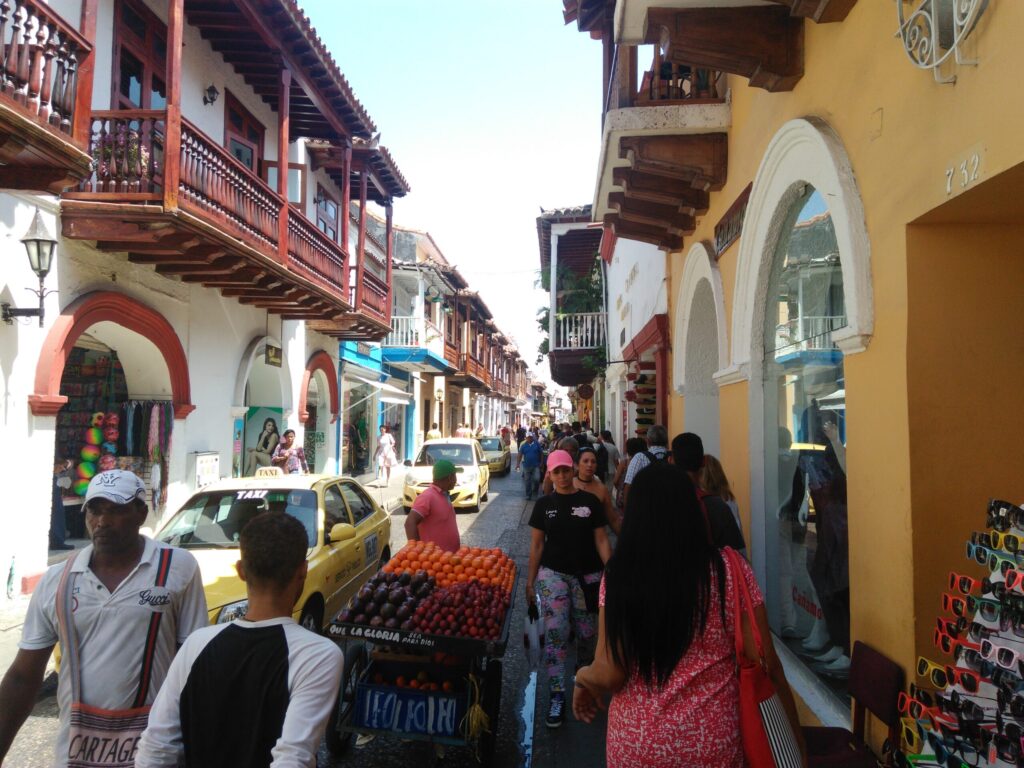
The first time I lost my bank cards while traveling happened to me in Cartagena, Colombia, in 2017.
About a month prior, I was violently robbed in Brazil. One of my bank cards was in the case of my phone, which was stolen. Shortly after, I used a friend’s phone to call my bank via the overseas hotline and cancel the card (this was before these things were streamlined through the app).
But all was good, I still had another card…
Cut forward a month later when I was passing through Cartegena, and you won’t believe it. I was robbed again! The phone I literally bought a few weeks ago was stolen, along with my only remaining bank card that was in the casing.
Yes, I know. I should have learned from the first lesson, but give me a break. I was 24, young, naive, and a little bit stupid. So now I was stuck in a hostel, essentially begging the owner to let me stay until I could get it all figured out and pay what I owed him.
Thankfully, he agreed.
The first thing I did was go out a buy another phone the next day. Considering this was the second phone I bought in a few weeks, with fears that it too may be stolen, I opted for something cheaper.
Another $200 down the drain.
Still, this gave me some peace of mind being able to use my banking apps, easily contacting my parents, and most importantly, calling my bank in Australia to cancel the card and order a new one.
I sucked up the costs and called my bank in Australia. For about half an hour (mostly waiting on the line for a representative), I think it cost about $10 on my Colombian SIM card, which was pre-paid. I got a new card sent to my hostel in Colombia, however, I would never see that card because… guess what?
Colombia doesn’t have a postal service. At least it didn’t at the time.
Upon contacting my parents via Facebook on my laptop, they agreed to wire me money via Western Union, a service I didn’t know about at the time, where you can wire cash to people overseas.
Since ordering a new card via my bank, I could activate it and use it for online payments, which helped a lot. Now that I had access to my bank account where my funds were stored, I would transfer one of my parents some money for the next couple of weeks, and they would go to a local Western Union branch to wire me the money in cash.
This was a game-changer, and I traveled for the next 5 months like this.
Most cities have Western Union branches where you can either send or collect cash. They usually have a big yellow “Western Union” sign out front or a sticker on the window.
And the second time…
The second time I lost my bank cards while traveling abroad was in 2023.
Once again, I was robbed…
What’s worse is that I got complacent and had my only functional card in my phone case. Stupid move considering there was a big festival happening, and I had shallow pockets. You would think I would have learned, but no.
At the time, I still had another 2 cards from my main bank, however, they expired some time ago. It had been about 4 and a half years since returning home, so naturally, I was relying on my US bank card (where I had just spent a year working, so most of my funds were stored there), which was stolen.
And… I was in the same situation. No card, no postal service (I was in Ecuador), no way to access cash.
Thankfully, by this point, Western Union had an app that made everything much easier. For the next 5 months until I headed back to Australia, I could quite easily transfer myself cash via the Western Union App, and pick it up.
So, that’s exactly what I did, transferring myself a bulk of cash via Western Union every month or two until I got back to Australia.
The present trip I’ve already lost 2 cards, but I have more measures in place, such as digital banks and excess cards so I never end up in this situation again.
Making sure you’re never stuck without access to money abroad
First, we’re going to look at the precautions you can take so that you avoid getting stuck in this situation in the first place.
You never have enough cards!
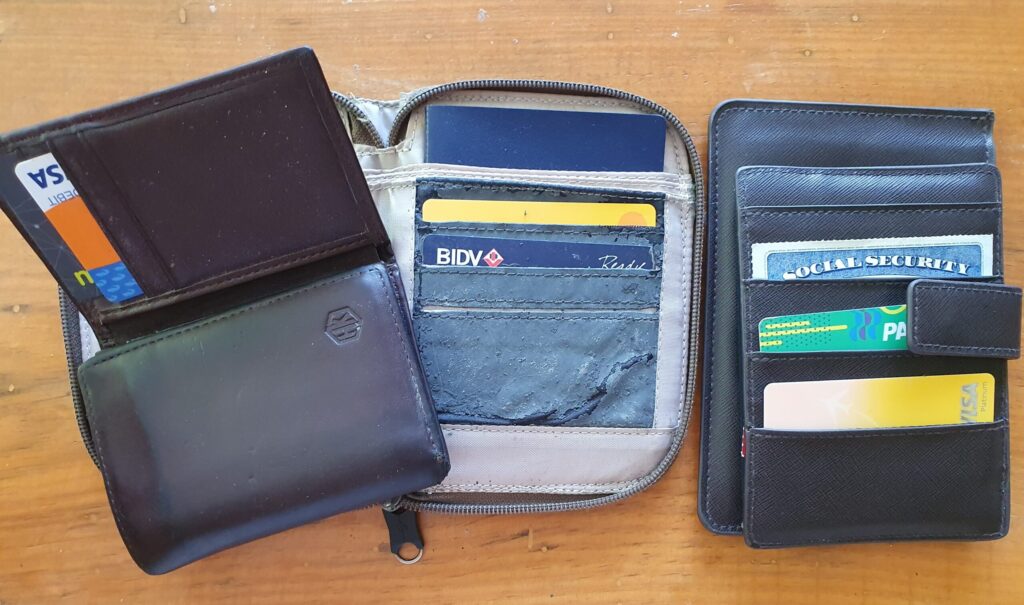
Having learned from these lessons, now I make sure I am signed up with at least 3 banks, and carry at least 4 or 5 cards with me when I’m traveling for long periods and have no intention of returning to my home country any time soon.
While this might seem excessive, trust me, you won’t regret it!
I’m not going to lie, I’m a menace when it comes to losing my bank cards. Even though I planned extra diligently for this trip (which I’ve been on for about a year now), I’ve already lost 2 cards…
One of them vanished without a trace, like the magical card goblin gave me a visit, and suddenly it was nowhere to be found. The second card had an unknown purchase, so I needed to contact my Bank to dispute it. The policy is that they must cancel the card when disputing an unknown payment, and send out a new one to your home address.
Of course, not having an address in Australia, I just get these sorts of things sent to my mother’s house, and pick them up next time I’m in the country.
Thankfully, because I took this precaution, I still have another travel card through my main bank in Australia, my US card, which is tied to my US bank account, and a Revolut card, which is an online Bank.
Believe me, you will not regret having more cards than you think you’ll need. Likewise, it’s best to diversify your banks, too. If you have an issue with one Bank, you still have others to fall back on. For best practice, keep some funds in each bank, because transferring between them can prove tricky at times.
Therefore, I suggest having at least 2 cards with your main bank if possible (I have my normal debit card, and two travel cards with my main bank in Australia), and open at least 1 online bank such as Wise, Revolut, or N26.
It’s best to sign up at least a month before you start traveling to give sufficient time for the debit card to arrive in the mail.
Separate your cards
Another big thing I’ve learned through my rough experiences is to never keep two or more cards in the same place!
When I travel, I usually keep one card in my wallet, one card in my phone case, one card in my main luggage, and one card in my daypack. I make sure they’re all tucked away in different locations; therefore, if something happens, and god forbid, I get robbed again, I will only lose one card, which is manageable.
With that said, usually I just take one card with me when I go out.
If I lose the card, it’s not the end of the world. But if I were to lose both my wallet and phone somehow which both had cards in them, this could be a bigger issue, especially if you’re not returning home for another year or two.
Don’t underestimate how important this one is. You might forget about it, or become a little complacent and keep most of your cards in the same place. But if something happens to it, then you will be in a world of regret.
This might feel a little paranoid, but believe me, you can’t be too cautious with these things. So, keep that in mind, and learn from my mistakes!
Add another authorized user or signer to your primary bank account
Giving a second person in your home country authorization to access your bank account could be a good idea to streamline the process when you’re having difficulties getting in touch with your bank.
Of course, you want to make sure it’s someone you deeply trust, probably a family member. Then, sometimes, even with authorization through your bank, they won’t be able to do a whole lot, sorta defeating the purpose.
With that said, it can be a good idea if you’re ever stuck because having someone in your home country who can talk to the bank on your behalf adds an extra safety net.
What to do when you’ve lost your cards
Okay, so you’ve lost your cards, and you have no way to access cash while overseas. So now you’re in one of two situations.
- You still have an active card somewhere, it’s just not with you.
- You have no active cards because they have all been canceled.
Here’s what to do.
Cancel the card and order a new one
First off, cancel (or at least freeze) the card that was stolen. It’s gone, and I hate to say it, but it’s not coming back.
Freezing the card as soon as you realize you lost it is the first thing you want to do when your card gets stolen or lost while traveling. This ensures that nobody else can use it. Luckily, most banks have an option nowadays to do this through the app, so it should be pretty straight-forward.
When you can, contact your bank and get a new card issued. You may be able to do this online, or you may need to call your bank. In which case, you will probably need to buy a local SIM and put enough credit on it to last the call. This varies wildly from country to country.
This will usually cancel the previous card, but that’s okay. Not like you need it anymore anyway.
Your bank will send your card to an address in your home country. As I’ve been a nomad for 9 years, I don’t have a home address, so I use my mother’s address. If you don’t have a home address, ask a family member or friend if you can send your new bank card there.
Usually, once the card is issued, you can activate it immediately via your bank’s website/app, allowing you to use it for online transactions. Once it’s activated, this gives you a little more freedom.
Set up a digital wallet
Most modern phones have the capability to set up a digital wallet. Whether it’s Apple Pay, Samsung Pay, or Google Pay, you can digitally add your card and use your phone as a form of contactless payment.
This can be handy when purchasing things, but keep in mind, it has its limitations and isn’t a long-term solution. If you’re in a developing country, you probably won’t get far. Most places tend to rely on cash unless they’re supermarkets, larger companies, or services, etc.
If you’re in a developed country, on the other hand, this can get you far. Most places will accept contactless payment, so you can go about your day as usual.
Some stores may allow you to cash out via contactless payment. If you can find a place that will do this, they will often take a 3-5% commission, but it’s a way to get cash, considering you can’t use an ATM without a card.
Western Union is your best friend
The first time I was stuck without bank cards in a foreign country, my parents luckily helped me. I would transfer them money directly through my bank app, and they would then go to a local bank or post office in Australia and send that money to me so I could pick it up in person.
A little bit inconvenient, and there was a fee, which was around $10 – $20 at the time to do a transfer. But, it allowed me to get cash out. Due to the heavy fees, I would usually get a large sum of money transferred at once which would last me at least a couple weeks, ideally more.
The process is pretty straightforward. You go to a location that supports Western Union (usually it will be labeled on a sign), and send money to the recipient.
You will fill in a form that has the details of the person, amount, and country to which you’re sending it. You will be given a code that you give to the recipient. They will need that code to verify the money is for them, along with their passport, which must match the details the sender gave, and the tender will give the cash.
Make sure you send it to the country where the recipient is. If you send money to someone in Colombia when they’re in Ecuador, they won’t be able to access the money.
See if another traveler can spot you
If you have access to your bank account but not a card, see if another traveler will trade you cash in exchange for transferring it directly. Hostel owners or hotel management may be able to do this too.
International transfers can be a little tricky, so it’s best to find a willing soul from your country. For example, I can transfer funds from my Australian bank to another Australian bank seamlessly. It’s instant and super easy to do. If I meet another Australian in a hostel, they could potentially get cash out for me if I transfer to them.
So, see if this is a viable option for you.
Final notes!
Losing your bank cards while traveling overseas is a situation you don’t want to find yourself in. But, the situation can be resolved, and you can take precautions to make sure you don’t get stuck in this situation.
If you’re in this situation, don’t panic. It may take a little effort, but there are ways around this issue, and you will be able to get cash once again. Apply the advice in this article, and it’s something you won’t need to worry about again.