Table of Contents
The Grampians is a national park in Victoria, about a three-hour drive west of Melbourne. It is a sandstone mountain range with some of the best hiking and animal life in all of Victoria, making it an incredible wilderness getaway destination within proximity to Melbourne.
Even before I could walk, the Grampians had been my family’s go-to holiday destination. At this point, I’ve probably had about 20 vacations here, and it’s a place that I will always hold very close to my heart, not just because of the sentimental value, but because it really is a slice of paradise.
So, I’m going to run through everything you need to know if you’re thinking about visiting the Grampians, including what to do, where to stay, and what it’s actually like based on first-hand experience. Otherwise, if you’re specifically wondering about the world-class hiking the Grampians offers, check out my other guide: A Complete Hiking Trail Guide For The Grampians
Why go to the Grampians?
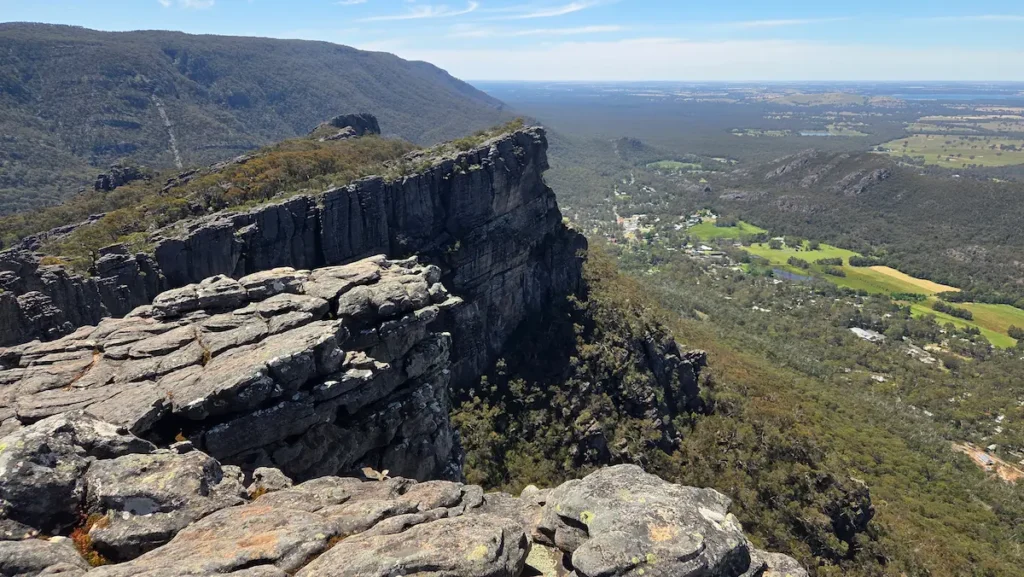
Surrounded by sprawling farmland in every direction, the Grampians is like a mountain oasis in the middle of western Victoria.
Jagged sandstone ridges rise straight out of the plains, kangaroos and emus graze on the grass next to your accommodation, and a string of cozy cabins and cafes line the main road through Halls Gap.
The whole range is tilted sandstone, laid down around 400 million years ago by ancient river systems and shallow seas, then buried, compressed, lifted, and folded by tectonic movement.
Erosion has stripped away the softer rock and left those distinctive ridges, characterized by broad sloping backs on one side and sharp cliff faces dropping away on the other. Most of the famous lookouts (the Pinnacle, the Balconies, Boroka) are just spots where you can stand on the edge of one of those tilted slabs and look out.
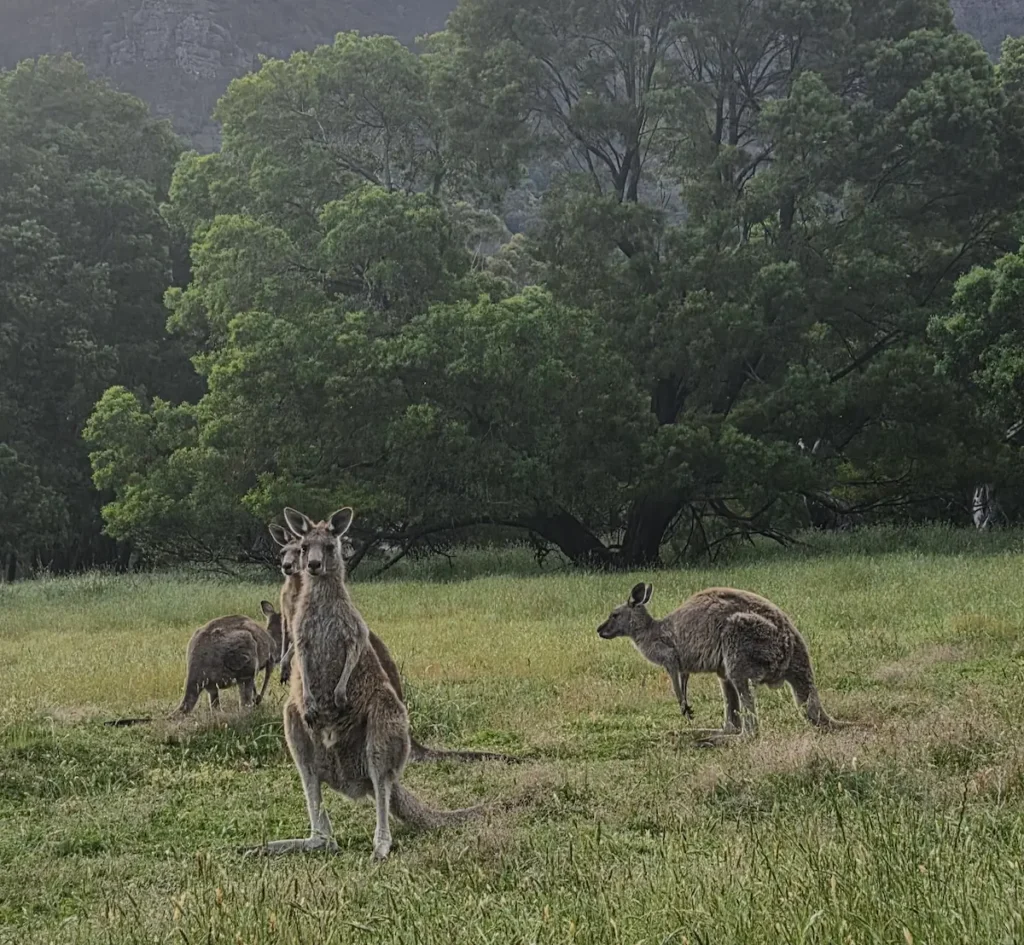
The Grampians has some of the best wildlife viewing I’ve seen in Australia. You see kangaroos, wallabies, emus, and mountain goats all over the place without having to look far. You’ll often hear kangaroos grazing right outside your bedroom window in the morning, while the valley comes alive with the unique songs of Australian birdlife.
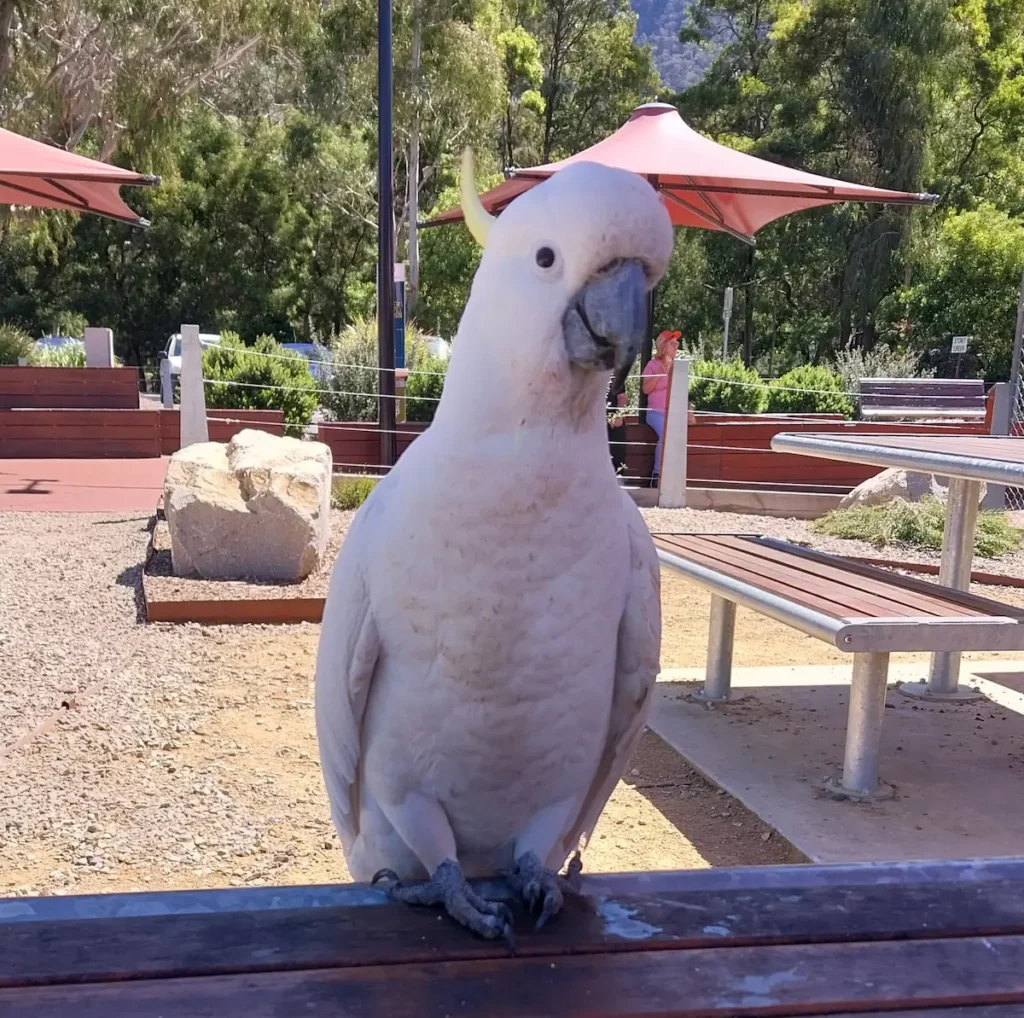
With that said, the birdlife is also incredible, and it’s a great place for birdwatching (and listening). You’ll see cockatoos, kookabarras, galahs, currawongs, burrudondoogas, and snoochamakayas everywhere!
Alright, I made those last 2 up.
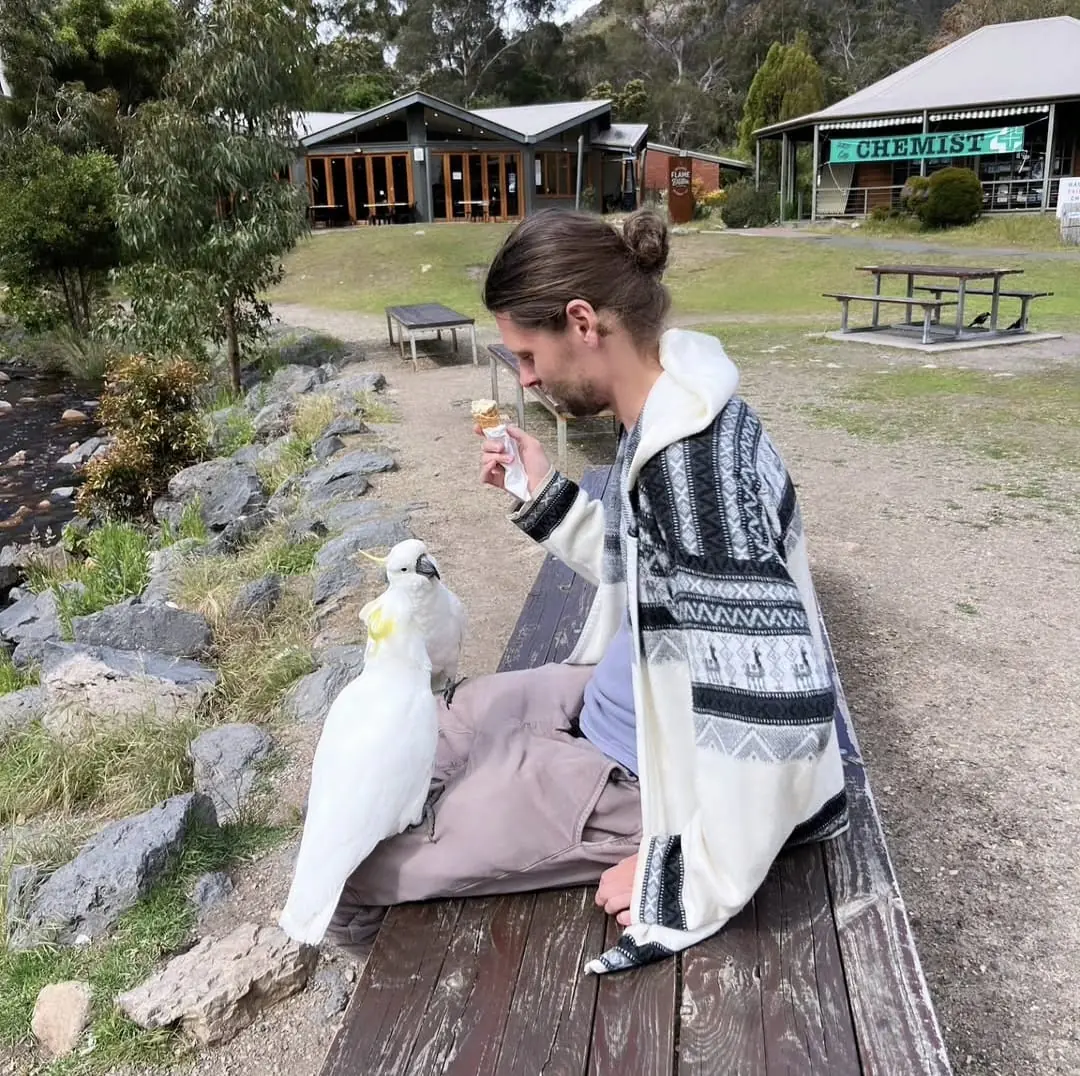
But you will see them flying overhead, in the trees, landing on your lap or shoulders in hopes of being fed. Maybe nibbling at your toes a little if you let them.
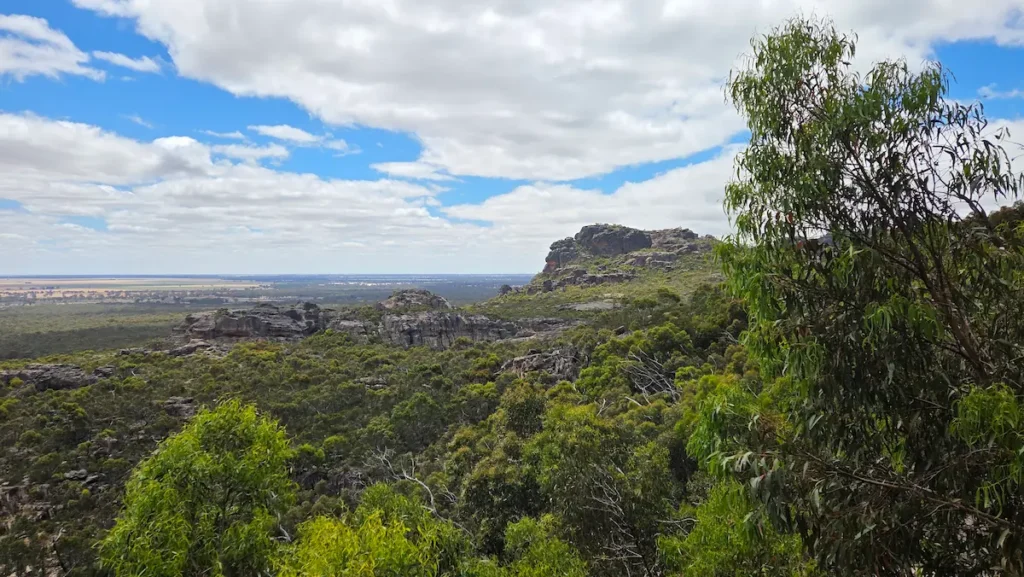
So, you can spend a long time here just soaking up the atmosphere and enjoying the tranquility of Halls Gap. But hiking is the main event.
The Grampians is known as a popular hiking destination with exciting walks, incredible views, and beautiful sunsets. So, if you’re an active outdoorsy person, this is your place.
How to get to the Grampians
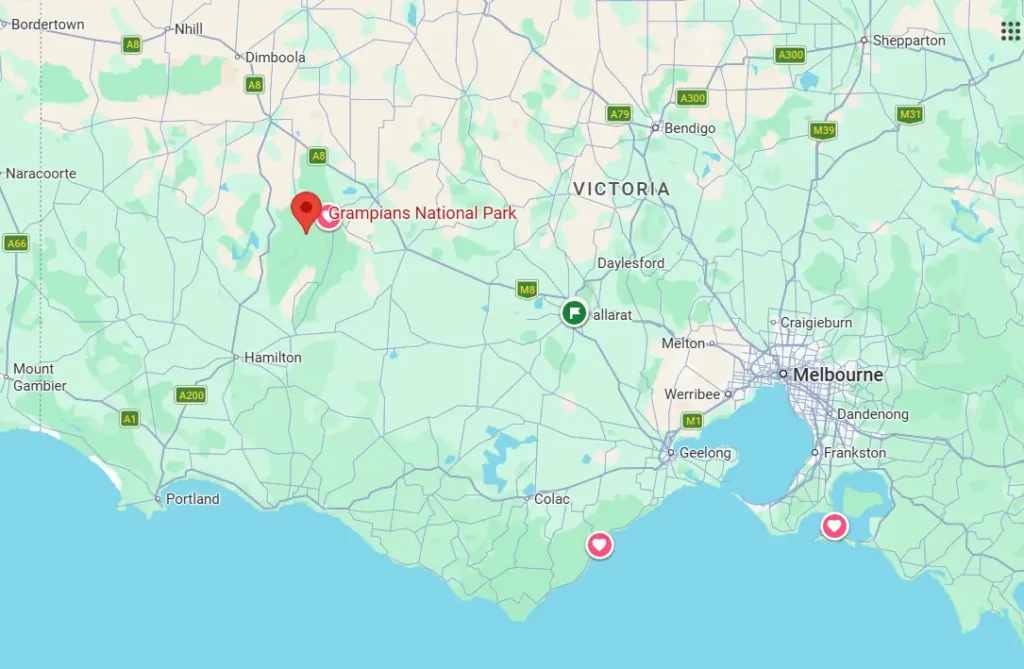
The Grampians National Park is in western Victoria, roughly 250 kilometres northwest of Melbourne. The main visitor hub is Halls Gap, a small town tucked into a valley on the eastern edge of the park.
You have three realistic ways to get there from Melbourne. I’ve gone back and forth using every method, so here’s what I suggest:
Driving
Like with many places in Australia, driving is by far the most convenient and gives you the freedom to go wherever you want. The route runs along the Western Freeway through Ballarat and Ararat. It’s generally a straightforward and easy-going trip.
The Grampians is also spread out, so having a car really helps you to see much more of it rather than being contained around Halls Gap. Don’t have one? No worries, you can rent a car here.
Public transport
Not ideal, but doable. Surprisingly, the Melbourne Metro passes through the Grampians.
Take the V/Line train from Southern Cross Station in Melbourne to Ararat (the last station on the Ararat line). The train costs AU$10 and takes about 3 hours. Services don’t run every day, so check the V/Line timetable before you commit to dates.
From Ararat station, you can get a connecting bus to Halls Gap. Buses pass regularly along the C222, the main road passing through Ararat, which will bring you directly to Halls Gap.
Once you’re in Halls Gap without a car, you’ll mostly be limited to walks that start in or near town, including the Wonderland Walk, the Pinnacle, Boronia Peak, and the Valley walk. So, you’ve still got plenty of options to keep you occupied for a week.
Guided tours
There are also day tours you can do from Melbourne, which might be more up your alley if you’re pushing time, don’t want to deal with the logistics, and are happy to spend just a day in the Grampians.
Guided tours organize everything for you and pick you up from Melbourne CBD, so it takes a whole lot of stress off your shoulders.
With that said, you also get the advantage of being with a group, so they’re often a good choice for solo travelers who want to share the experience with other people and make some friends along the way.
This 1-day tour is probably the best out there, with hundreds of 5-star ratings and many reviews. It picks you up from Melbourne, where you see several attractions in the Grampians and around Halls Gap, before bringing you back. All up, it takes between 12 – 13 hours, but it’s enough to get a good taste of the Grampians.
If you’re set on hiking, this Hiking & Waterfall Day Tour revolves more around hiking than just sightseeing. So, if you want to have a full Grampians experience (including doing 2 of the most popular hikes) while being back in Melbourne the same night, I suggest doing this tour.
Otherwise, if you already have plans to visit Adelaide, this 3-day tour takes you through the Great Ocean Road and the Grampians on the way, which is definitely an adventure.
What to know about Halls Gap
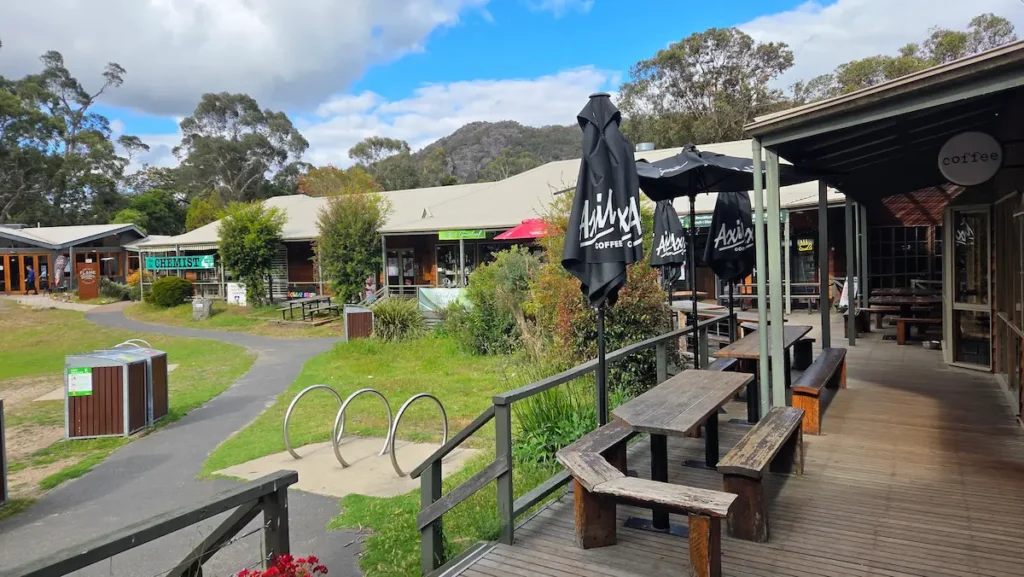
Halls Gap is the central village that acts as the main hub for travelers. It’s small enough to cross on foot in 10 – 20 minutes, but it has the essentials, including a supermarket, a bakery, an ice cream shop, a few cafes and bars, some craft stores, a visitor centre, and a spread of accommodation from hostels to cottages.
That’s really about it.
There’s a gentle creak that runs through town, and you have some gardens and parks surrounding it with plenty of public BBQs.
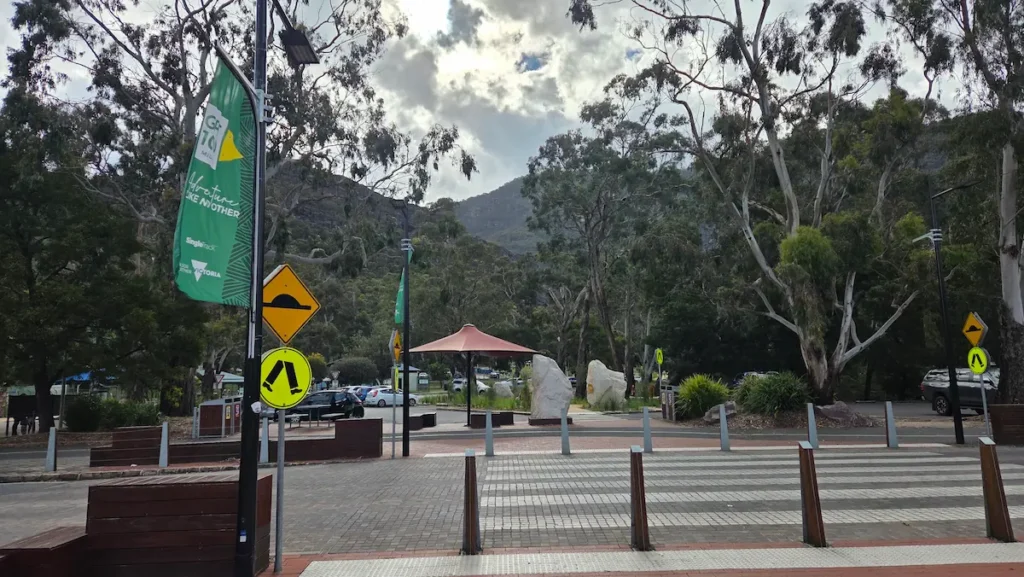
Here, you’ll see kangaroos everywhere. They’re not too shy of humans and keep to their own. You will often see them eating grass in packs in the local parks.
The birdlife can get aggressive. Not in the ‘peck at your face’ sorta way, but they do get ballsey if you have food, and might land on you and try to snatch it out of your hands.
Halls Gap itself is walkable, and several good trails start in or near town. What’s harder to reach are the sights spread across the park, like MacKenzie Falls and the western lookouts, if you don’t have a car.
Your options without a car:
- Stick to town-based walks and accept you’ll miss some of the drive-to sights.
- Use a guided tour for a day to cover the highlights, then walk locally on other days. I recommend this tour if you’re looking to do a day trip from Melbourne
- Use a local shuttle service. A few operators in Halls Gap run drop-offs and pick-ups to trailheads. Ask at your accommodation or the visitor centre.
Is the Grampians open after the bushfires?
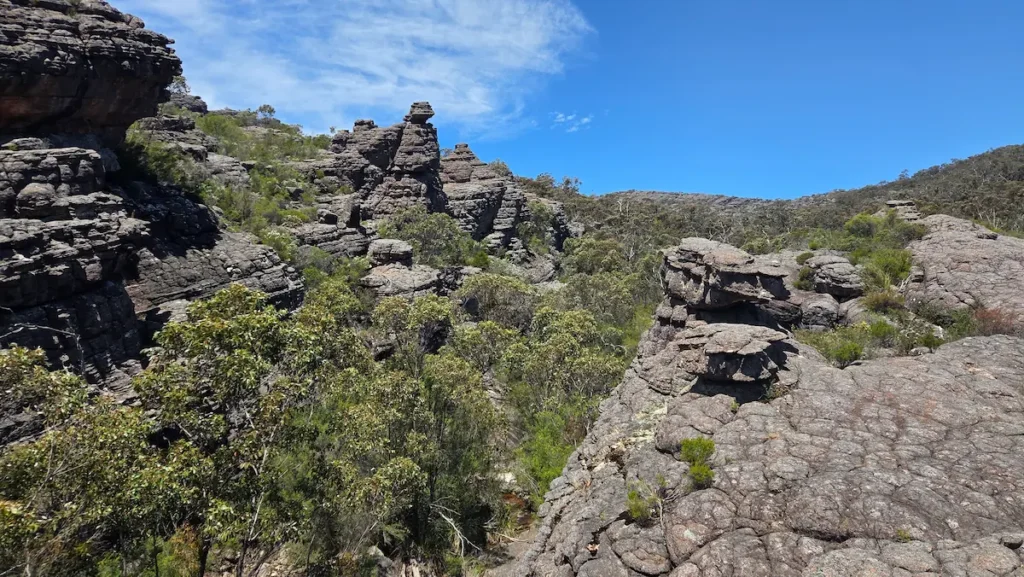
Something to be aware of is that the Grampians is in fire country, and bushfire season in Australia is a big deal!
In January 2006, the Mount Lubra fire took out nearly half the park. I remember being chocked and saddened by the beautiful forests that had been reduced to ash. But twenty years on, those areas have regrown to the point where a casual visitor wouldn’t notice.
There were also fires in 2013 and 2014, but those mostly hit parts of the park that day-trippers from Halls Gap rarely cross. Then, once again, there were major bushfires in 2024 to 2025, which burned through roughly 135,000 hectares of the park, close to 80 percent of its total area.
So, most of the Grampians is open, but a handful of specific sites are still closed. Since then, Parks Victoria has run a staged recovery program.
This means you’ll likely notice large swaths of charred trees and land in certain parts of the park, especially if you venture out of Halls Gap. For some people, walking through that is confronting. For others, it’s genuinely interesting, since native Australian bush is built to regenerate after fire, and you’re watching that process in real time.
It’s also important to note that in Australia, we take bushfire season seriously. This means that during summer and hotter days, there is a complete fire ban, meaning you can’t have a campfire, otherwise, the fire police (like a mix between regular police and firefighters) will rock up to your cottage and punch on.
Always check the official Parks Victoria Grampians page for the current list of open and closed tracks before you lock in a plan. Conditions are still shifting as recovery work continues.
Best time to visit the Grampians
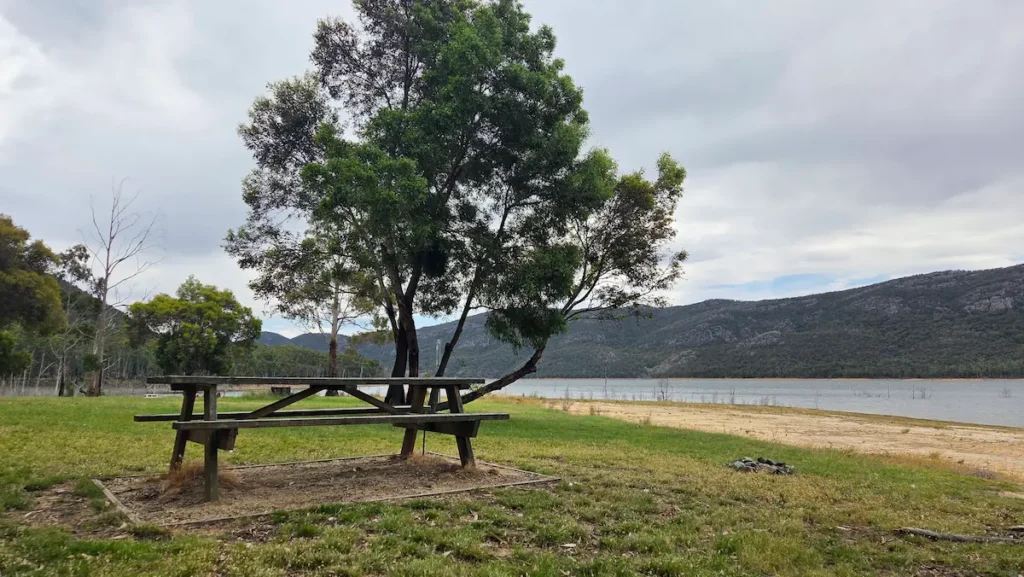
The best times to visit are spring (September to November) and autumn (March to May), when the weather is mild, and the park is at its most comfortable.
Here’s how the seasons actually compare:
- Spring: Brings wildflowers, cool air, and long days. It’s arguably the nicest time to walk.
- Autumn: Crisp and clear, with comfortable hiking temperatures and fewer crowds than summer.
- Summer: Can hit 35°C, and it’s both the busiest season and fire season.
- Winter: Cold and often wet with frosty nights. It’s the quietest season, and the waterfalls run at full strength. Bring layers!
One practical note…
Avoid school holidays and long weekends if you can. Halls Gap fills up fast, accommodation prices climb, and the popular trails get busy.
Best things to do in the Grampians
While the Grampians is known mostly as a popular hiking destination, there are plenty of other things to do here that are also worth your time:
- Go Hiking: There are many amazing trails here. No-brainer.
- Go Camping: There are several campsites and trailer parks in Halls Gap, and more further in the park.
- Have a BBQ: You’ll find public BBQs all over Halls Gap. Get out, cook up some food, and enjoy.
- Brambuk and Aboriginal culture center: A beautiful building that doubles up as an information and cultural center. Takes about 30 minutes to walk there from Halls Gap.
- Walk along the valley: You can walk a fair way along the valley. Nice and casual, good for animal watching.
- Visit Lake Bellfield: Nice area to have a picnic, swim, or kayak.
- Go rockclimbing: The Grampians hosts world-class rockclimbing spots.
- Enjoy the Wildlife: Sit in the park or outside your cottage and soak up all the sounds, the views, and the wildlife going about their business.
- Visit the waterfalls: There are quite a few waterfalls in the area, including Mackenzie Falls and Silverback Falls. Most of the waterfalls are a casual walk, so no strenuous hike is required to get to them.
Where to stay in Halls Gap and around the Grampians
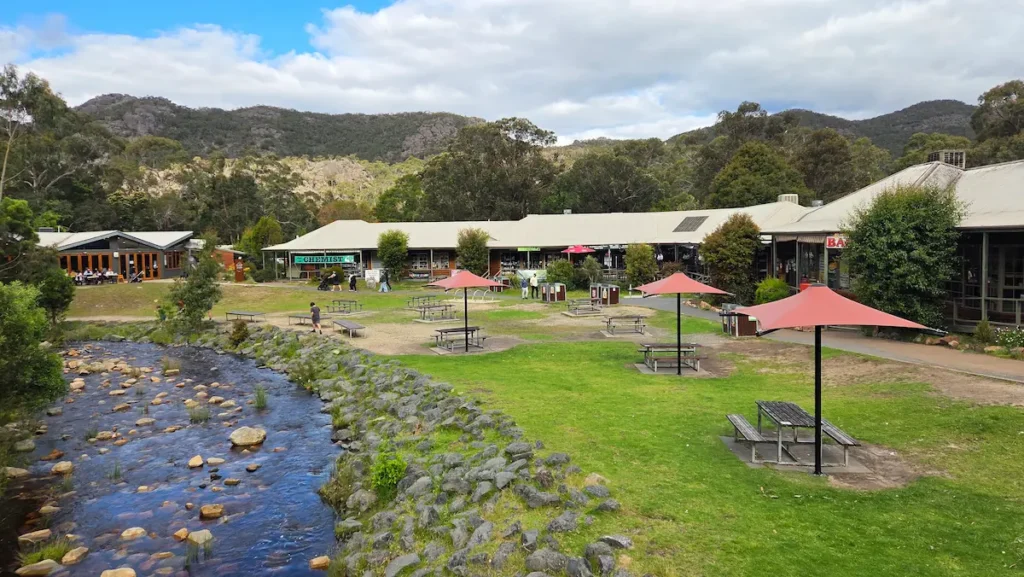
Most accommodations sit within strolling distance of the trailheads, cafes, and the main road through the valley. A few of the better stays are a short drive out of town, where you trade a five-minute commute for more space, fewer people, and better views.
There’s only so much accommodation in the valley, and it sells out fast on long weekends and over the Christmas period. Book at least a few weeks ahead in peak season. Mid-week off-season, you’ll have your pick, and a lot of space and quiet.
If you’re wondering how long you should stay, three to five nights is a comfortable choice for most travelers. It’s long enough to get a good taste of the Grampians, and not so long that you feel stuck if you don’t love it.
Here’s how I’d think about it depending on the kind of trip you’re putting together.
Best hostel for solo travelers: YHA Grampians Eco
This is the only hostel in the Grampians, which makes it the default pick for solo backpackers and budget travelers.
You get a dorm bed, a shared kitchen to cook your own food, and a sociable common space where it’s easy to find other people heading out on the same walks the next morning. The location puts you within walking distance of town and the closer trailheads, so you don’t need a car.
Check rates and book on Hostelworld →
Best for families and groups: Grampians View Cottages and Units
This is my go-to spot in the Grampians, and the one I keep coming back to. It’s a sprawling cabin park with a mix of layouts to suit different group sizes, indoor fireplaces, a community indoor pool for when the weather turns, BBQs you can use in the evenings, and proper mountain views from the property.
Kangaroos graze on the grass around the cabins, which sounds like a brochure line but is genuinely just what happens here. It’s about a 30-minute walk into Halls Gap if you want to head into town for dinner.
If you’re traveling with family, in a group, or just want a self-contained base with a bit of space, this is the easy choice.
Check rates and book on Booking.com →
Best cozy stay for couples and small groups: The Peaks, Halls Gap
A smaller, more characterful option with a perfect location for walks straight from the door. The bird life around the property is excellent, especially in the mornings, and the whole place leans into the cozy-cottage feel rather than trying to be sleek.
It’s the kind of stay that suits couples and small groups who want somewhere to come back to at the end of a hiking day, rather than a base for cooking big group dinners. I would stay here again.
Check rates and book on Booking.com →
Best modern upscale stay: Small Scale Stays – Couples Retreats
If you’d rather skip the rustic-cottage aesthetic and stay somewhere with newer finishes and a more contemporary feel, this is the one to look at. Strong reviews, modern build, and pitched at travelers who want quality without driving an hour out of town to find it.
Check rates and book on Booking.com →
Best remote escape: DULC Cabins
A spacious property further out from Halls Gap, with the kind of privacy that’s hard to find in town during peak season. Better suited to travelers with a car, since you’re trading walking-distance convenience for quiet, room to breathe, and a real sense of being out in the landscape.
Check rates and book on Booking.com →
Camping inside the park
If you’d rather sleep under the gum trees, Parks Victoria runs a network of campgrounds inside the national park. Fees are low, the sites are basic in the best way, and you wake up in the middle of the bush rather than driving to it.
You need to book ahead through the Parks Victoria website, and you should double-check which campgrounds are open after the fire recovery work before locking in dates. You can book here.
What the Grampians actually cost
The Grampians is one of the more affordable trips you can do in Victoria, partly because there’s no entrance fee to the national park itself. Here’s a realistic daily budget for a solo backpacker in 2026. Prices shift, so treat these as a guide rather than a promise.
| Expense | Budget approach | Mid-range approach |
|---|---|---|
| Accommodation | Hostel dorm: AU$30 to AU$55 | Private room or cabin: AU$100 to AU$160 |
| Food | Self-catered from the supermarket: AU$15 to AU$25 | Cafes and a pub meal: AU$30 to AU$50 |
| Getting around | Walking from town, free | Hire car share of cost: AU$25 to AU$45 |
| Activities | Hiking, all free | Tour: AU$120 |
| Daily total | Around AU$80 | Around AU$150 to AU$250 |
The biggest single variable is transport. The hiking is free, the park is free, and Halls Gap has a couple of small supermarkets where you can stock up. If you skip the hire car and cook your own meals, this is a genuinely cheap few days.
Safety and practical realities
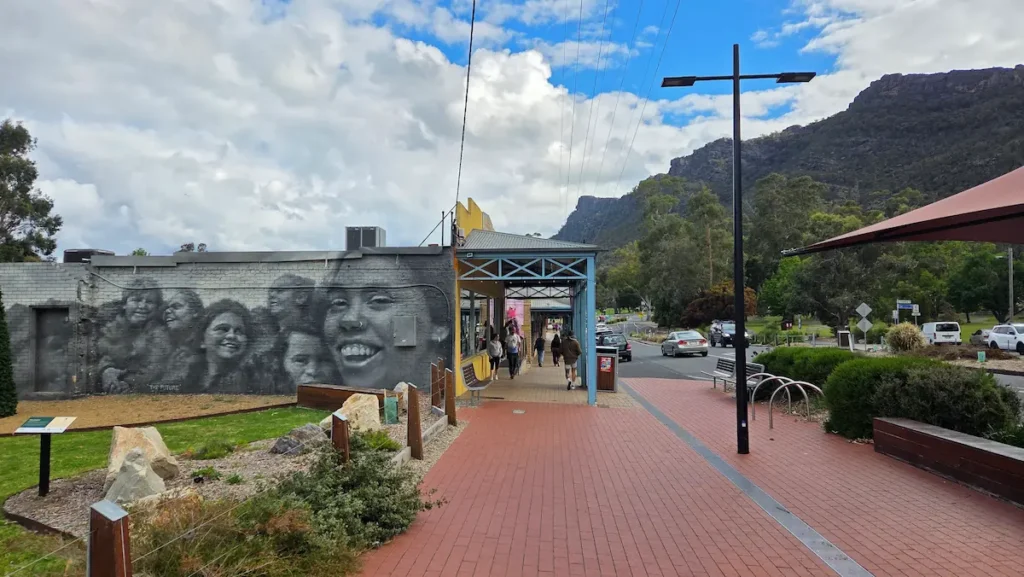
The Grampians is a safe destination, but a few things are worth knowing before you walk.
- Snakes: Australia has venomous snakes, and the Grampians is no exception, especially in warmer months. Stick to marked trails, wear closed shoes, watch where you step, and give any snake plenty of space if you spot one.
- Heat and fire: Summer can be genuinely hot, and the Grampians is a fire-prone landscape, as the history of bushfires here made that clear. Check the daily fire danger rating and the VicEmergency website or app before heading out. On days of extreme fire danger, change your plans.
- Phone reception. Coverage is decent in Halls Gap, but patchy or absent on many trails. Tell someone your plan, carry water, and don’t rely on your phone for navigation. Download offline maps before you go.
- Water and pacing. Most hiking trails have nowhere to top up water, so make sure you bring some with you, especially on hot days!
- Travel insurance. If you’re hiking in a remote-ish area, even a beginner-friendly one, having cover for medical issues and trip disruption is sensible. SafetyWing is a straightforward, affordable option built for travelers and digital nomads, and it’s easy to set up before a trip like this. It’s the kind of small cost that you hope you never use but are glad to have if something goes wrong.
Frequently asked questions
Is the Grampians safe to visit solo?
Yes. The Grampians is a popular and well-managed national park with marked trails, a staffed visitor centre, and other walkers on the main routes.
How many days do you need in the Grampians?
Two to four days suits most travelers. Two days cover the major sights, while three or four let you add quieter walks and downtime.
Do you need a car for the Grampians?
A car makes the trip easier and opens up the whole park, but it’s not essential. Without one, base yourself in Halls Gap, walk the town-based trails, and use a guided day tour or local shuttle to reach the more distant highlights.
Is there an entry fee for Grampians National Park?
No. There is no entry fee for the national park. You may pay small fees for camping or some parking, but day access to the park and its walking trails is free.
Can you swim at MacKenzie Falls?
No. Swimming is not allowed at the base of MacKenzie Falls because of dangerous currents and submerged rocks. You can still walk to the base and enjoy the view and spray.
Is the Grampians still affected by the 2024 to 2025 bushfires?
Most popular sites, including the main waterfalls, lookouts, and the full Grampians Peaks Trail, have reopened. A few specific tracks remain closed for repairs, and you’ll see regenerating bushland in fire-affected areas.
What’s the best time of year to visit the Grampians?
Spring and autumn offer the most comfortable hiking weather. Summer is hot and busy with added fire risk, and winter is cold and quiet, but great for full-flowing waterfalls.