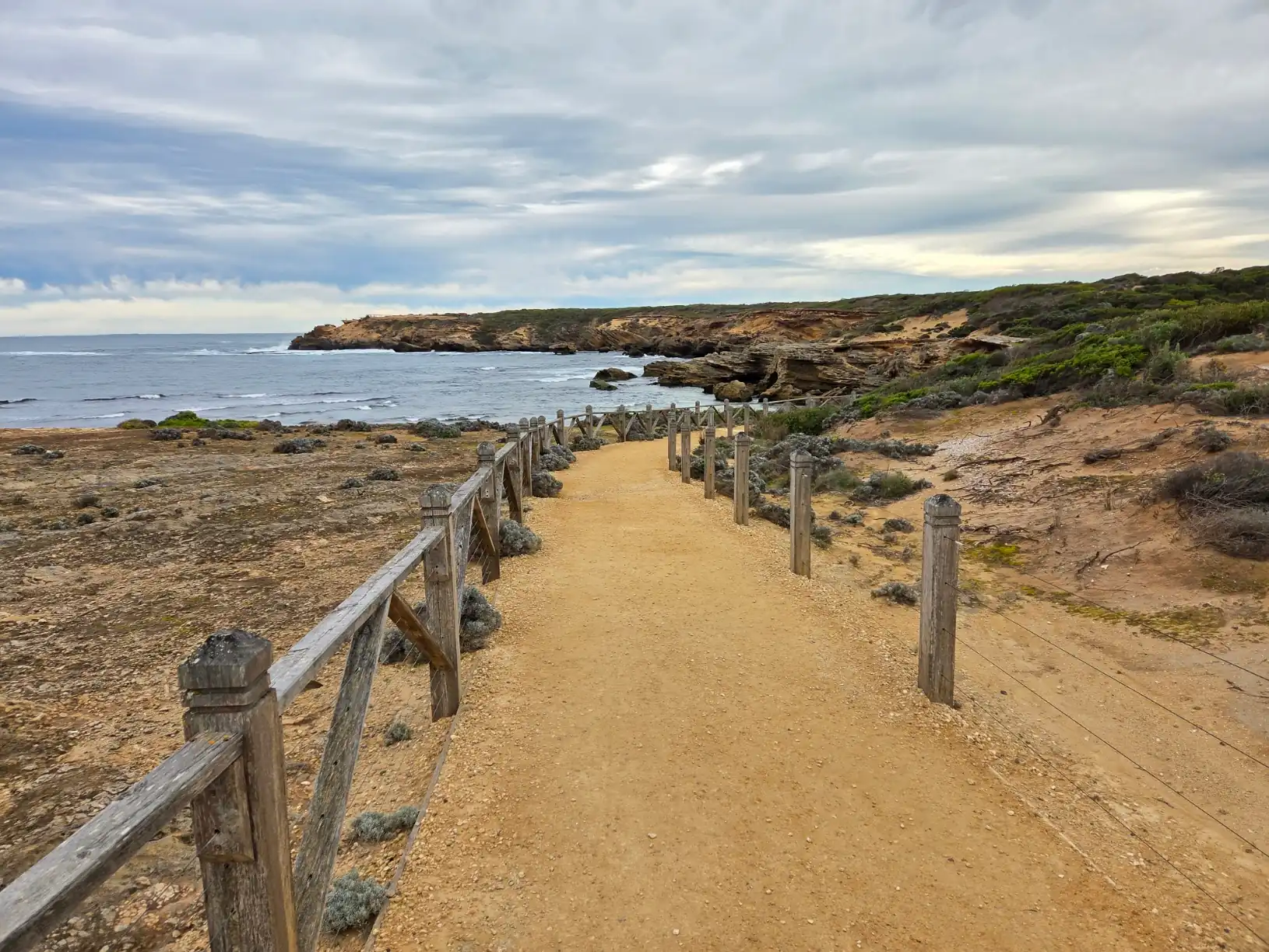
Table of Contents
Warrnambool is worth visiting if you like quiet coastal walks, volcanic landscapes, and using a place as a base rather than ticking off sights. It sits at the western end of the Great Ocean Road, about three hours from Melbourne, and it works best for slow, unhurried travel.
It will not hit you with dramatic cliffs the way Lorne or Apollo Bay can. What it offers instead is space, a calmer pace, and easy access to some genuinely unusual nature, including an extinct volcano you can walk inside and a UNESCO World Heritage cultural landscape an hour up the road.
If you are chasing constant highlights and postcard views, you can probably skip it. If you want a real, working town to slow down in while you explore southwest Victoria, it earns its place.
Who Warrnambool Is Good For

Warrnambool suits you if you value:
- Wide, open coastal walks without crowds
- Volcanic landscapes, wetlands, and wildlife
- Slow, practical travel over highlight chasing
- A comfortable base for exploring southwest Victoria
You may find it underwhelming if you want:
- Dramatic cliffs and constant photo stops
- A lively bar and nightlife scene
- A compact, walkable holiday-village feel
I got to know Warrnambool over about two years. My dad moved there, and while I was in the middle of a long stretch of travel.
I came back several times, usually for a couple of weeks, before he sold the house and resettled in Ecuador in 2026. So this is not a one-night impression. It is what stuck after returning to the same town across different seasons.
First impressions?
Not much happening! It’s a relatively small coastal town at the end of the Great Ocean Road. Sure, it’s got some charm, but let’s be fair. Many small coastal towns in Australia have a pretty similar flavor.
But after spending some time getting to know the place through the eyes of a local, I realized that there’s actually a lot to offer here.
If you’re researching whether Warrnambool is worth visiting, you’re probably weighing it against other stops along Victoria’s southwest coast, and likely doing a trip along the Great Ocean Road, which is one of Victoria’s most famous tourist routes.
So the real question isn’t whether Warrnambool is beautiful. It’s whether it’s the right kind of place for the way you travel.
Why Visit Warrnambool?
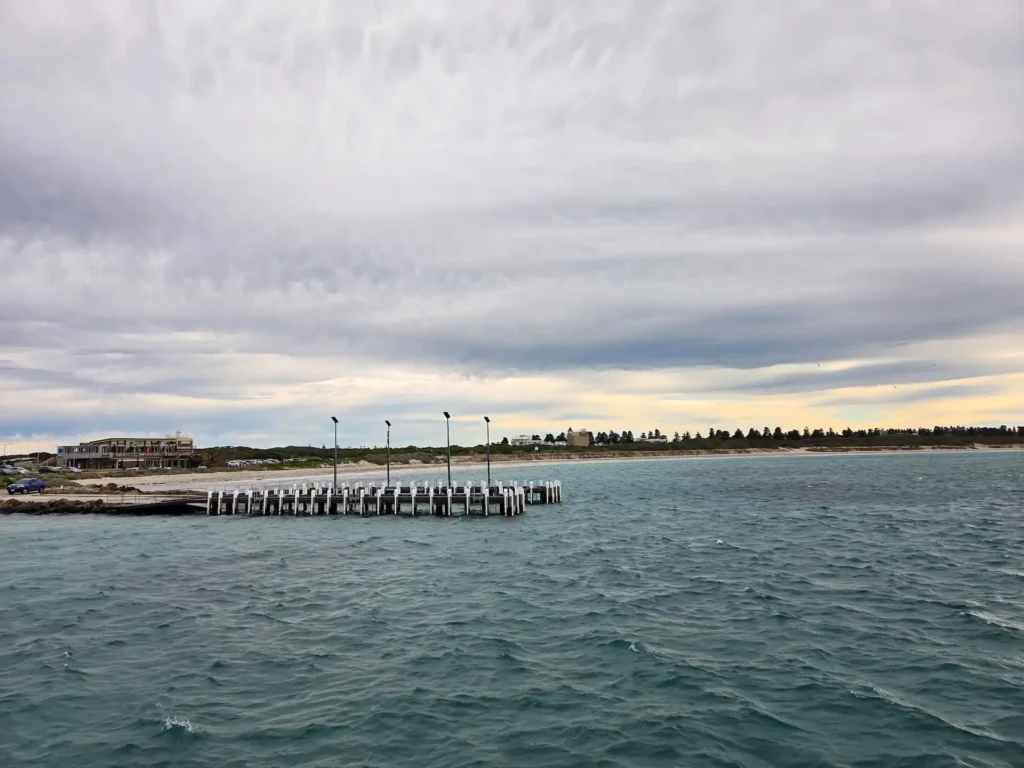
Warrnambool is a regional coastal city in southwest Victoria, about three hours from Melbourne by car. It sits at the end of the Great Ocean Road, and for some people, is the last stop before heading back to Melbourne.
It’s bigger than many people expect. This isn’t a small surf town or a sleepy village. It’s a working regional centre with hospitals, schools, shopping centres, and a solid local population.
It might not be breathtaking, but it’s livable, functional. That means it lacks the romantic edge of places like Lorne or Apollo Bay. But it also offers something those towns don’t.
The beauty isn’t necessarily in Warnambool itself, although it is nice too, but in the areas close by that are really unique to visit.

So, if you’re thinking of visiting Warnambool, let’s look at why you might do so, and what it actually offers. Warrnambool is worth visiting if you value:
- Wide open coastal walks without crowds
- Volcanic landscapes and wetlands
- Slow, practical travel rather than highlight chasing
- A base to explore southwest Victoria
If you’re chasing dramatic cliff views and touristy stuff, maybe Warnambool isn’t your place.
But if you’re looking to experience an authentic Australian town away from the tourist crowds and curated holiday destinations, then it’s worth checking out, especially if you’re already doing the Great Ocean Road and want a change of pace.
How to get to Warrnambool
Despite its isolated location between Melbourne and Adelaide, Warrnambool is actually pretty easy to get to by public transport.
All you need to do is catch the Vline to Warnambool from Southern Cross Station in the heart of Melbourne. The train costs $10 and takes about 2.5 hours.
So, it’s not difficult. That being said, without a car, you’re somewhat stranded in Warrnambool, with limited access to the places that people actually visit to Warrnambool.
In that case, it’s best to hire a car. Chances are, if you’re considering going to Warrnambool, it’s probably because you plan on doing the Great Ocean Road, in which case you probably already have one sorted.
Having a car gives you the freedom to explore Tower Hill, coastal reserves, and inland areas. Without one, you can still enjoy the town and nearby walks, but options are more limited.
How long to stay: 1 to 3 days works well for most travellers. One day gives you a feel for the town and coast. Two or three lets you explore Tower Hill and nearby reserves at your own pace.
Best time to visit: Late autumn and spring are ideal. Summer can be windy but pleasant. Winter is colder and quieter, with a moody coastal feel.
Getting around: A car makes a big difference if you want to explore volcanic landscapes and coastal reserves. Without one, stick closer to town and Lake Pertobe.
The Coastline and Rocks
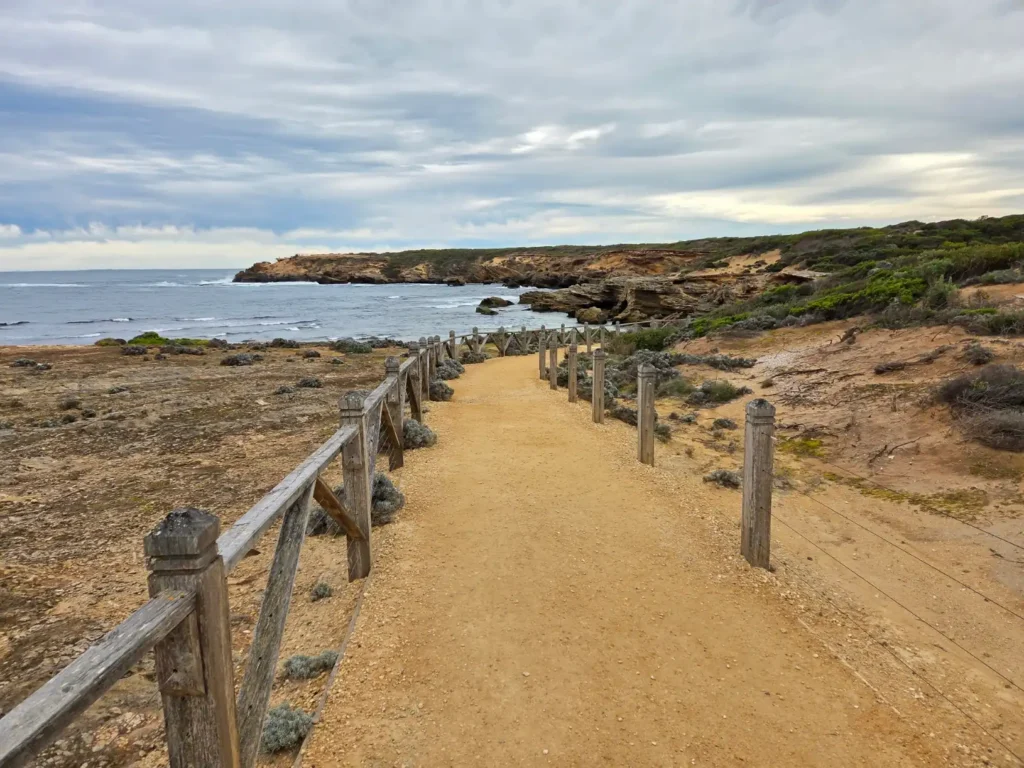
Being a coastal city, one of Warrnambool’s main drawcards is its coastline. The town has a long, open beach that works well for walking, swimming, or just spending time near the water. The shoreline is wide and fairly open, so it rarely feels cramped, even when there are other people around.
Along parts of the coast, there is a shared walking path and boardwalk that runs close to the cliff edge. This makes it easy to explore the coastline on foot without needing to hike or navigate rough terrain.
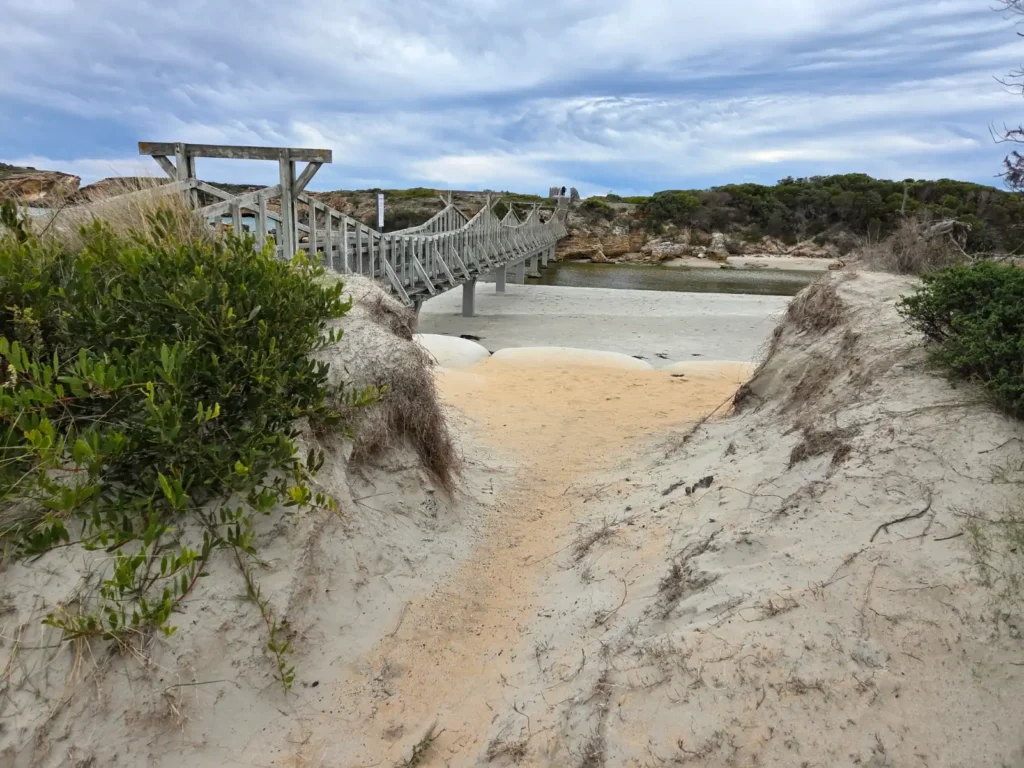
The path is mostly flat and well-maintained, suitable for casual walks rather than anything strenuous. It also connects several lookout points where you can stop and take in the view over the ocean and beach below.
The landscape here is more gentle than dramatic. The cliffs are lower and less rugged than other parts of the Great Ocean Road, and the land gradually levels out as you move away from the headlands. Large stretches of sand and exposed coastline give the area a more open feel, with fewer tight coves or enclosed bays.
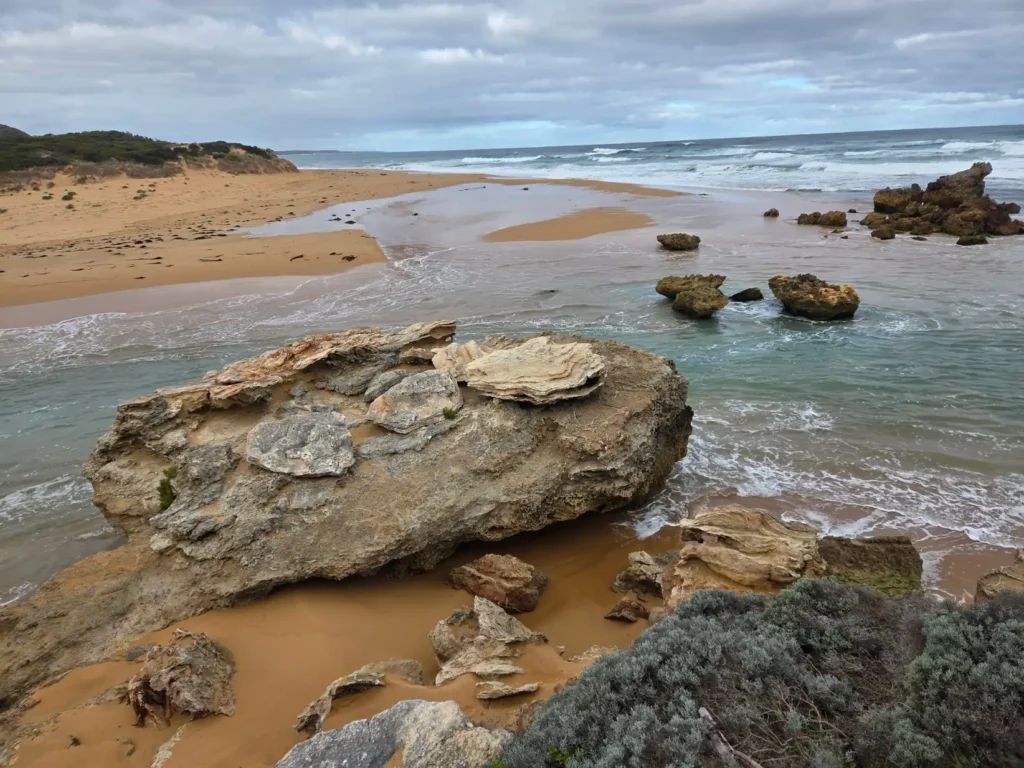
Wind is a regular feature and something to factor into your visit. It can pick up quickly, especially along the clifftop sections of the path, so a light jacket is useful even on mild days. On calmer days, the coastline feels relaxed and spacious, making it a good place for an easy walk rather than a sightseeing rush.
Overall, the coastline in Warrnambool is best suited to slow exploration. It is accessible, easy to walk, and practical for everyday use, whether you are out for a short stroll, a longer coastal walk, or simply looking for a place to spend time near the ocean without needing to travel far.
Warrnambool is known for whale watching.
Between May and October, southern right whales migrate along the coast and often come close to shore. Logans Beach is the main viewing area, and sightings can be surprisingly frequent.
This seasonal rhythm adds depth to the landscape.
Lake Pertobe
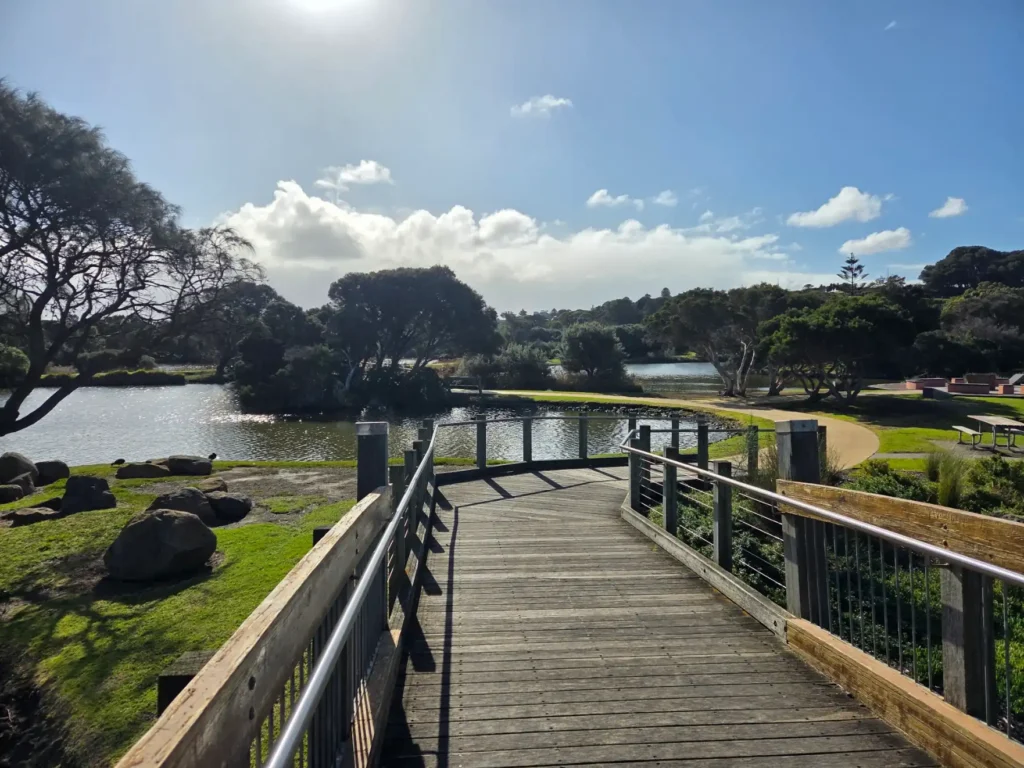
Lake Pertobe is one of Warrnambool’s most accessible and easy places for a walk. Located close to the town centre and the foreshore, it’s a convenient option if you want to get outside without needing to plan a trip or drive far.
A network of flat, well-maintained paths loops around the lake and surrounding wetlands. The walking is simple and relaxed, with no elevation or rough sections, making it suitable for all fitness levels. You can follow shorter loops or combine paths for a longer walk, depending on how much time you have.
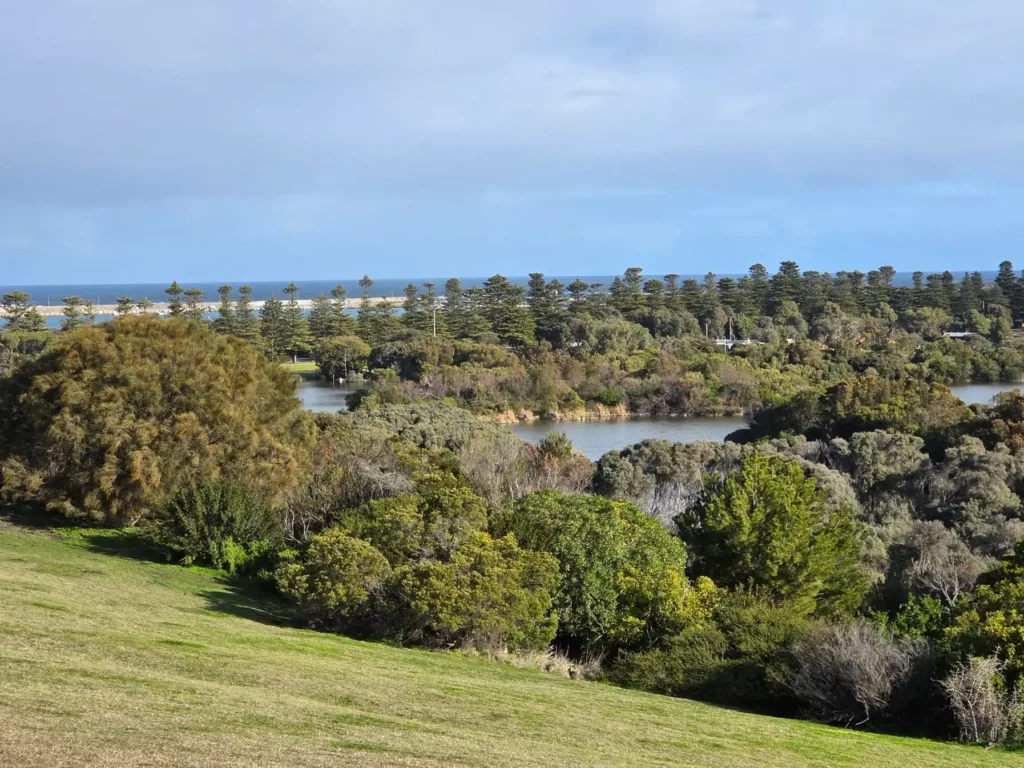
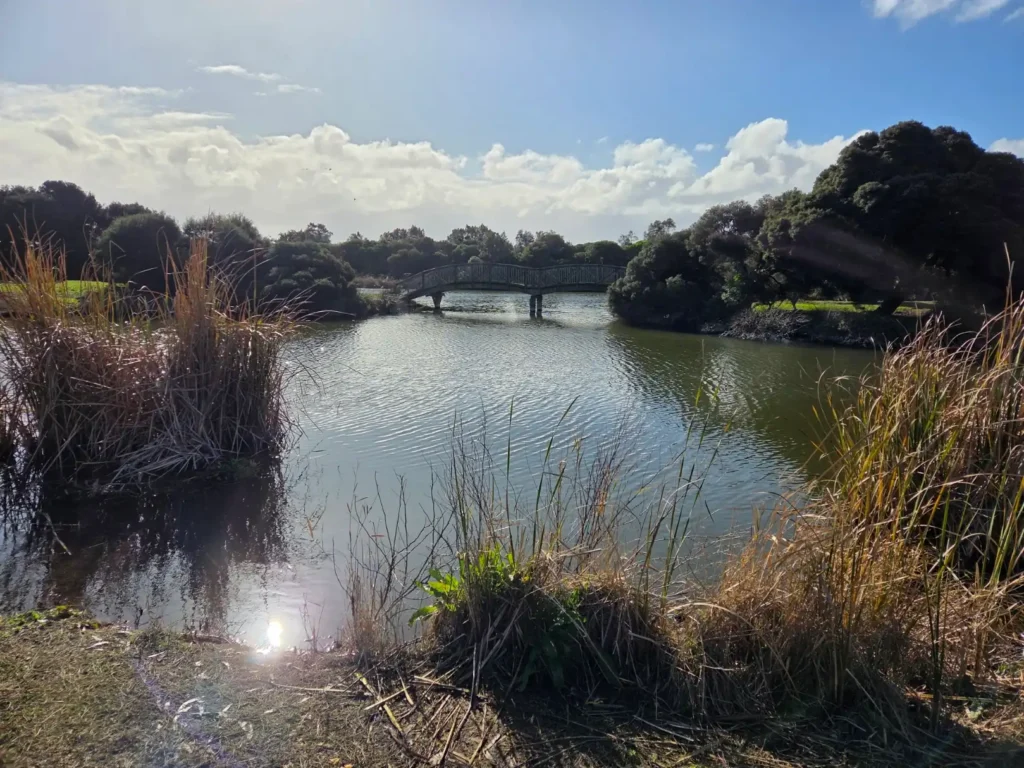
The area has a calm, open feel. Birdlife is common around the water and reeds, and the lake changes throughout the day as light and weather shift. It’s a good spot for a quiet walk in the morning or later in the day when things slow down.
Lake Pertobe works well as a repeat visit rather than a one-off attraction. If you’re staying in Warrnambool, it’s the kind of place you naturally come back to for a regular walk or to stretch your legs between other activities.
Belfast Coastal Reserve
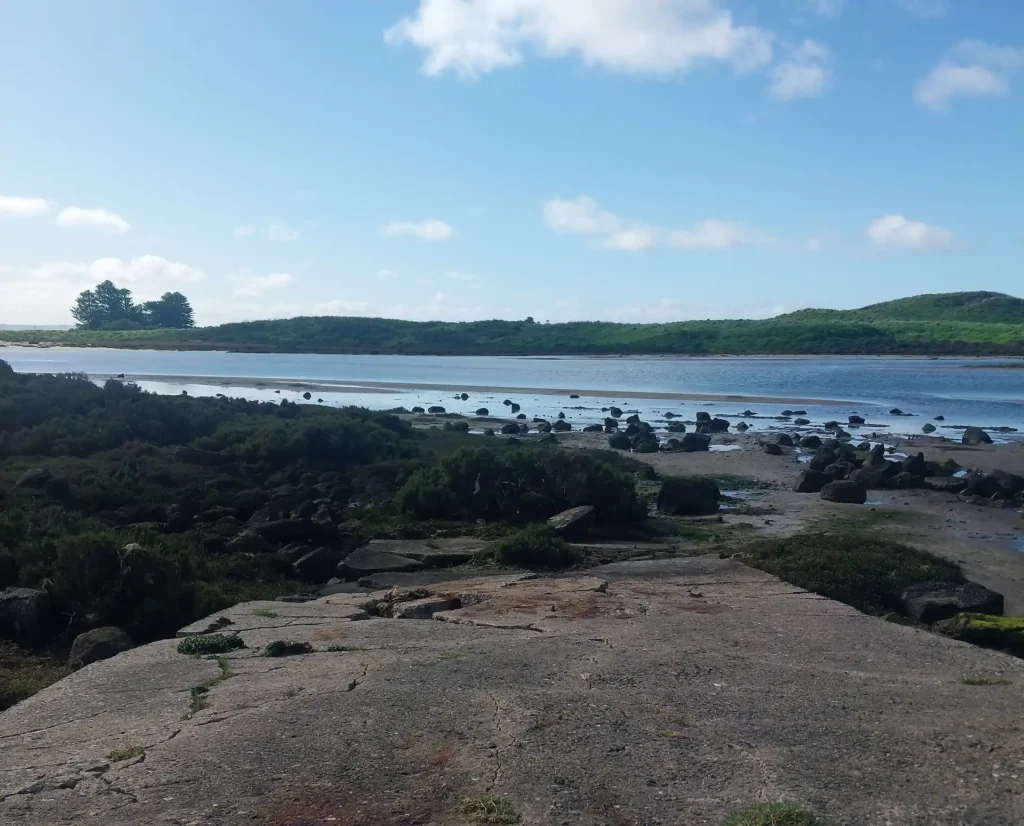
The Belfast Coastal Reserve offers some of the best coastal walking in the Warrnambool area, especially if you’re looking for something more open and less developed. Located just outside town, it feels noticeably quieter than the main foreshore walks.
Walking tracks follow the edge of the coastline, moving between low headlands, open grassland, and stretches of beach. The terrain is mostly straightforward, with gentle rises rather than steep climbs, and the paths are more natural than paved. This makes it better suited to people who enjoy longer walks and don’t mind uneven surfaces in places.
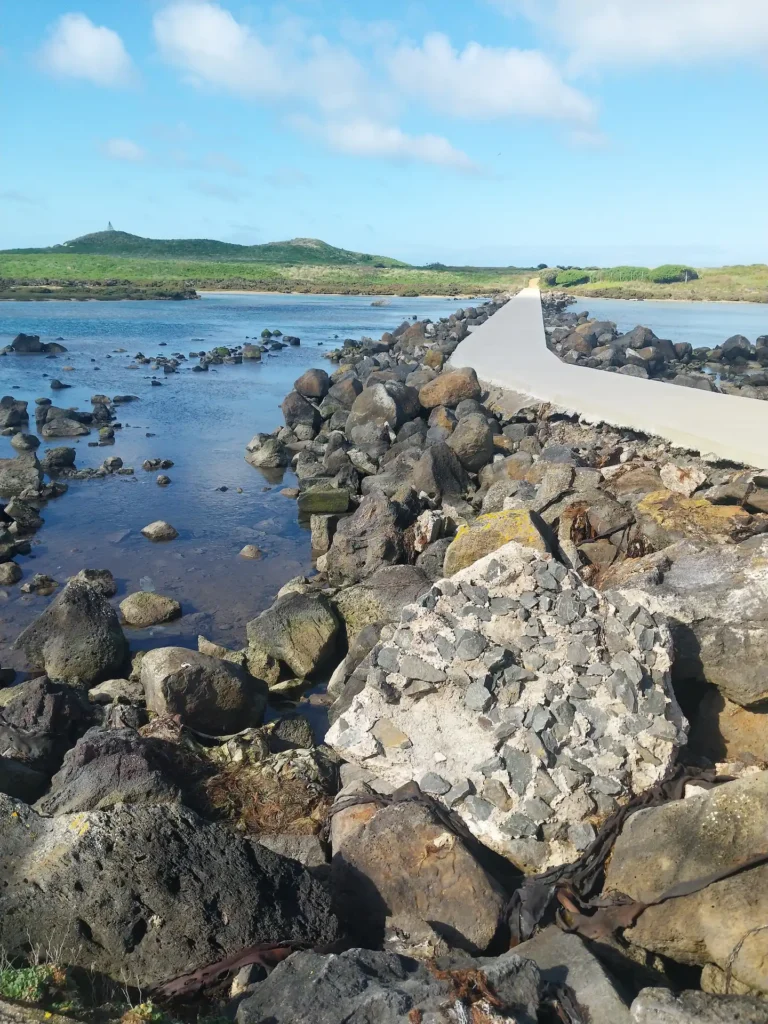
The reserve is known for its sense of space. Views extend across the ocean with very little built infrastructure in sight, and on clear days, the coastline feels wide and uninterrupted. There are fewer lookouts or formal stopping points, so the focus is more on walking through the landscape than stopping at set viewpoints.
Crowds are uncommon here, particularly outside peak holiday periods. If you want a coastal walk where you can move at your own pace without distractions, this area works well. It feels simple and largely untouched, offering a more natural coastal experience compared to the more developed areas closer to town.
Tower Hill Wildlife Reserve
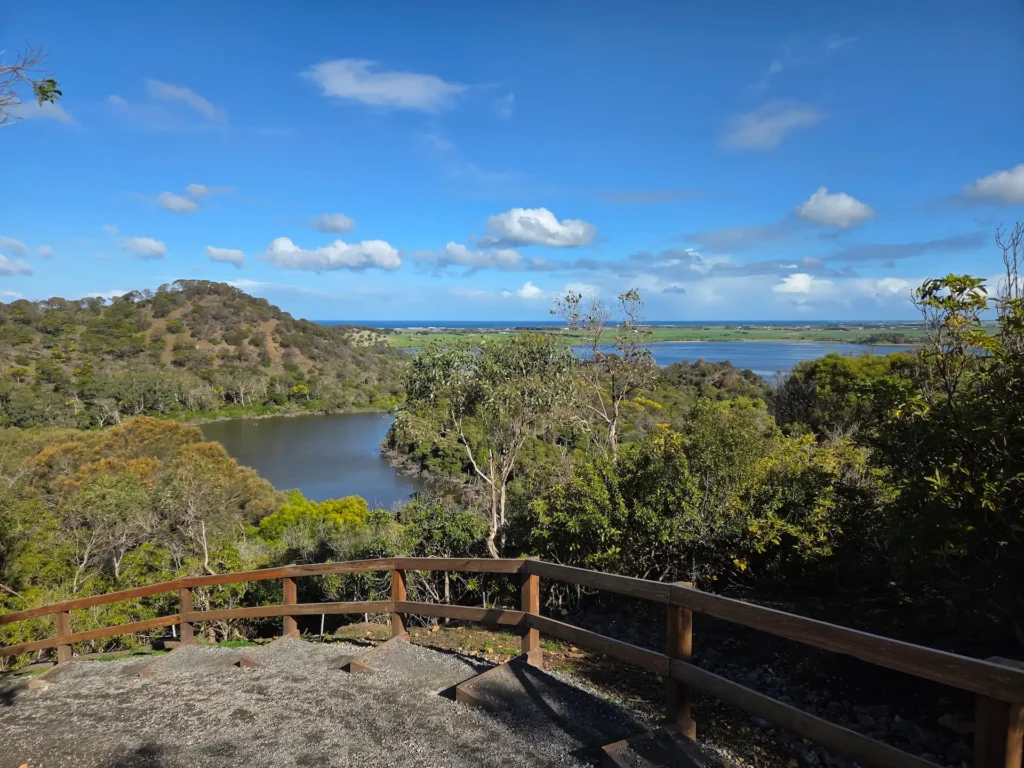
Just a short drive from Warrnambool, Tower Hill is one of the most distinctive natural areas in the region. It sits inland from the coast and feels very different to the surrounding landscape. The reserve is located inside the crater of an extinct volcano that erupted thousands of years ago, leaving behind a broad, bowl-shaped landscape.
The crater is now filled with lakes, grassland, and pockets of bushland. Much of the vegetation sits on raised areas within the crater, with water surrounding parts of the reserve. This creates a sense of separation from the outside world and makes the area feel quiet and self-contained.
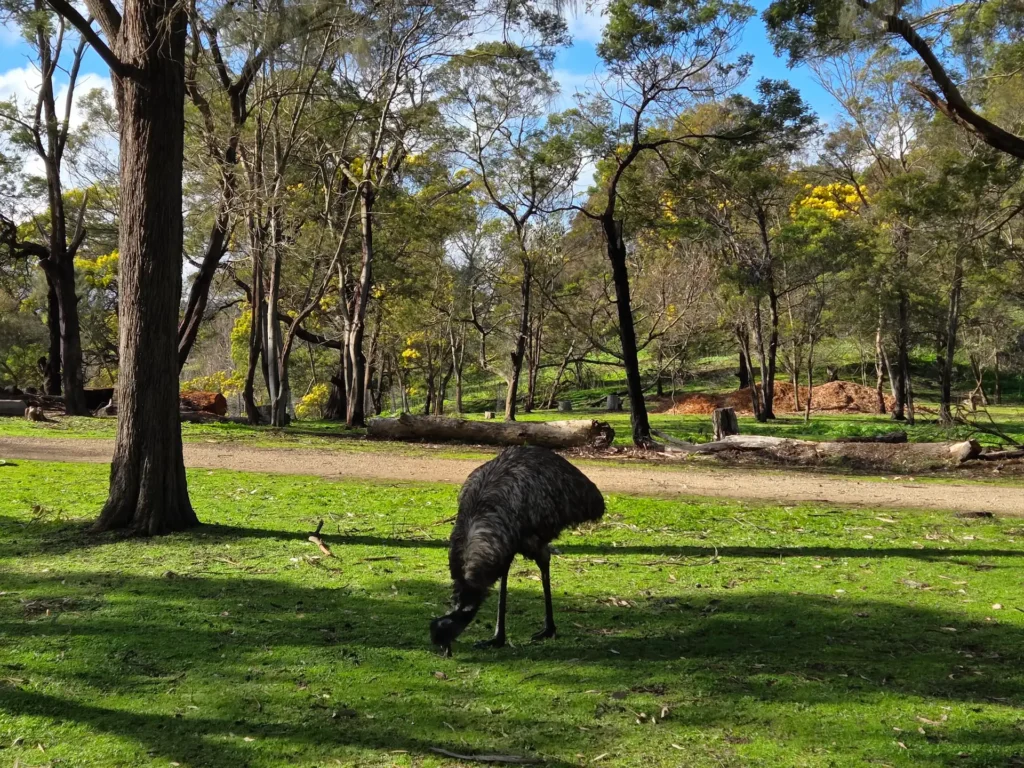
Tower Hill is well known for its wildlife. Kangaroos and emus are commonly seen moving through the open grassland, while koalas can often be spotted in the trees if you take your time. Birdlife is also abundant around the water and throughout the reserve, making it a good spot for slow walking and observation rather than rushing through.
There are multiple walking tracks spread across the reserve, ranging from short loops to longer walks that take you deeper into the crater. The trails are generally easy to follow and not demanding, allowing you to explore different parts of the landscape at your own pace. As you walk, views open up across the crater, giving a clear sense of the scale of the volcanic formation.
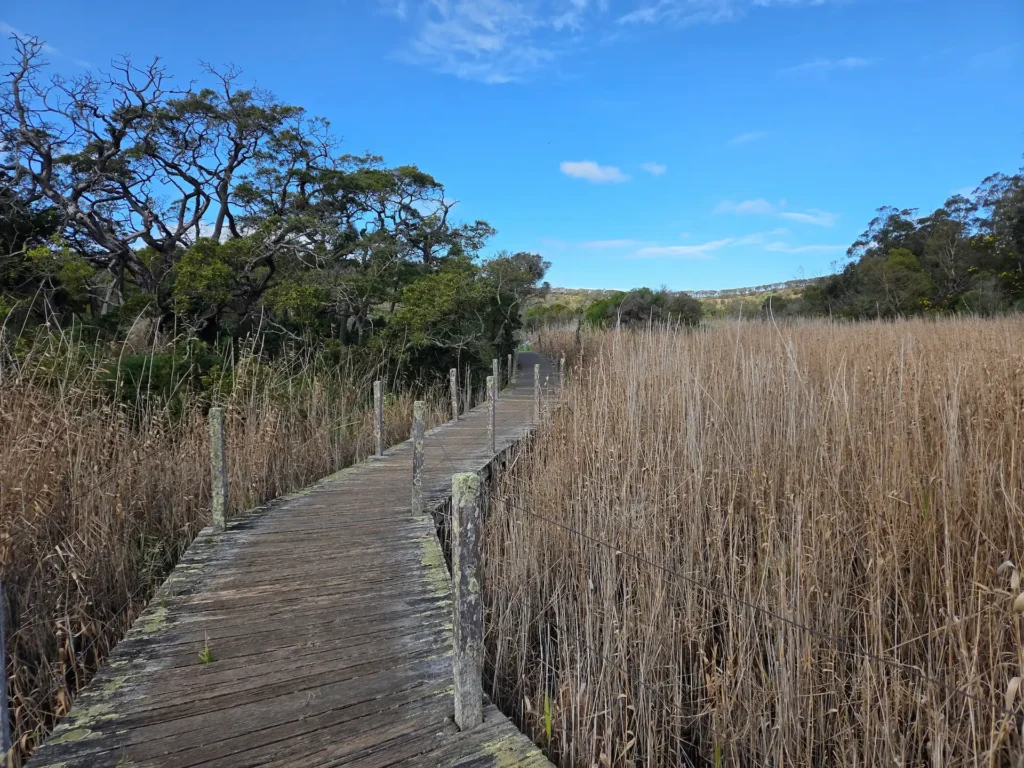
Tower Hill is a place where you can easily spend a few hours walking without feeling repetitive. The combination of open space, wildlife, and the unique volcanic setting makes it one of the most rewarding nature stops near Warrnambool, especially if you want something inland that contrasts with the coastal scenery.
Budj Bim: Volcanic Country and Inland Detours
Volcanic activity has shaped much of southwest Victoria, and Budj Bim is one of the clearest examples of that landscape. Driving inland from Warrnambool, the scenery changes quickly. Open farmland gives way to dark volcanic rock, low rises, crater lakes, and broad plains formed by ancient lava flows.
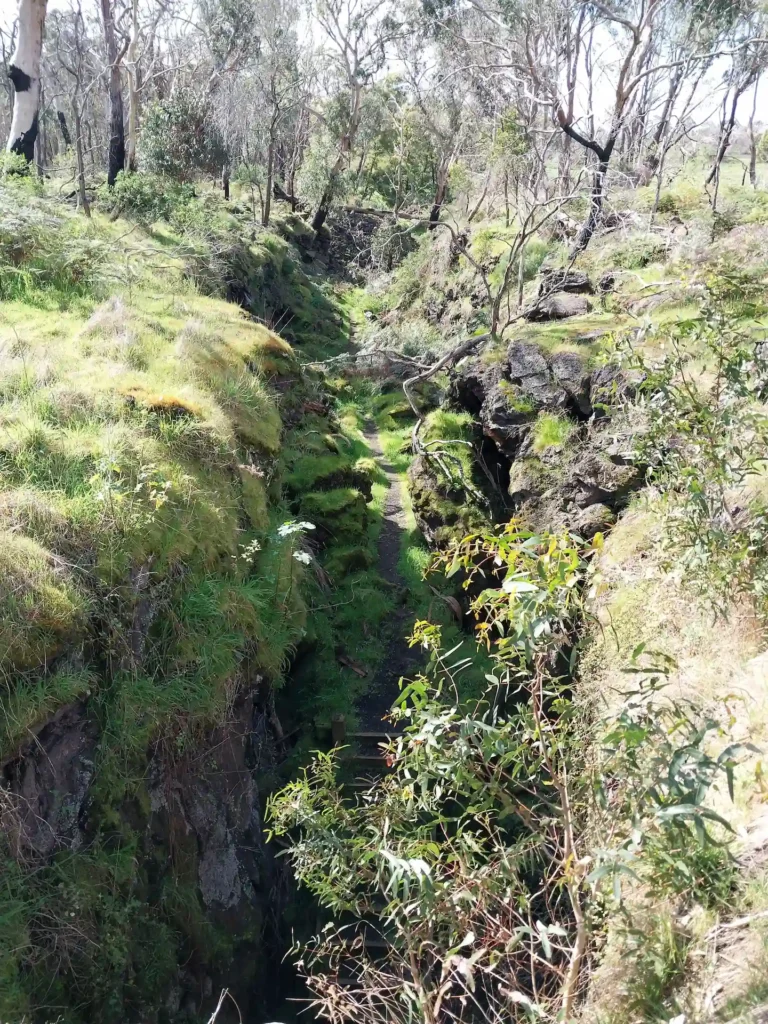
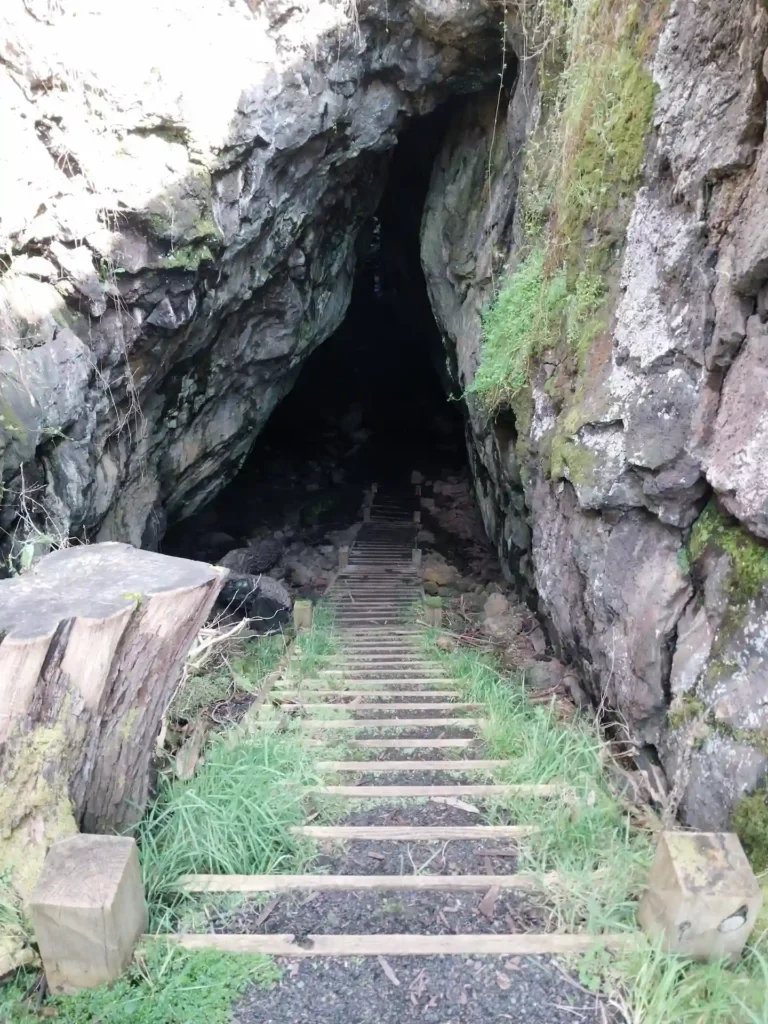
Budj Bim is recognised for both its volcanic geology and its deep cultural significance. The area forms part of an Indigenous cultural landscape shaped by volcanic activity and long-term land management. As a visitor, the sense of history is felt in the land itself rather than through built attractions.
Walking opportunities here are quieter and less developed than along the coast. Paths and tracks tend to be simple, with an emphasis on moving through the landscape rather than ticking off highlights. The terrain is mostly flat to gently undulating, but the ground can be uneven in places due to exposed rock and old lava formations.
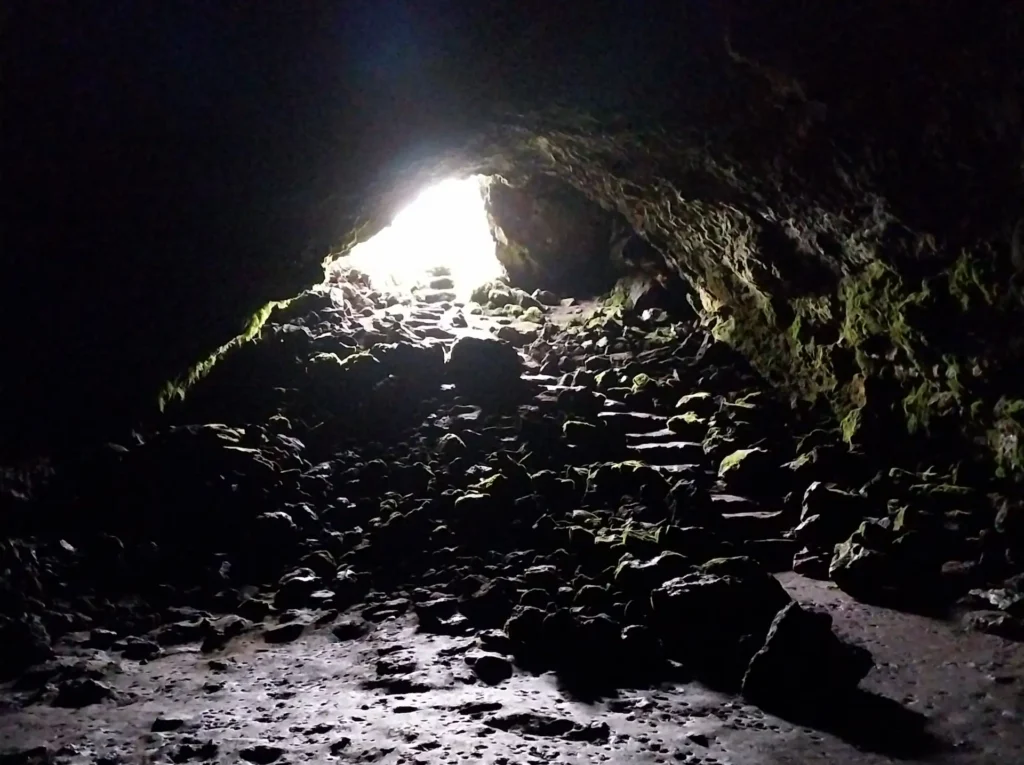
This is a good area if you enjoy slow exploration. There is less signage, fewer facilities, and very little noise. It suits travellers who are comfortable taking their time, stopping often, and letting the landscape set the pace rather than following a strict plan.
Budj Bim works best as an inland detour rather than a quick stop. It offers a different perspective on the region, one that contrasts strongly with the coastline and gives a clearer sense of how volcanic forces shaped the land long before modern settlements appeared.
The Twelve Apostles
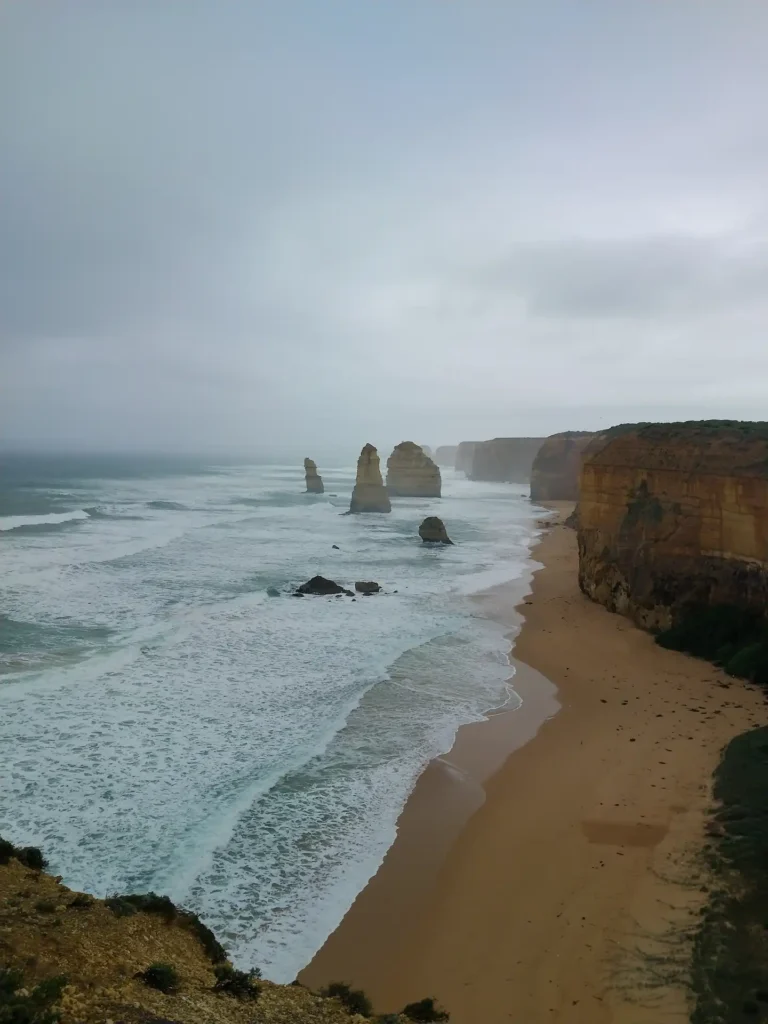
Warrnambool sits close to the western end of the Great Ocean Road, putting some of its most well-known scenery within easy reach.
The Twelve Apostles are less than an hour’s drive away from Warrnambool, making them a straightforward day trip rather than a major undertaking. With that said, you also pass through a really beautiful stretch of coastline on the way, which, in my opinion, is well worth a visit.
This western section of the Great Ocean Road is often considered one of the most impressive parts. The coastline becomes more rugged and dramatic, with cliffs dropping straight into the Southern Ocean and frequent pull-offs for short walks and viewpoints. The road itself is slower and more winding here, but the views make it worth taking your time.
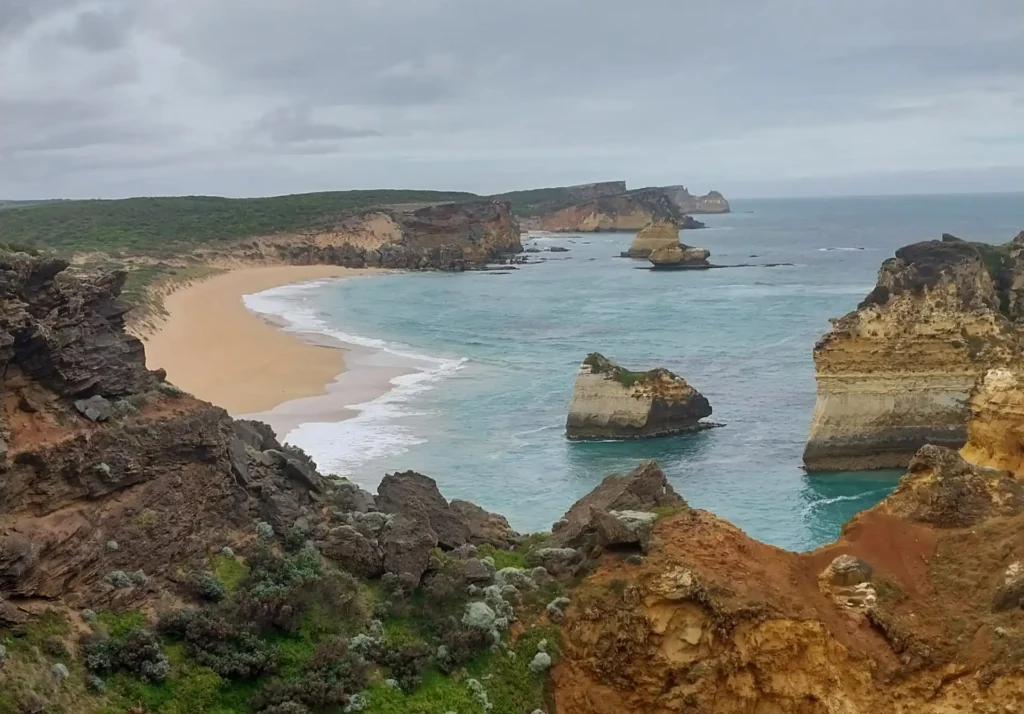
The Twelve Apostles area is well developed, with sealed paths, viewing platforms, and clear signage. It can be busy, especially around midday, but visiting early or later in the afternoon helps avoid the largest crowds. Even with the infrastructure, the scale of the coastline still comes through, particularly when you look along the cliffs rather than focusing only on the formations themselves.
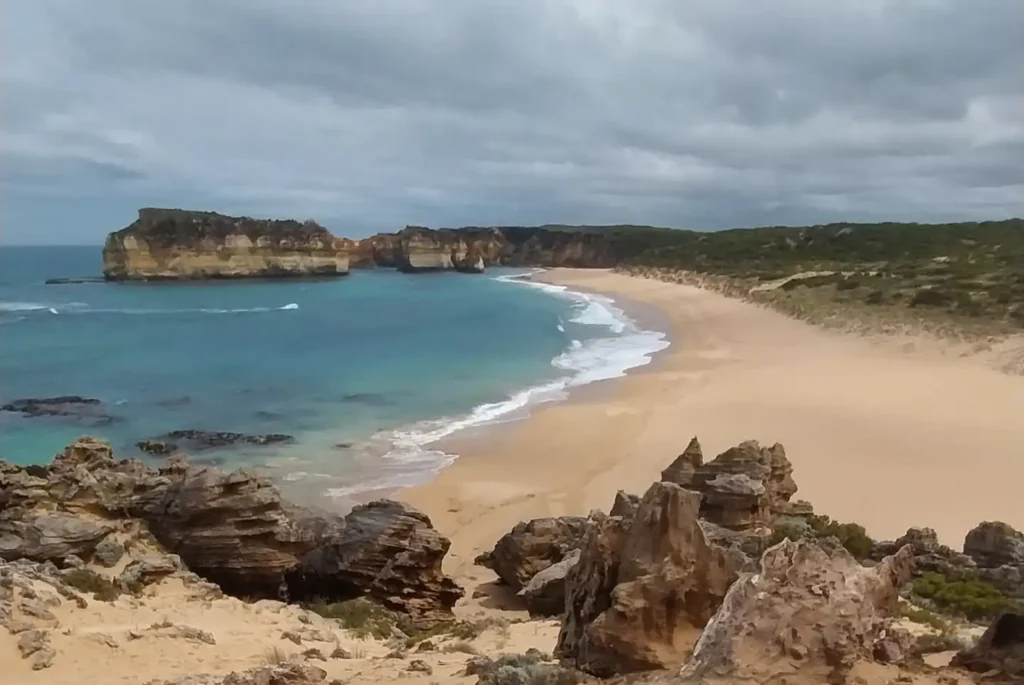
From Warrnambool, this stretch of coast works well as a half-day or full-day loop, allowing you to experience the iconic scenery without committing to the full length of the Great Ocean Road.
Southern Grampians
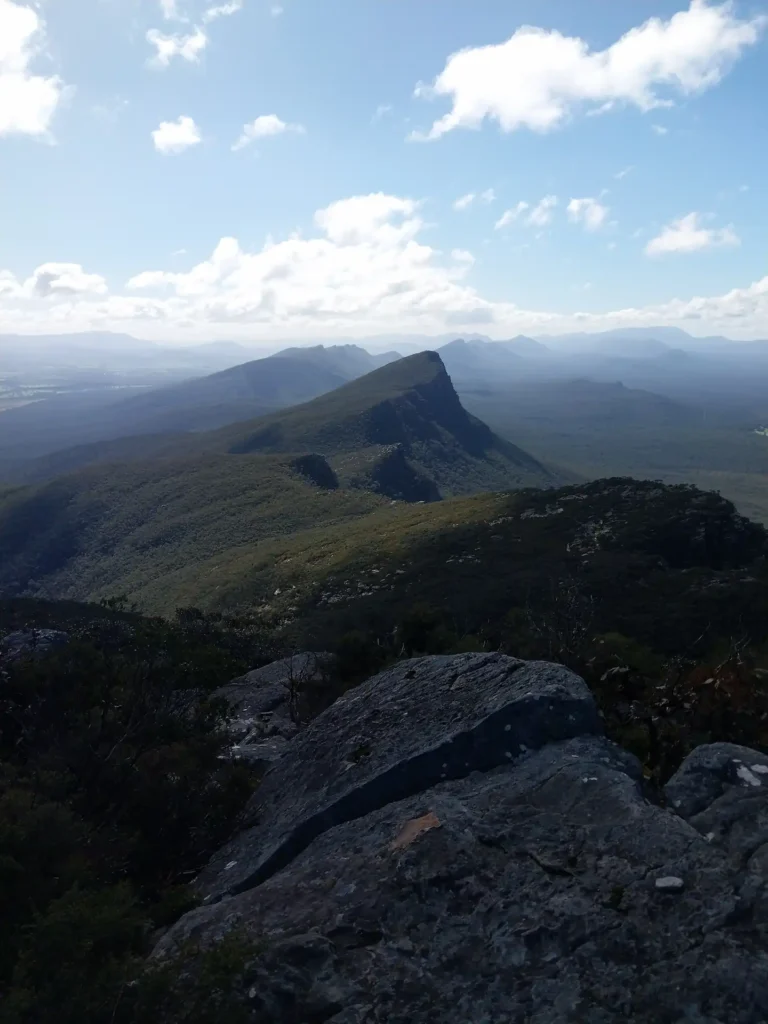
The southern section of the Grampians is around an hour and a half from Warrnambool, making it a realistic inland option for a day trip or short overnight stay. Compared to the coast, the landscape changes quickly, shifting to ranges, forested slopes, and rocky outcrops.
This part of the Grampians is generally quieter than the central areas around Halls Gap. Walking tracks range from short bush walks to longer hikes that climb gradually into the hills. Views often open out across plains and valleys rather than along the coastline, offering a different sense of scale and perspective.
The southern Grampians suit travellers who want space and variety without heavy crowds. Facilities are more limited than in the main tourist hubs, but that also means fewer people and a more relaxed pace. It pairs well with time spent around Warrnambool, giving you access to both coastal and inland landscapes without long travel days.
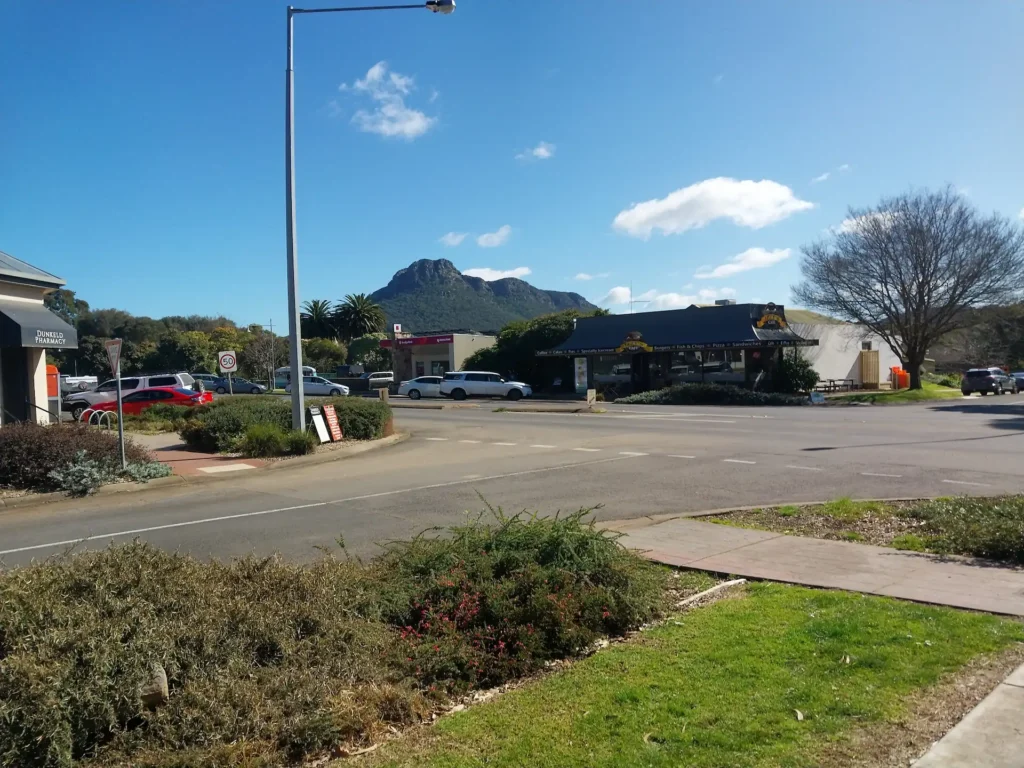
Together, the coast, volcanic country, and nearby ranges make Warrnambool a strong base for exploring southwest Victoria at a steady, flexible pace.
Final Thoughts
Warrnambool doesn’t try to impress.
It offers wind, space, and continuity between land and sea. It suits travellers who like grounded places and honest landscapes, and who are happy letting a destination unfold slowly.
Warrnambool works best when you don’t rush it.
It pairs well with places like the Grampians or inland volcanic country, rather than being treated as a quick photo stop. If your travel style values space, walking, and everyday rhythm over constant highlights, it earns its place.
If that sounds like you, Warrnambool is worth the stop.