Table of Contents
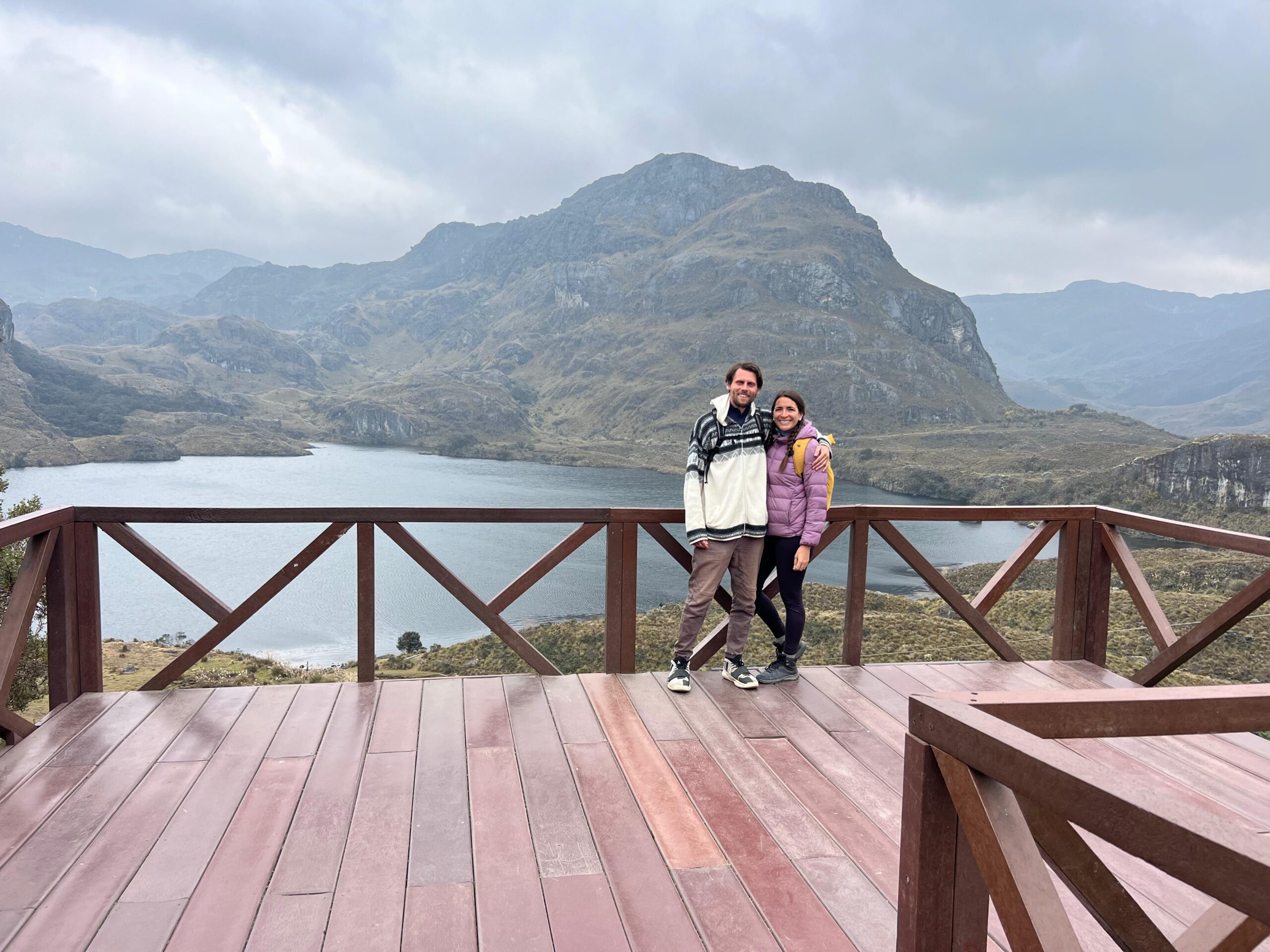
If you’re in Cuenca and looking for the best hiking spots around town, Cajas National Park is a must-see. Even if you’re not much of a hiker and prefer a casual stroll, I still recommend checking out this incredible park because it’s so unique.
It’s only about 45 minutes away, but it feels like you’ve stepped into another world entirely. Think misty mountains, glassy lakes, and an eerie, peaceful silence that kind of makes you want to just stop and stare for a while. Whether you’re into hiking, you need some solitude in nature, or you just want to escape the city for a bit, Cajas delivers.
Let’s look at how to get to Cajas National Park from Cuenca, how to get back from Cajas (which is a little more tricky), and everything inbetween.
How to Get to Cajas National Park from Cuenca
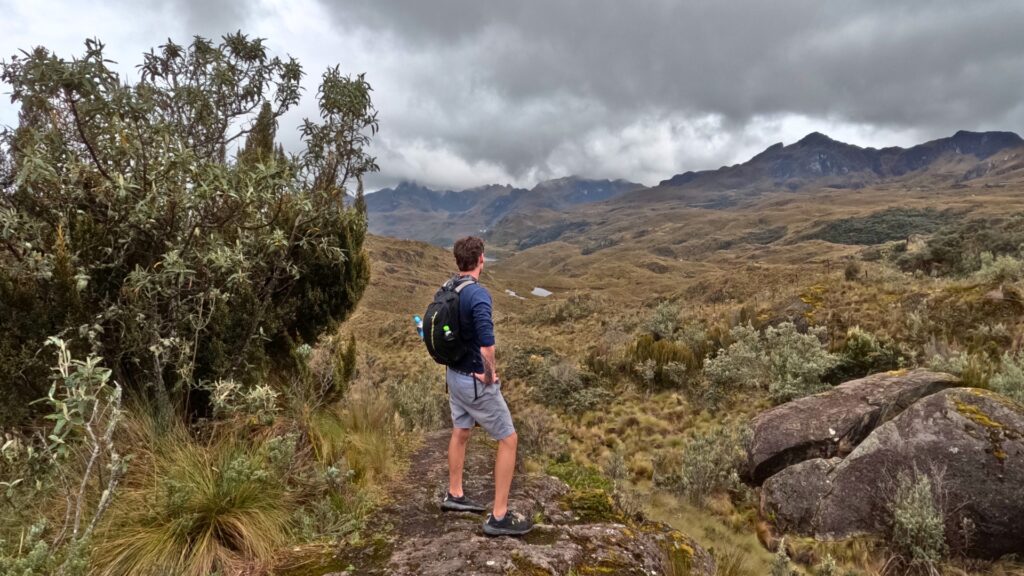
To get to Cajas National Park from Cuenca, you can hop on a bus from Terminal Terrestre (the main bus terminal in Cuenca). There is no dedicated service to Cajas National Park, but you can jump on any bus heading to Guayaquil as Cajas is on route.
Usually the offices in the terminal list the services the bus company operates, but if you’re a little confused when you enter the terminal, usually there are people working there who will ask you where you’re going and point you in the right direction.
It usually costs about $2–$3 for the ride to Cajas, and the ride usually takes about 30 minutes to an hour depending on traffic and how fast your driver is feeling that day. As you pass through, someone will call out “Cajas!”, so be prepared. They won’t wait…
Entry is completely free. You just have to sign in at the ranger station with your passport (or a copy/photo of it). That’s it. No hidden fees, no permits needed for day hikes. Just show up, register, and hit the trails.
The park is open from 8:00 AM to 4:30 PM every day. They do take the hours seriously, but you’ll want to be out of there before it gets dark anyway, especially if you’re on one of the longer trails. The fog can roll in fast, and things can get confusing.
Keep in mind that if you go this route, you should get back to the main road by 3pm because it can be tricky getting a ride back. I’ve had to hitchhike twice back from Cajas after waiting hours in the cold because all the Taxis were reserved and the occasional bus that passed by was full.
You can try your luck, but if you’d rather not deal with the bus, there are some companies that offer tours to Cajas National Park which from Cuenca which usually costs $50–$60 including transport, lunch, and a guide. Yes, it’s the more expensive option, but sometimes the peace of mind is priceless.
I’ll add a reputable tour company here if you would like to book:
What to Expect in the Park
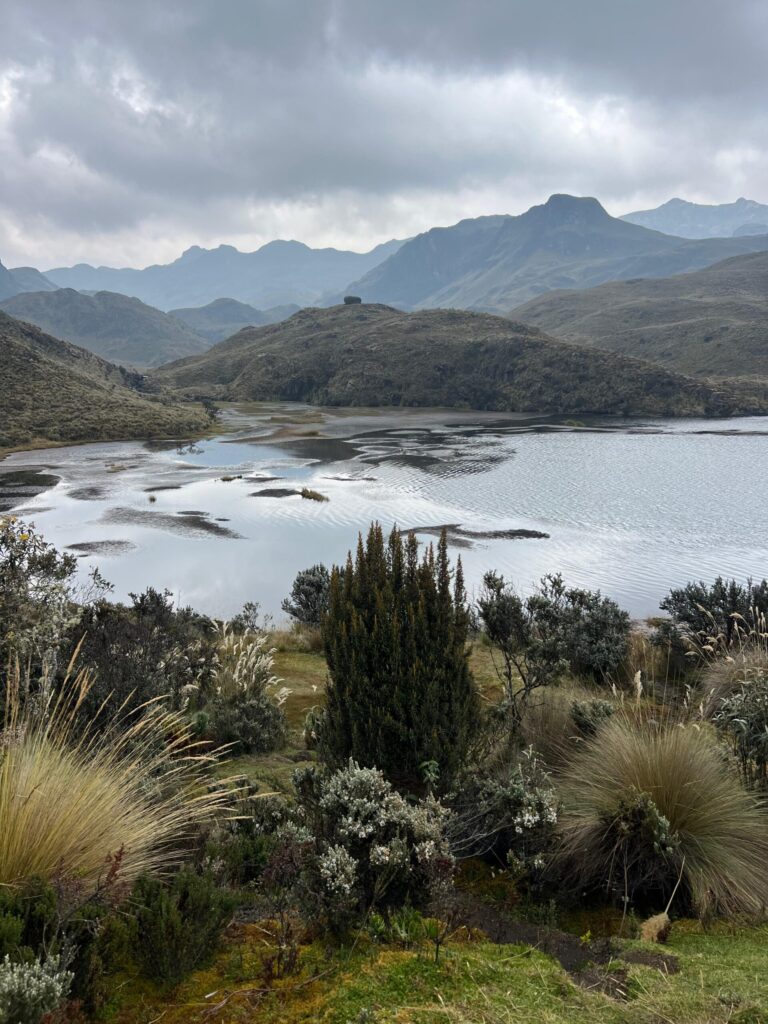
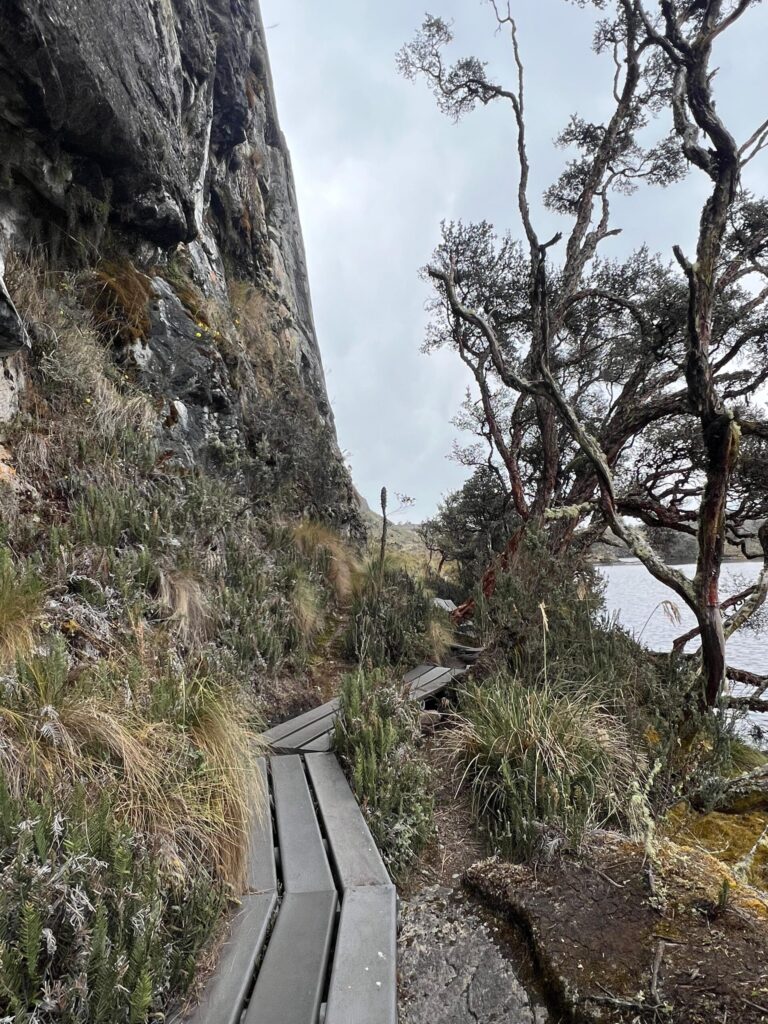
Cajas National Park is a geographical wonder with a distinct biome with diverse ecology that is only found in one other place in the world, in Colombia. Ecologically, Cajas National Park is considered a páramo ecosystem, which is unique to the high Andes of South America.
Páramos are alpine tundra ecosystems characterized by grasses, small shrubs, and cushion plants that play a crucial role in water regulation as they capture moisture from the mist that frequently blanket the park.
The park is home to diverse wildlife. You might spot wild llamas, deer, hummingbirds, condors, and if you’re lucky, elusive Andean fox that you can see from time to time. It’s also an important area for birdwatching, with numerous bird species adapted to the high-altitude environment.
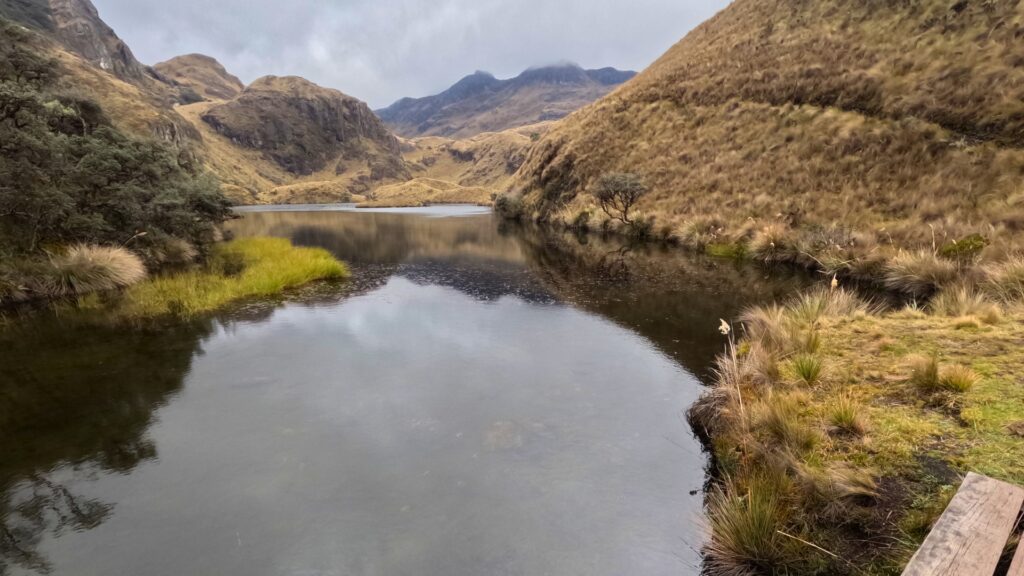
The park sits at an elevation ranging from about 3,100 to 4,450 meters (10,170 to 14,600 feet) above sea level. The terrain consists of rolling hills, rocky outcrops, and valleys carved by ancient glaciers. The glacial lakes, numbering over 200, add to the park’s scenic beauty and ecological diversity.
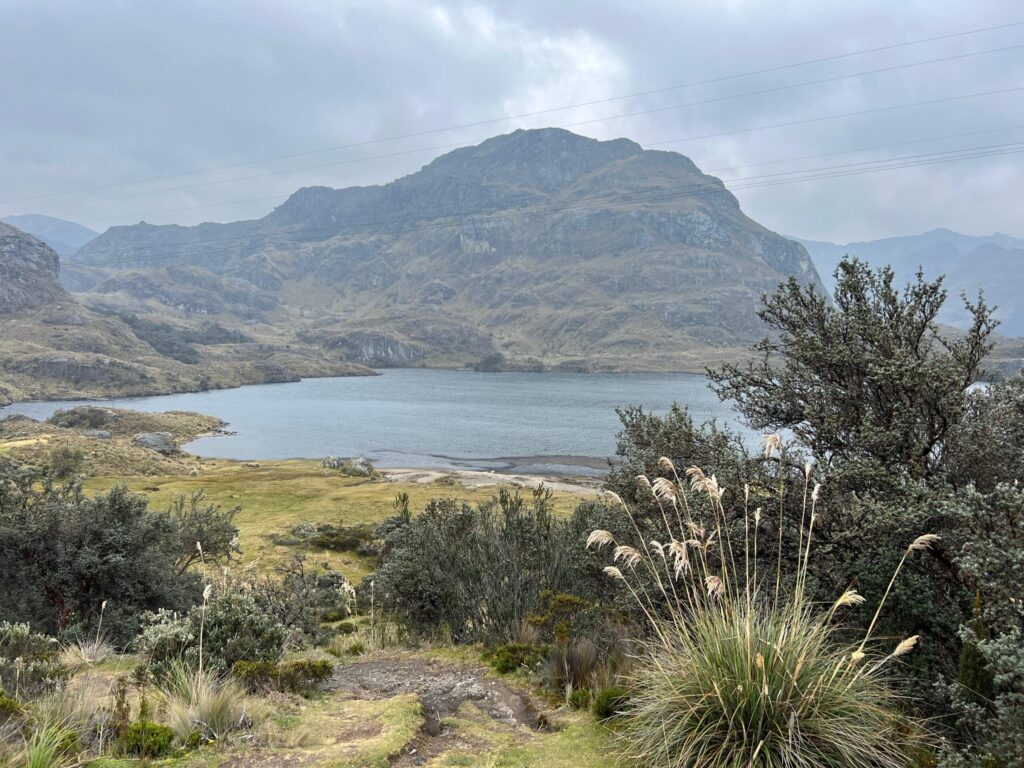
Cajas also has some history to it. It has always been a popular place to practice shamanic ceremonies, give offerings, and do pilgrimages. Today, Cajas is still a popular place for Huachuma (San Pedro) hikes and all sorts of ceremonies that you might catch a glimpse of
Honestly, Cajas is one of those places that just feels sacred. The quiet. The mountains. The fog moves through the trees. You don’t need to be a shaman to feel a special energy there, there’s a lightness like you truly feel as if you’re in the untamed rawness of nature.
If you’re walking one of the trails alone or just sitting by a lake for a bit, don’t be surprised if a few things click into place inside you. It’s that kind of place, and why I believe it has a strong presence even today with medicine communities and indigenous ceremonies.
The different trails of Cajas
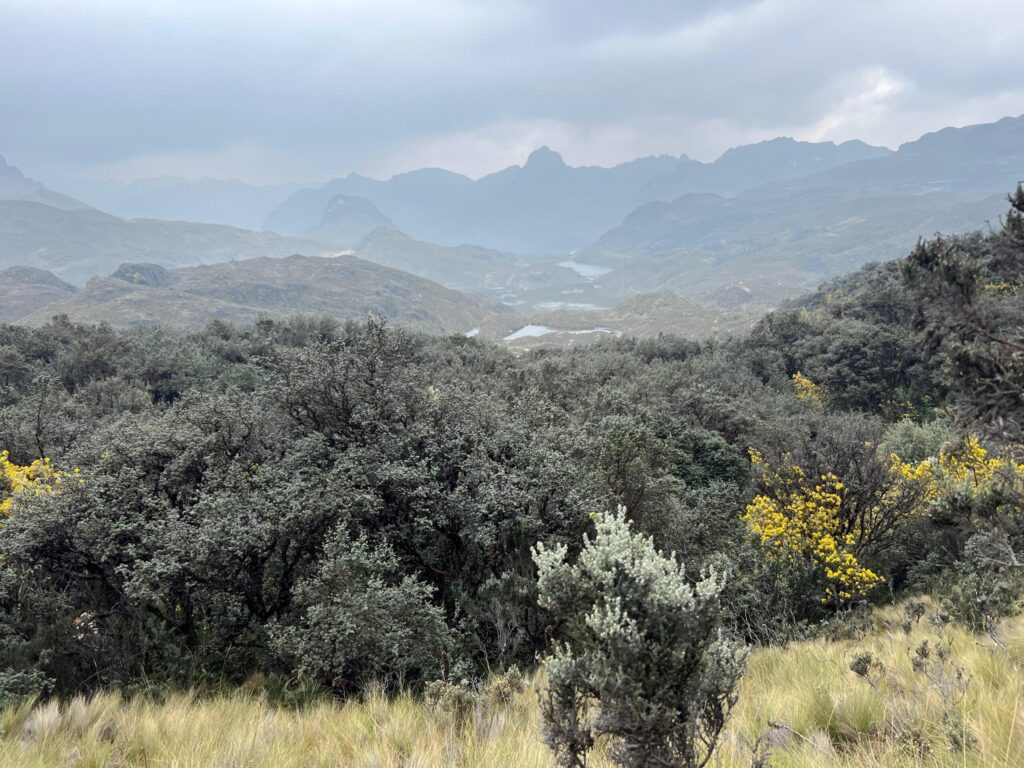
Cajas National Park has about 15 different trails, and each are color-coded. You can find a big map in the visitor center with each trail marked with different lengths, estimated times, and difficulties. In my experiences, the staff in the visitor center are always friendly and knowledgeable, so they can give you some good suggestions.
Although the trails are marked well on the map, most of them aren’t marked so well in reality. It’s very easy to walk off track and wonder where the hell you are half an hour later.
Most people who visit Cajas do a day trip, and therefore take one of the shorter trails, which range from 2-4 hours to do one of the smaller loops.
With that said, you can also do multiple day trecks, the park is huge. But beware that at 4200 meter, temperatures get freezing cold. Some seasoned hikers I met who camped in Cajas National Park said it got unbearably cold at night, and they couldn’t keep warm.
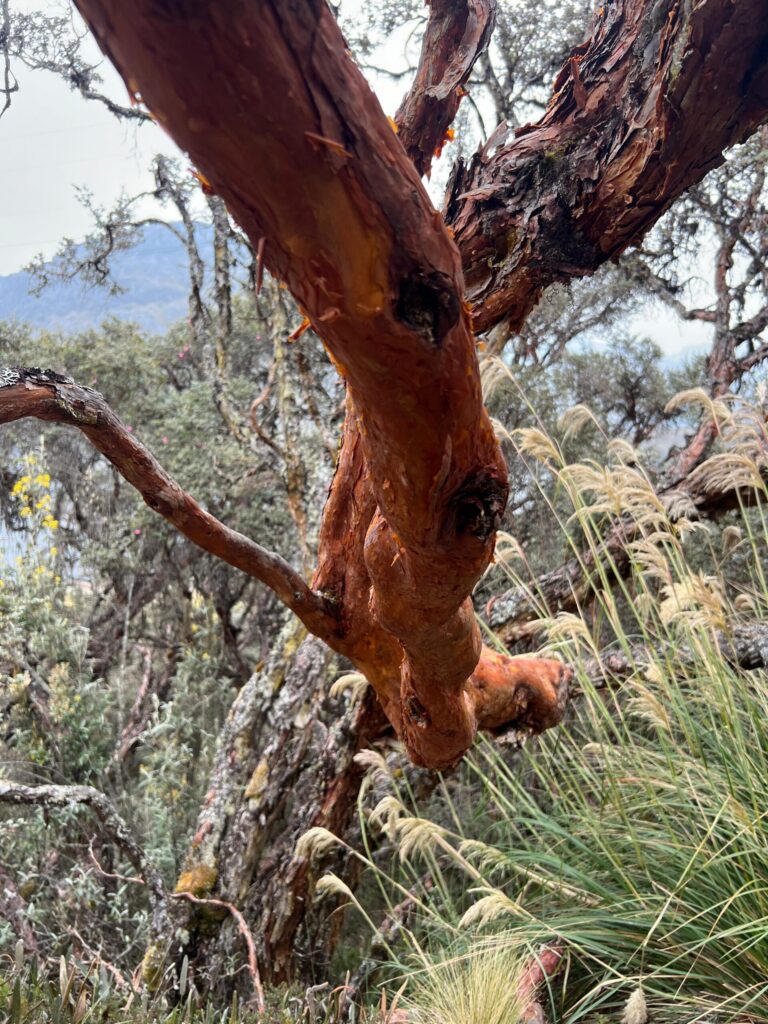
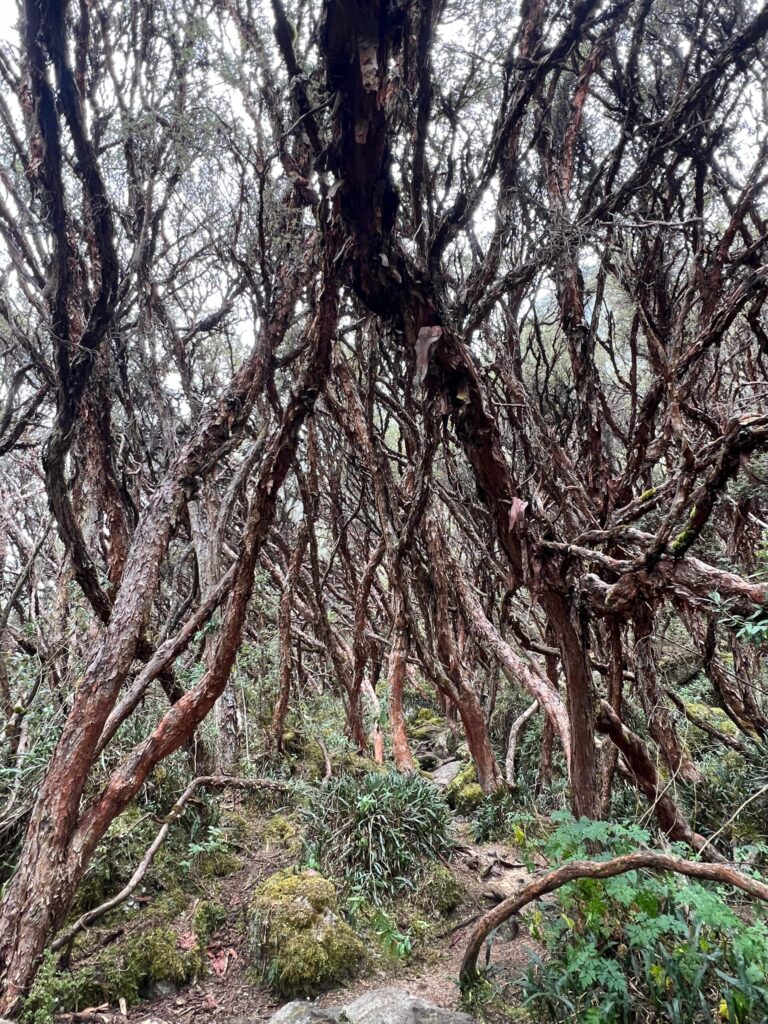
If you want something longer or wilder, there are plenty of trails, but bring a guide or let the rangers know your plan. Some trails are remote and easy to lose if the fog sets in. You can find more information about the different trails at Cajas National Park here. Otherwise, you can find information about the trails on the official Cajas Park website here.
What to Take With You
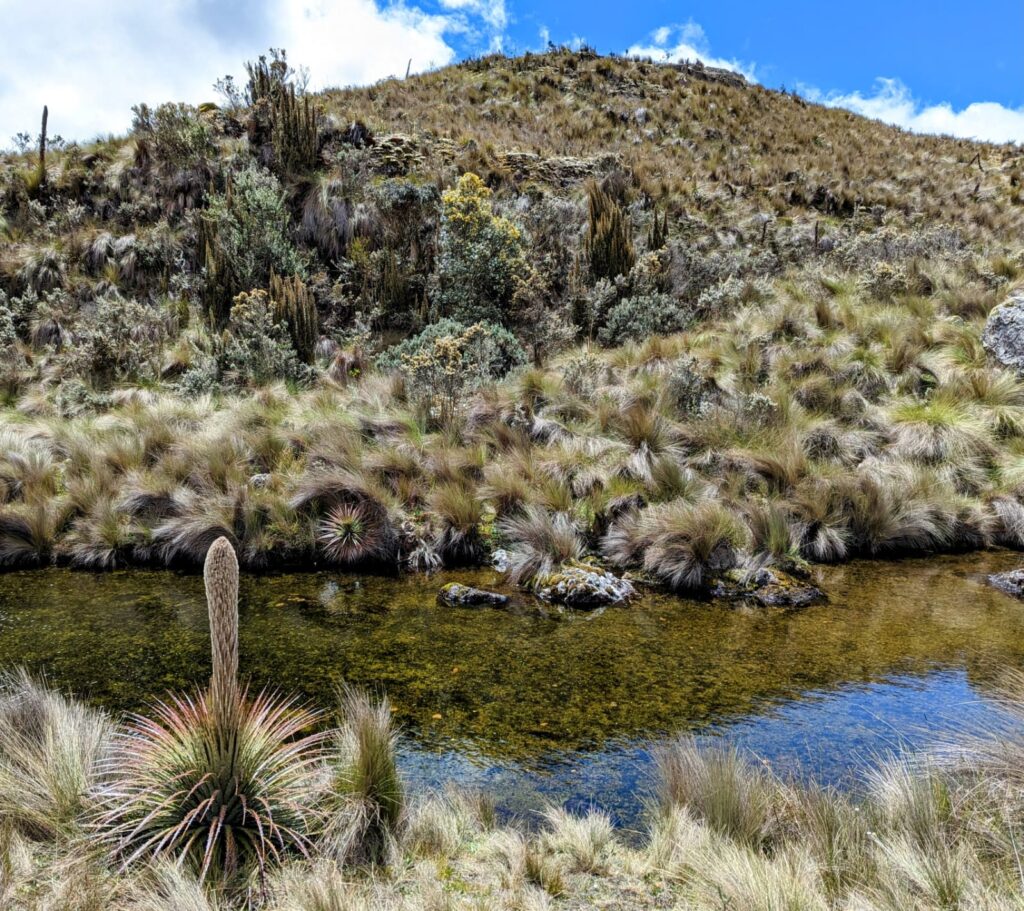
The weather at Cajas National Park changes constantly. One minute it’s sunny, the next you’re hiking through clouds, and the next you’re drenched in rain. Often you have scattered rains throughout the day as it’s generally a wet environment, so it’s best to bring a rain jacket or buy a cheap plastic poncho because if it rains, you certainly don’t have much cover here.
Another things to keep in mind is that Cajas National Park gets cold, sometimes freezing. Generally, the days aren’t too bad, however once the late afternoon chill creeps in, the temperature plummets.
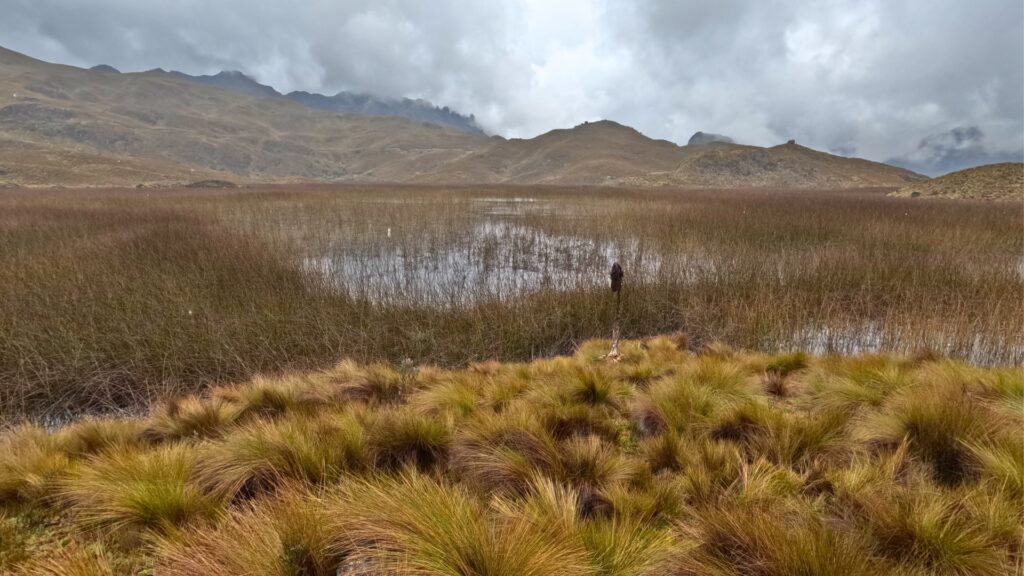
Some parts of the park are also quite muddy, or swampy. Having a solid pair of hiking shoes goes a long way in having an enjoyable time in Cajas when you’re not squelching around with wet socks. Due to the geography, you won’t see much shade in the park, besides some isolated forests you might pass through during some of the hikes.
So, here’s what I suggest you bring to Cajas National Park:
- Warm layers (you’ll want a fleece and rain jacket at minimum)
- Waterproof hiking boots (it’s muddy)
- Water & snacks
- Sunscreen and sunglasses (yes, even in the clouds)
- A hat or beanie
- Offline map or GPS (there’s no signal in the park)
How to Get to Cuenca From Cajas National Park
Getting back to Cuenca from Cajas National Park can be a bit of a challenge, especially if you’re heading back around closing time, where there tends to be a lack of taxis or collectivos that will take you. At Cajas, you don’t have reception, even with the best networks, so simply calling a taxi won’t work.
So, you have 3 options to return to Cuenca from Cajas National Park:
- Jump on a bus heading towards Cuenca: Generally, a bus will pass by every half hour or so. You can try waving one down and hoping that it will stop to pick you up. There is a little bus stop right across the entrance to Cajas, but in my experienced, buses don’t pull over.
- See if a local Taxi or Collectivo will take you: You will likely see some Taxis parked out front of the Cajas National Park entrance, however, they are usually waiting for someone or occupied. You can ask, of course, however, I didn’t have much luck getting one. If you manage to get a taxi, it should be around $15-$20 to get back to Cuenca.
- Hitchhike: Your next best bet is to try your hand at hitchhiking. The times I have been to Cajas, I have resorted to hitchhiking back to Cuenca, which wasn’t ideal, but it worked. So if you’re stuck in the cold and the situation’s looking grim, honestly, hitchhiking might be your best bet.
But for the best chances to catch a bus, leave Cajas early before the crowds.
Most of the crowds will have their own transportation, but it’s best to leave before the park closes, otherwise there’s nobody around, you have no way back and no reception, and you can feel a bit isolated. The park officially closes at 4, but it’s best to head back before 3:30 so that you can… actually get back.
Yes, buses are heading from Guayaquil to Cuenca that pass through occasionally, but despite trying to wave many of these buses down, they never stopped for me. I can’t say if they were full, it just wasn’t worth their effort, or you had something against picking up tall lanky Gringos, I had no luck.
Maybe you will have more luck.
I have been to Cajas twice, and both times I had to hitchhike back due to a lack of transportation. The first time I was with two other people from the hostel I was staying at, and waited for about an hour in the freezing cold weather (4 degrees), sticking my thumb out at every car that passed.
One lady eventually picked us up and brought us to Cuenca. She had travelled the world quite a lot too and had some hippy vibes going, but she was a lifesaver because we were losing hope.
The second time I returned to Cajas was in 2024 with my current partner. We got back to the main road by 4. We waited for about 30 minutes trying to wave down the occasional bus, but nada. We decided to give hitchhiking a go, and almost immediately after sticking my thumb out, a shining white knight in the form of a young Ecuadorian man pulled over in his expensive Mercedes.
Another great journey. Dropped us right off at our hotel, and we spent the whole time chatting about Ayahuasca. Turns out he is also an enthusiast, and I was in Cuenca that time specifically to visit some Curanderos I’m quite close with. So that was fun.
If you don’t want to have to deal with this stress, I recommend just paying a little more and doing a proper tour. If you need to get a taxi back to Cajas (if available), you probably won’t be saving a whole lot of money anyway.
I’m not trying to sell you here, but again… Being stranded in the middle of nowhere in the freezing cold with no reception isn’t as fun as it sounds, so maybe it’s worth saving the hastle.
Accommodation at Cajas National Park
If you’re looking for a place to stay in the area, this is it. A little more on the pricey end, but it’s an absolute gem of a spot, and just a 5 minute drive from the entrance.
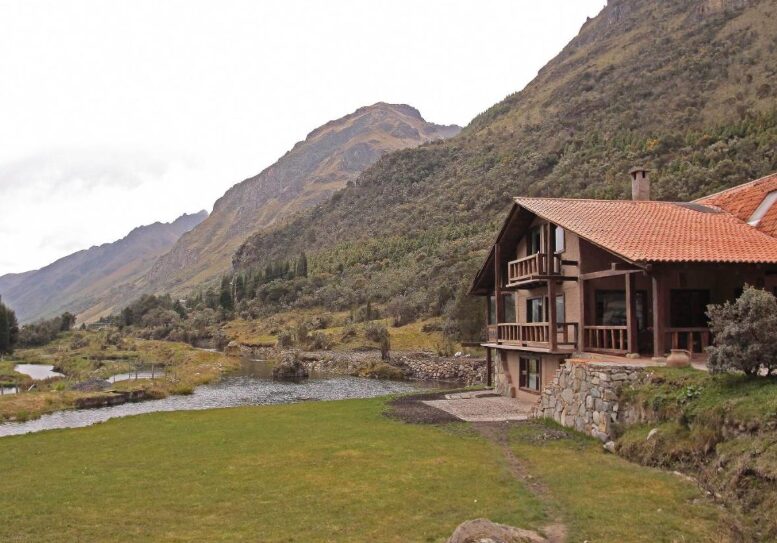
Hacienda Hostería Dos Chorreras
Located just 5 minutes from Cajas National Park and 35 minutes from Mariscal Sucre Airport, Hacienda Hostería Dos Chorreras is a scenic mountain retreat located 30 minutes from Cuenca’s historic center. Apart from being a beautiful lodge in a beautiful setting, guests can enjoy panoramic views, free Wi-Fi, and on-site dining at the restaurant and bar. The property features a garden and offers activities like fishing, canoeing, and horseback riding. Book here.