Table of Contents
If you’re backpacking through South America, you’ll likely pass through the Ecuador-Peru border at some point. There are 3 main border crossings between Peru and Ecuador. The coastal route is the most popular, and the Amazon route is the trickiest.
During my travels in South America, I’ve taken two of the 3 main corridors connecting Peru and Ecuador, passing through the Amazon side via the La Balda crossing last year with my partner. This crossing is a little off the beaten track and not very popular amongst tourists, but it’s the best route to take if you’re heading to Ecuador from Tarapoto by land, or vice versa.
The track isn’t laid out so well, and it requires quite a few transfers. So here I’m going to show you step by step how to go from Tarapoto to Vilcabamba and cross via the La Balsa Border. If you’re heading to Tarapoto from Vilcabamba, just do it in reverse.
Expect the journey to take a couple of days with an overnight stay or two on the way. You’re crossing quite a big stretch of land, and there are no direct buses from Tarapoto to Vilcabamba, but it’s a nice journey!
The La Balsa Crossing Between Peru and Ecuador
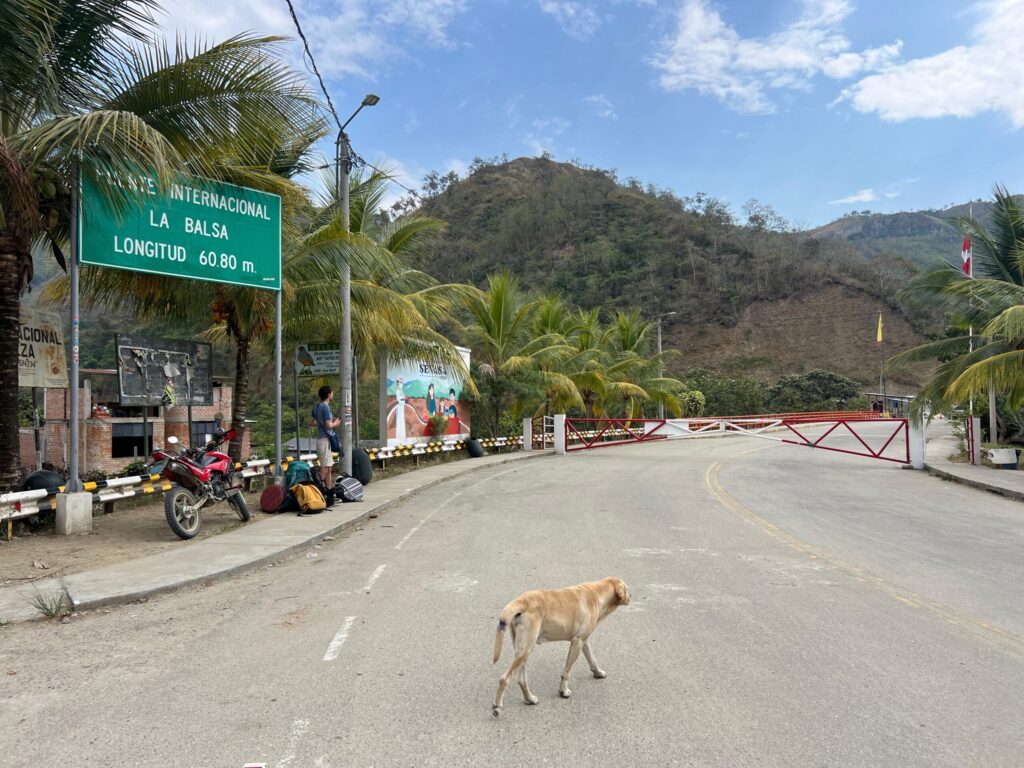
After spending three months in Peru, my partner and I made our way north toward Ecuador. We decided that going through the La Balsa crossing made the most sense because we wanted to go to Vilcabamba in Ecuador from Tarapoto, Peru, and it was the most direct route.
There are other ways to cross the Peru/Ecuador border, but that would have meant a lot of backtracking and 20-hour-long bus rides, which aren’t fun in the best of situations.
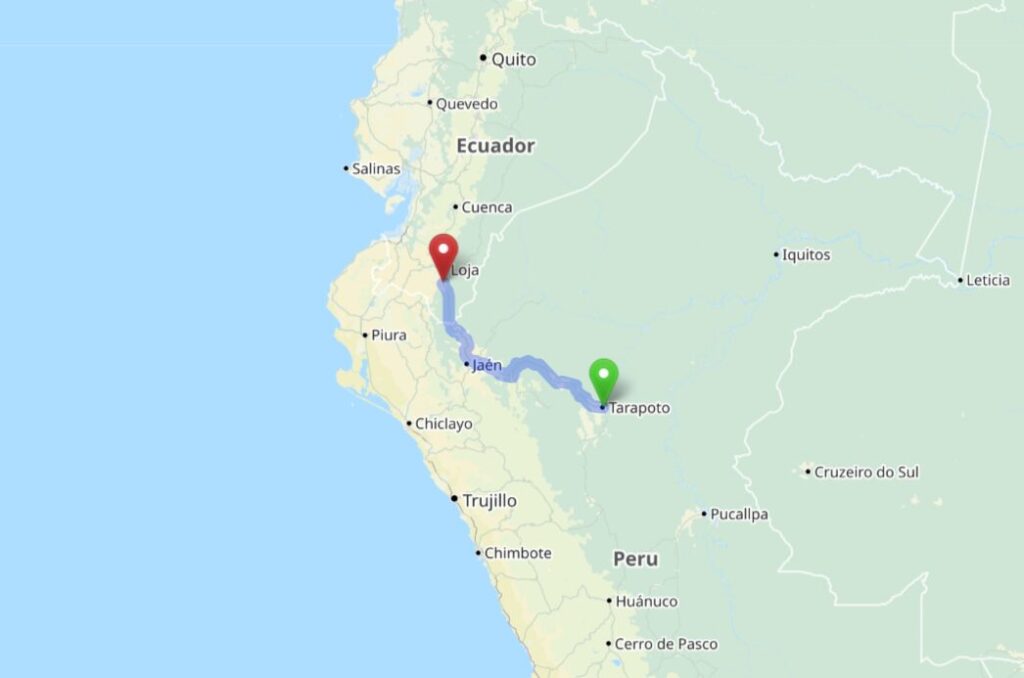
The La Balsa crossing is one of the quietest and safest crossings between Peru and Ecuador.
If you’re planning to take this remote jungle route, aim for the dry season (April to October) when roads are more reliable. During the rainy months (November through March), landslides and closures are common, so patience and flexibility are important.
So, here is the journey I took.
- Tarapoto to Chachapoyas
- Chachapoyas to Jaén
- Jaén to San Ignacio
- San Ignacio to Namballe
- Namballe to La Balsa crossing
- La Balsa crossing to Zumba
- Zumba to Vilcabamba
As you can see, this trip required 6 transfers, and each leg of the journey was anywhere between 20 minutes to 12 hours.
The journey from Tarapoto to Vilcabamba took 2 days in total, so it’s best to have some time on your hands. Yes, you can do it quicker, but it’s also important to rest during these sorts of journeys and see some of the places you’re passing through a little.
Tatapoto to Chachapoyas
Our journey started in Tarapoto, as after a week-long master plant dieta in the Amazon, it was time to head up North to Ecuador.
First thing you want to do is go to Terminal Terrestre Distrito de Morales in Tarapoto, which is the main bus station.
It’s just a short moto-taxi ride from the city center (about 5 soles) and is somewhat akin to the wild west. Rustic, dirty, and you might hear a gunshot or two (I’m joking, it’s perfectly safe). You will see a bunch of kiosks lining the space where you can buy a ticket to Chachapoyas.
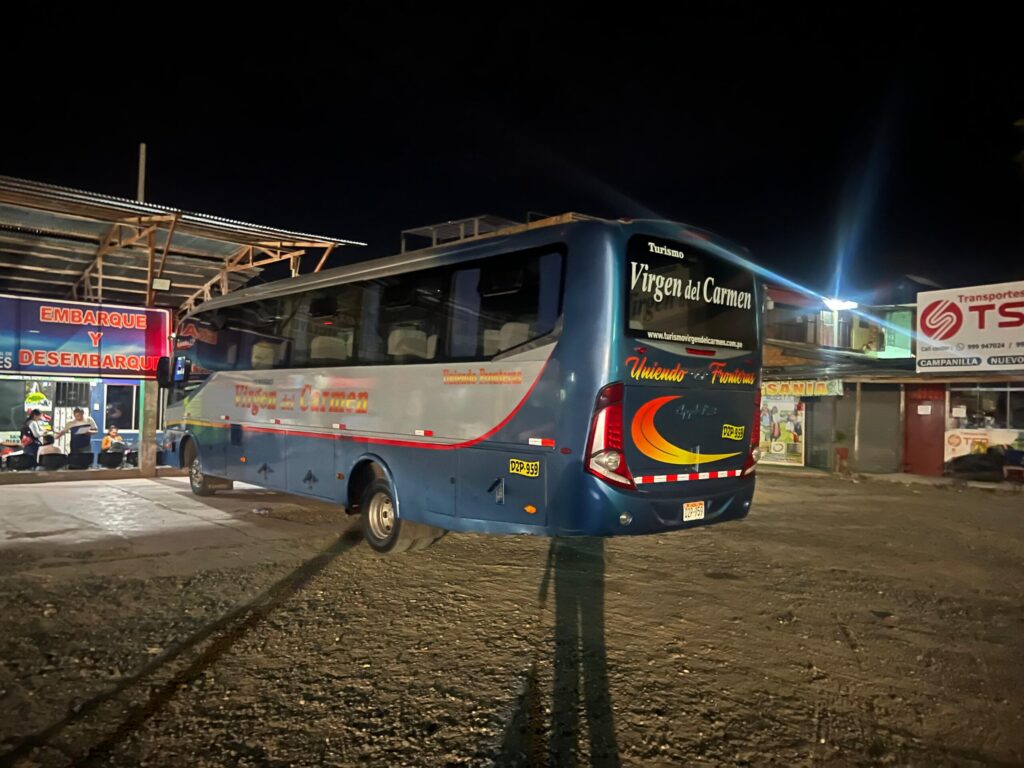
I traveled with Virgen del Carmen, which seemed to be the only service that connected Tarapoto and Chachapoyas.
Terminal Terrestre Distrito de Morales in Tarapoto only had 1 trip for this route a day, which departed at 8 PM and arrived around 5 AM.
Tickets cost 70 soles and must be purchased in person at the terminal. I arrived half an hour early to secure my seat and had plenty of time to spare.
Chachapoyas to Jaén
Now you’ve made it to the lovely white city of Chachapoyas. Not a touristic city, but it should be! I spent a few nights in Chachapoyas before moving to the next stop, Jaén, and I suggest you do too.
You can easily spend a couple of days here getting to know the city, eating some local food, and visiting the famous Revash Mausoleums & Leymebamba Museum, the Carajía Sarcophagi, and Quiocta Caves that Chachapoyas is best known for.
I stayed at Guiltor Host, which is a family-run homestay. The place is authentic, and the hosts are lovely! Otherwise, if you want to stay somewhere a little closer to the city, Miski Warak is the place to be.
Anyway, I digress.
When you’re ready to move on, you’ll want to go to Terminal Terreste de Chachapoyas, which is the same bus terminal you arrived at.
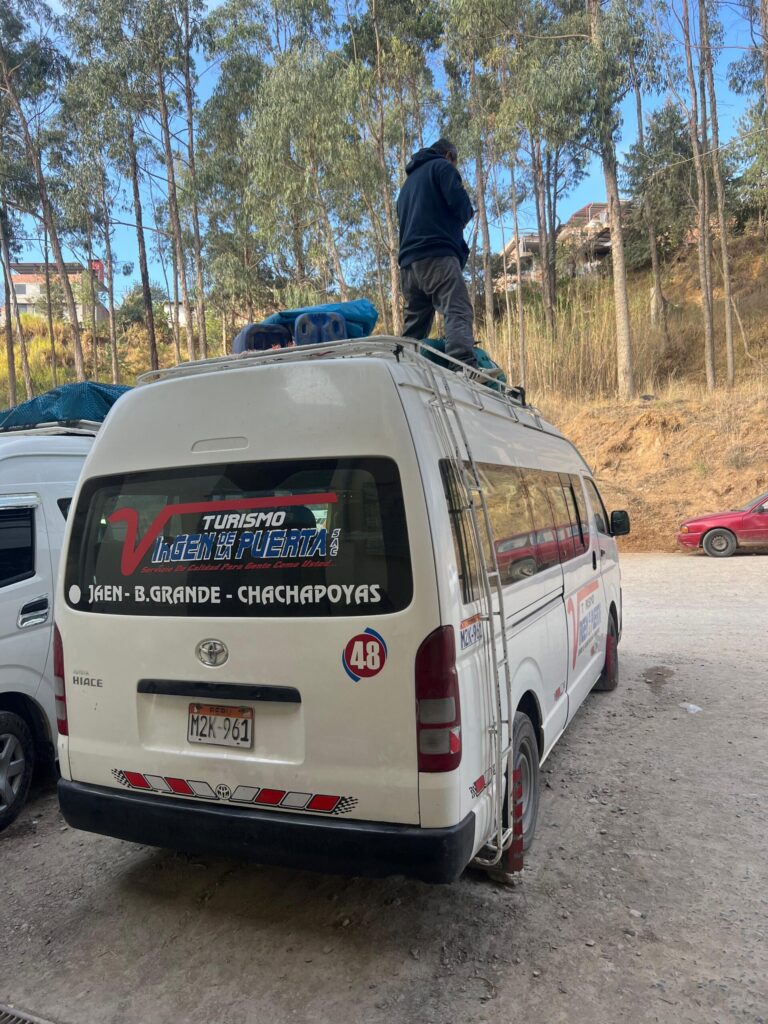
From there, take a collectivo (a shared van which is quite common in Latin America) to a city called Jaén.
Jaén is about 4 hours from Chachapoyas, and it will cost you about 25 soles. Collectivos leave Terminal Terrestre de Chachapoyas every few hours, but I suggest going early because you’re up for a bit of a trip.
Jaén to San Ignacio
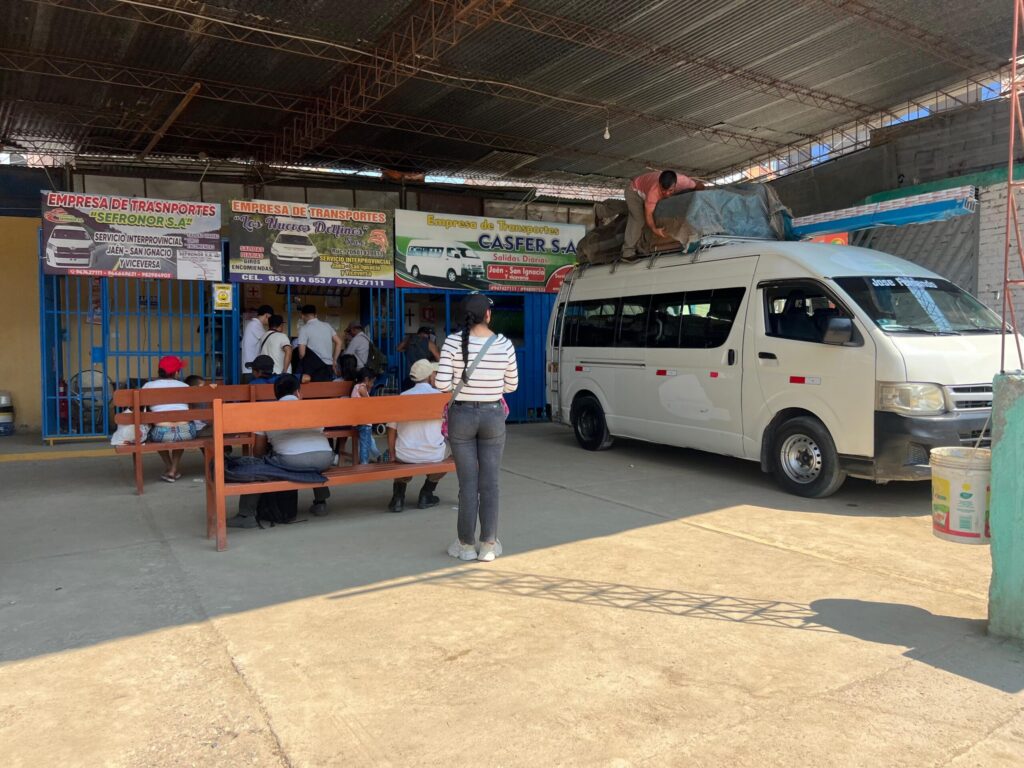
You’ll arrive at Terminal Terrestre in Jaén. There’s a little restaurant which surprisingly has some decent food, but apart from that, there’s not a whole lot happening.
From Jaén, I heard that there was a route that goes directly to Vilcabamba with Nambija company and departs at 1:00 PM from Jaén. If you can catch this bus, it’s the easy way to go. But I didn’t know this route existed at the time, so I had to take the long way, which we’ll continue on with here.
For the next transfer, you’ll need to get from Jaén to San Ignacio.
Keep in mind that the bus doesn’t leave from the main bus terminal where you get dropped off. You need to jump in a Tuk-tuk (don’t worry, they’ll be all over the place) and go to Paradero Jaén San Ignacio.
Paradero Jaén San Ignacio is where you will find collectivos from Jaén to San Ignacio. It’s about a 10-minute tuk-tuk ride from Terminal Jaén (main bus station) and cost me 5 soles to get there.
Once you walk inside, you’ll see a little jail-looking spot with shiny blue bars, and a bunch of collectivos parked out back. Go to the jail and ask the man inside for a bus to San Ignacio.
You’ll pay 20 soles for the trip. There is no set leaving time as they just wait until the collectivo fills up. I waited for about an hour until they were ready to go. Again, best to do it earlier because if you’re there in the afternoon and they don’t have enough people, you might have to stay in Jaén for the night.
San Ignacio to Namballe
You will arrive at Terminal Terrestre San Ignacio, which is the main bus station here. But again, this is not the same station where you’ll find a bus to Namballe.
You’ll have to transfer to another bus station in San Ignacio called Terminal de Norte, which doesn’t make a whole lot of sense considering that about 3 people live in this town.
Thankfully, the other bus station is just down the road.
You can get to Terminal de Norte in about 10 minutes on foot, or pay a tuk-tuk 3 soles to take you. This is the option I opted for, as it had already been a long day and I just wanted to move.
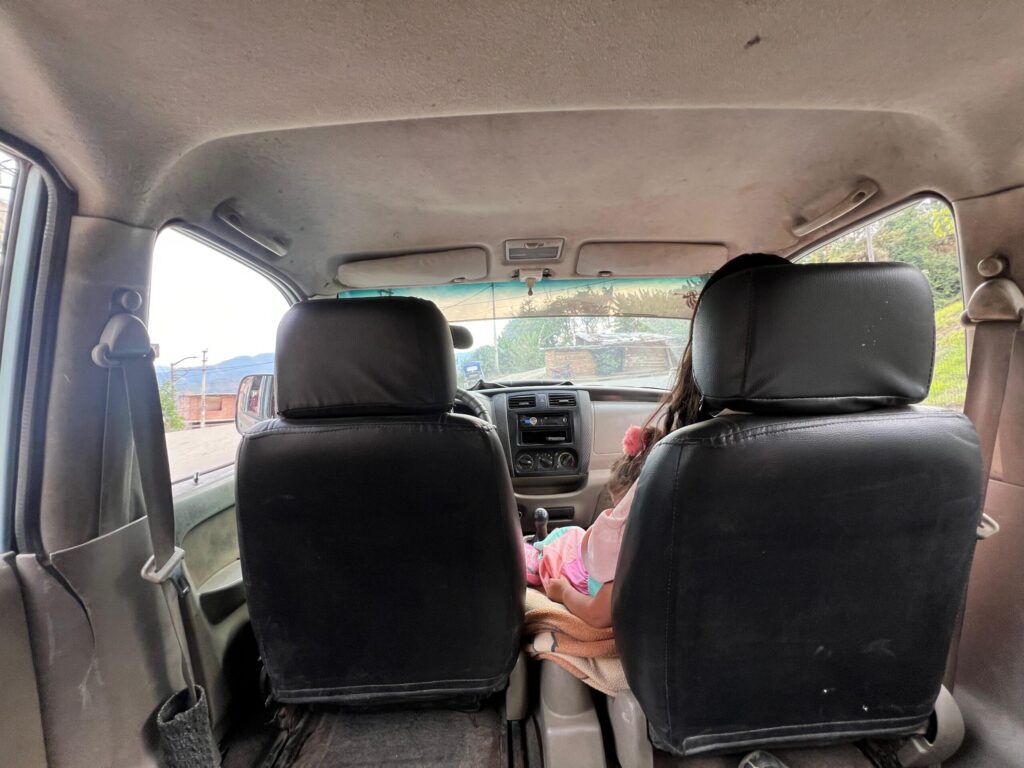
Upon arriving, at first they said they couldn’t take us because it was already around 3 pm and they wouldn’t get enough people to fill up the collectivo. So, I started researching where to stay in San Ignacio for the night, which is when they offered to take us for a higher price.
It may have been another couple of dollars, but it was worth it to get a ride. The trip would take about an hour to arrive in Namballe.
Namballe to La Balsa
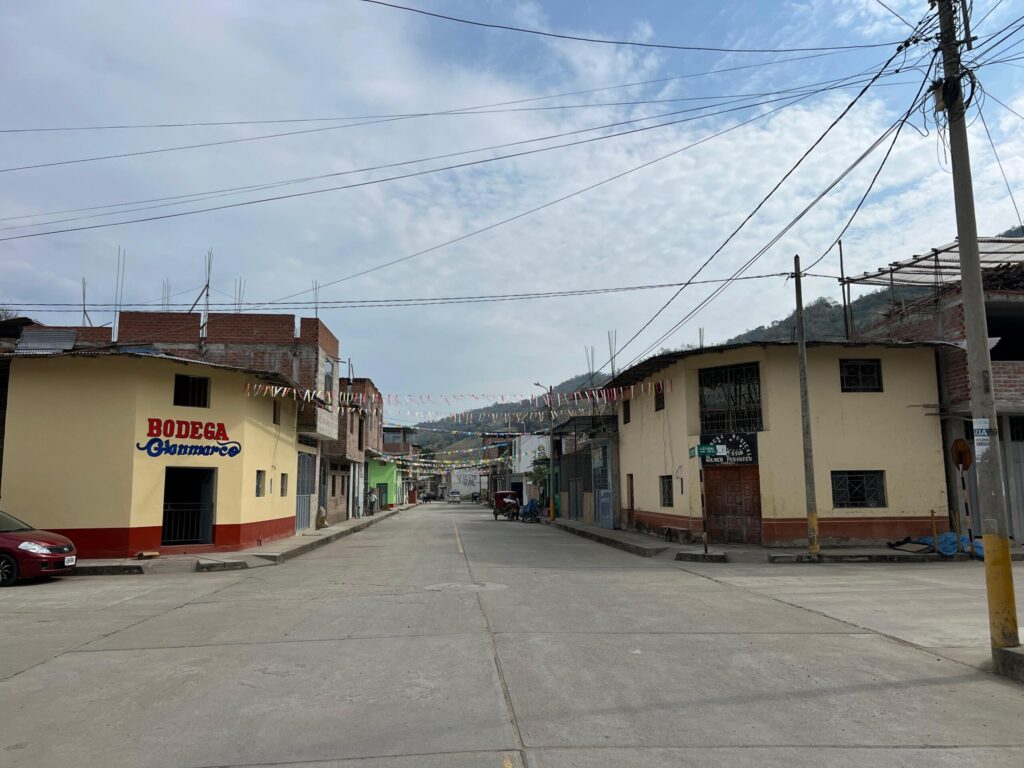
Namballe is a small town about 20 minutes from the Ecuadorian border. The collectivo from San Ignacio will drop you in the town, and you’ll need to get a tuk-tuk to the border from here.
By the time I arrived in Namballe, it was already evening, and the last transportation from the Ecuador border leaves at 5:30 pm. Not knowing if we would make it, we decided to spend the night in Namballe.
I was also tired of all the traveling by this point and just needed a good meal, a beer, and a good sleep.
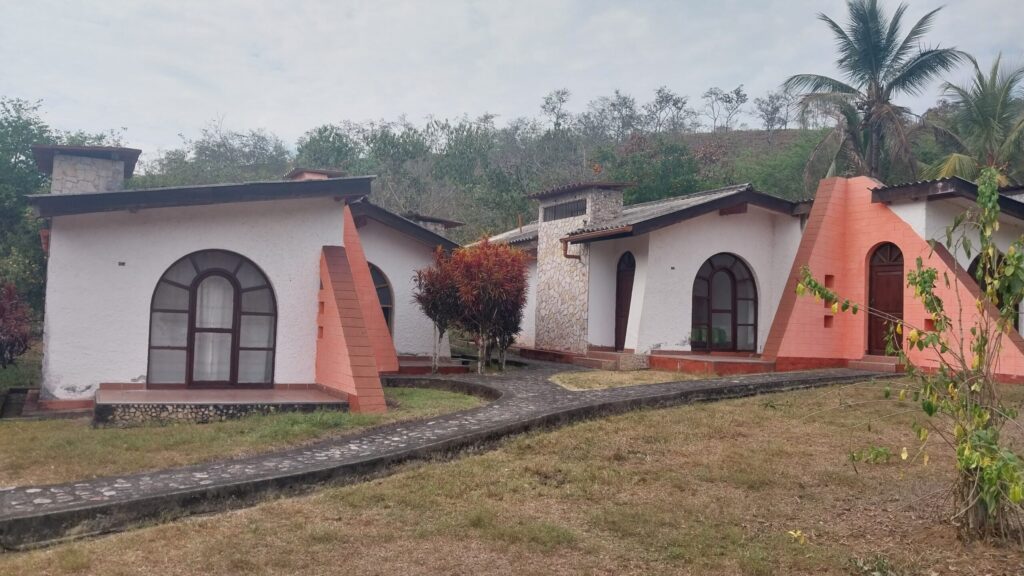
I stayed at Hotel Sol de la Frontera, which was a nice spot to stay, about halfway between Namballe and La Balsa. It cost us 65 soles for a room. The next morning, the hotel owner called us a tuk-tuk and we made our way to La Balsa crossing.
There will be tuk-tuks routinely passing along the road to La Balsa, so just wave one down or find a tuk-tuk parked in the city if you are going directly from Namballe to the La Balsa border crossing.
La Balsa Border Crossing Between Ecuador and Peru
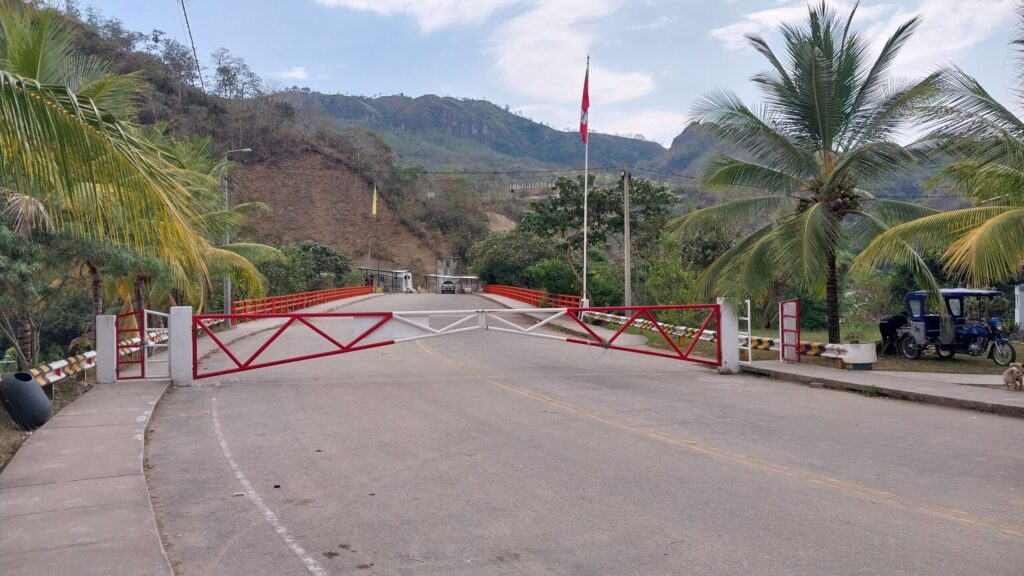
It will take around 20 minutes in a tuk-tuk to get to La Balsa crossing from Namballe.
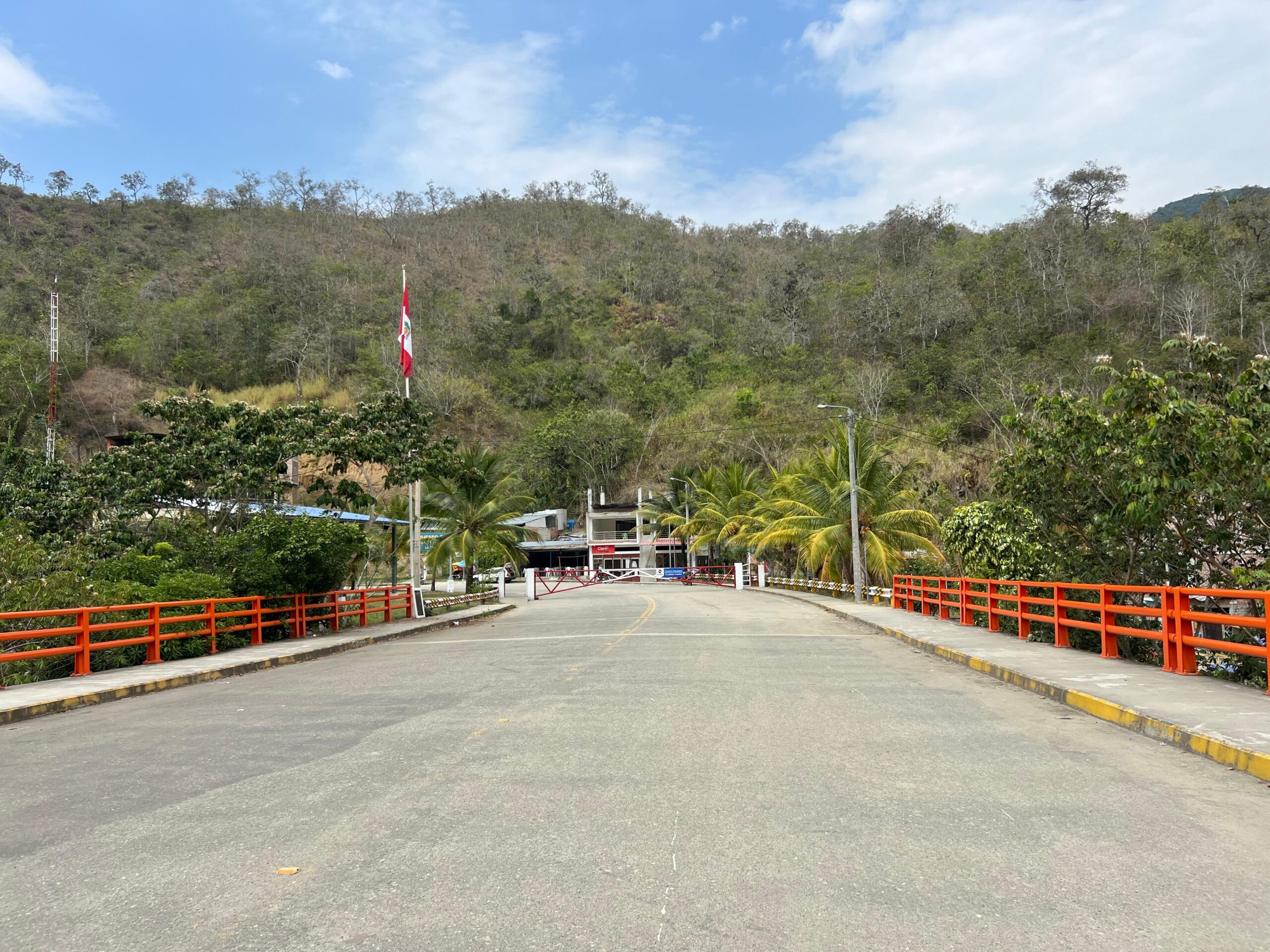
In my experience, it was super relaxed and easy going. Not another soul here, which made things quick and easy.
Before you cross the bridge at La Balsa to Ecuador, you’ll need to pop into the immigration office to get your passport stamped. My partner had overstayed her visa for about a month, and had to pay a fine of 5.5 soles per day, which was smooth-going.
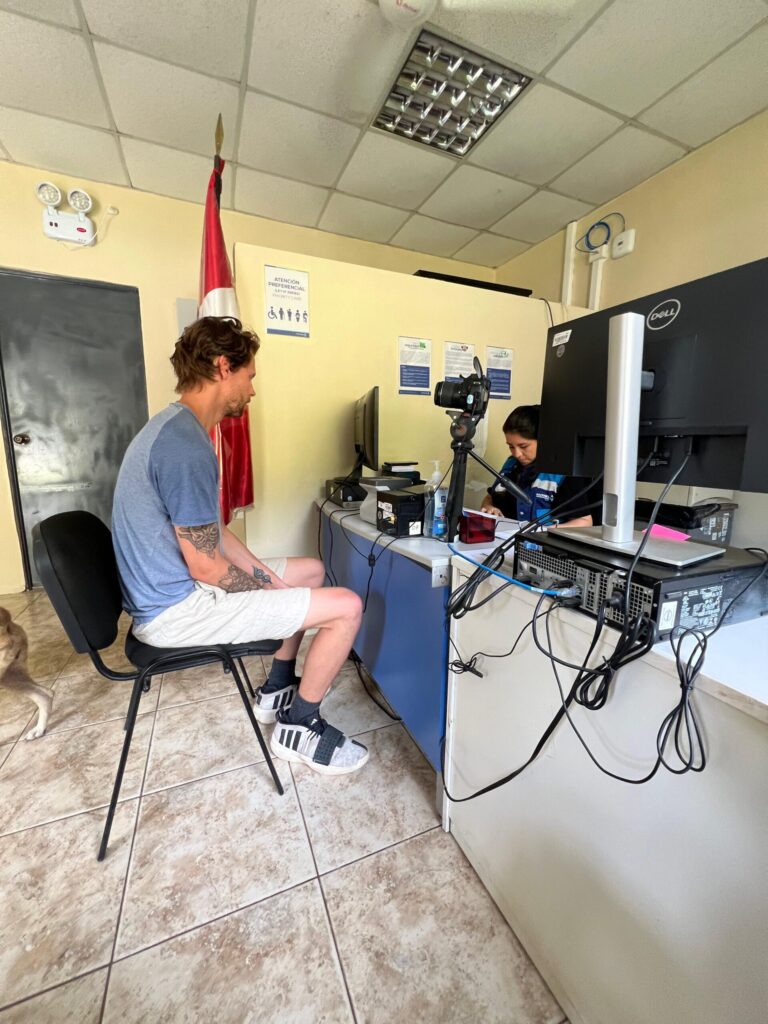
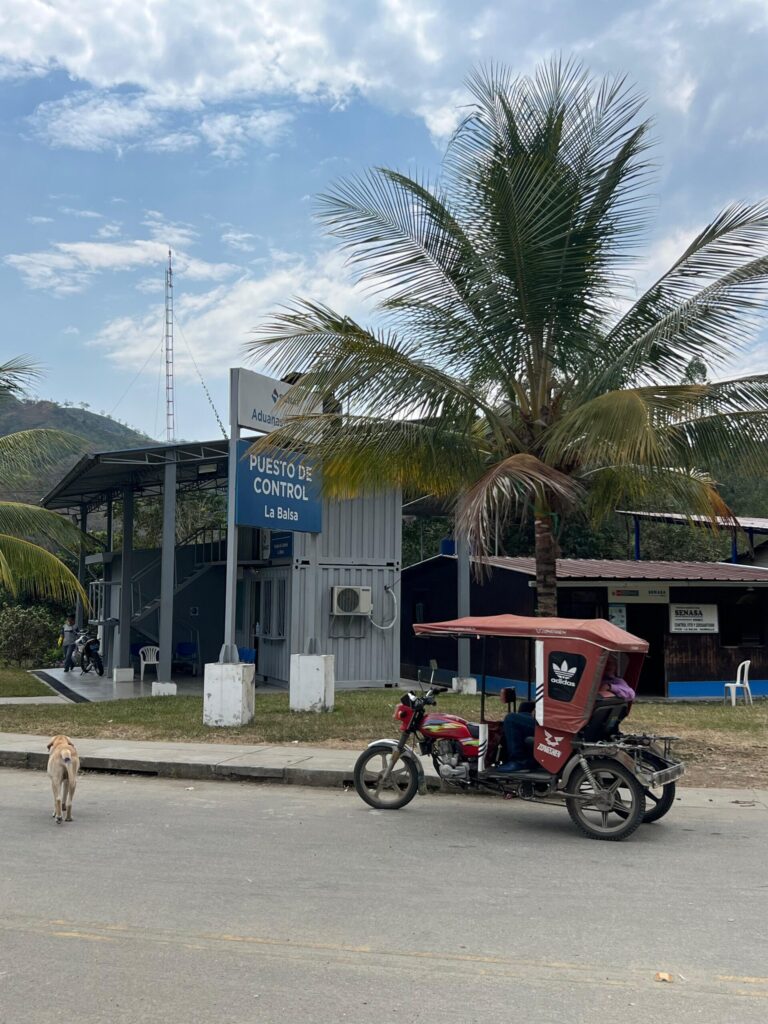
If you have overstayed your visa in Peru, the immigration office doesn’t accept cash. You will need to pay via Pagalo. The immigration office will give you the payment details to do so. You can pay there on the spot and show the immigration officer the receipt, and they will stamp your passport and send you on your way.
With your exit visa stamped, simply walk across the bridge. On the other side, an Ecuadorian official will ask you to step into a little tub of water to sanitize your feet, and then you’re good to go.
Welcome to Ecuador, but it’s not over yet.
La Balsa to Zumba
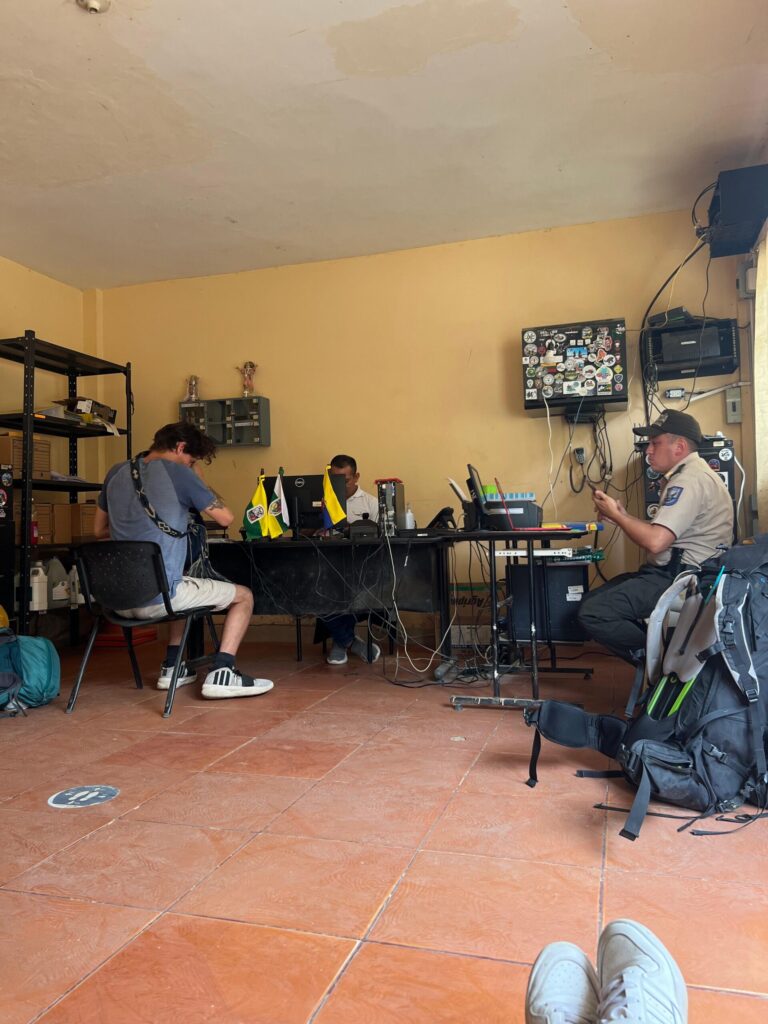
Bear with me, we’re nearly there! Now you just need to go to the immigration office, get your Ecuadorian tourist visa, and you’ll be on your way.
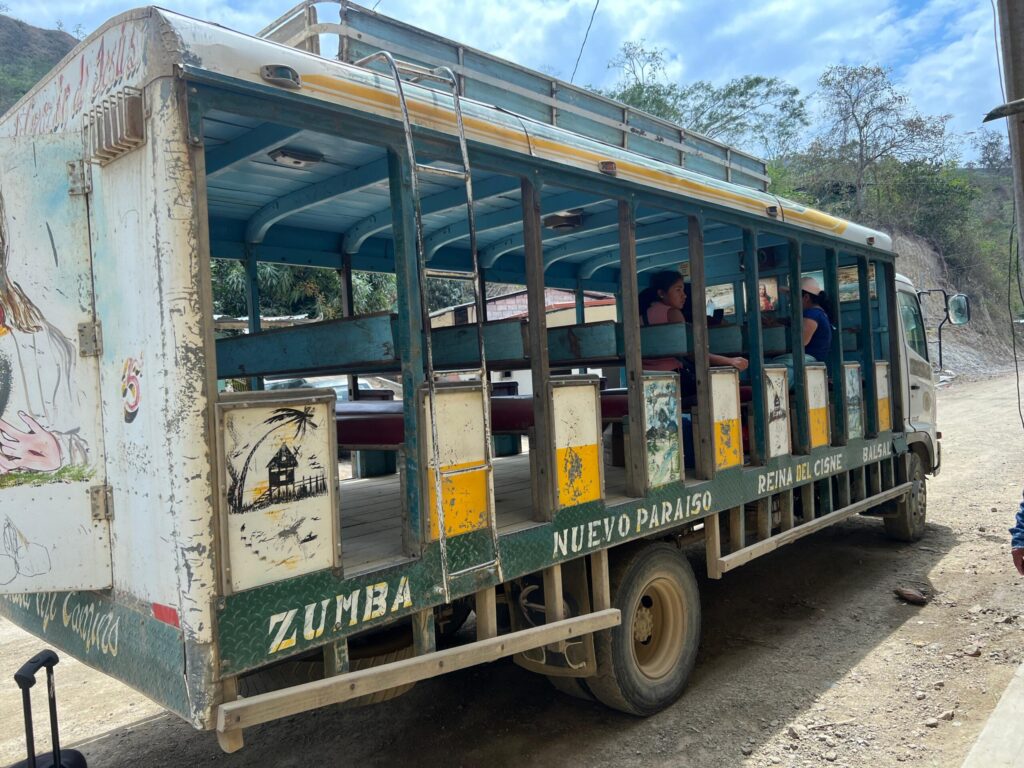
There will be a Ranchera parked next to the immigration office, you can’t miss it.
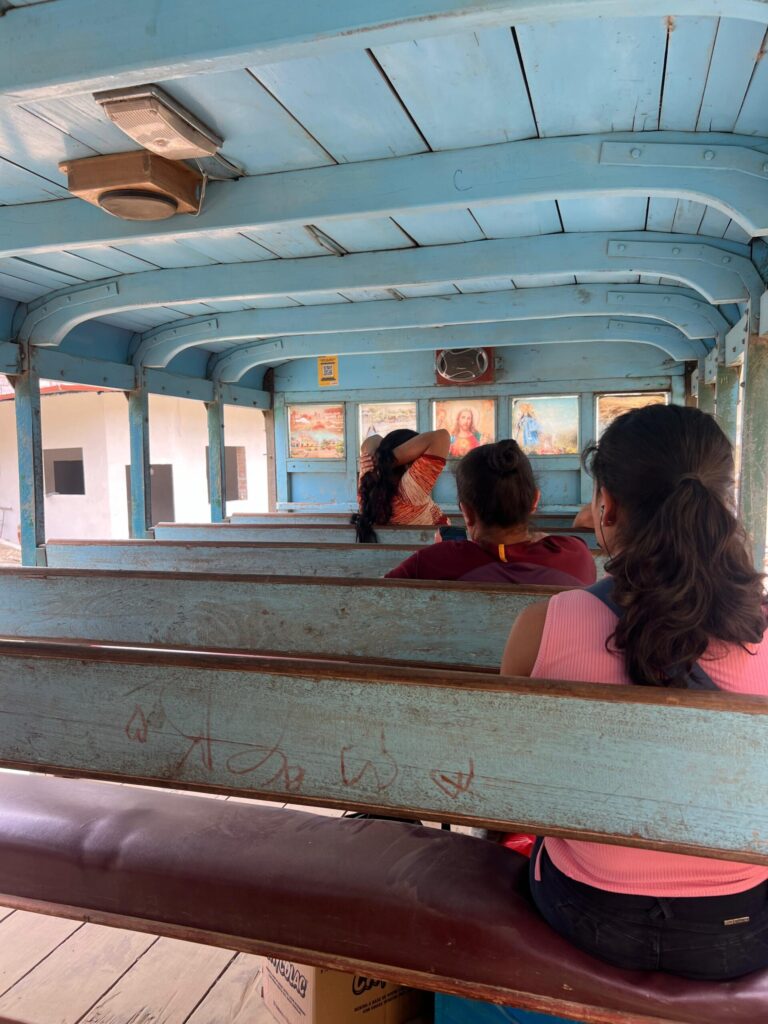
You will need to take a Ranchera, which is like the builders gave up halfway through making a bus, leaving you with the trembling scaffolding of a bus for the next journey.
There are 3 trips from La Balsa to Zumba scheduled for the day: 12 pm, 4:45 pm, and 7:00 pm. The 7 pm Ranchera doesn’t run on weekends, so if you’re crossing on a Saturday or Sunday, make sure you take the 4:45. In this case, I suggest getting to La Balsa around 3 pm in case there are any hiccups.
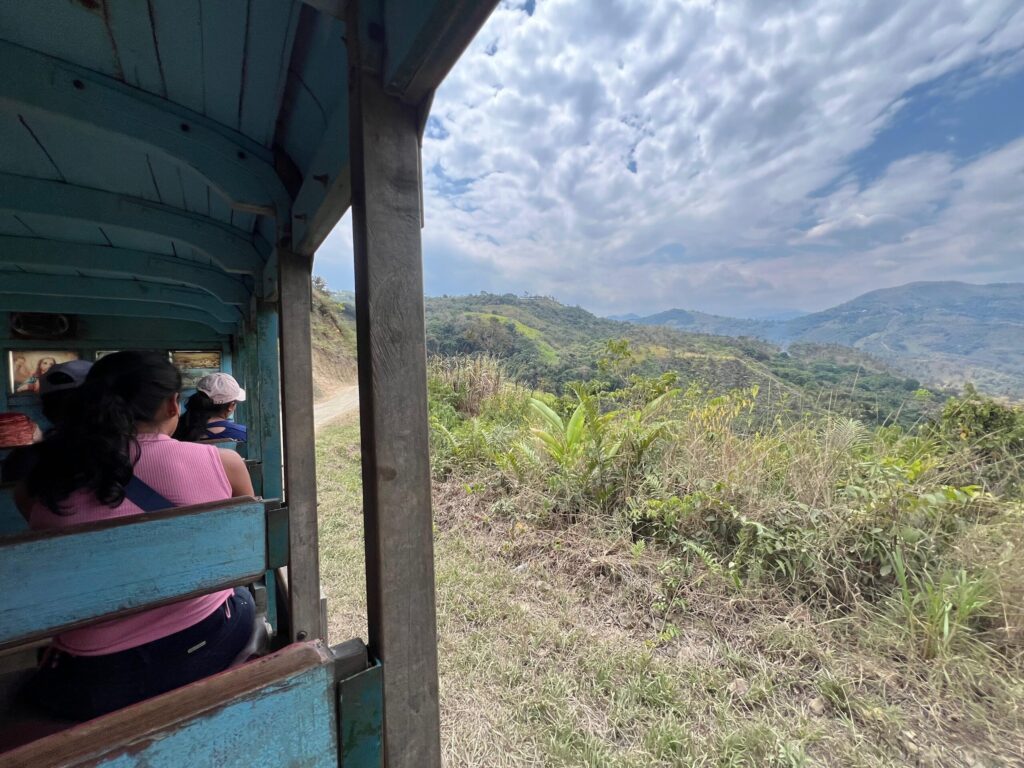
The ranchera will bring you to the Zumba bus Terminal, and now we’re on the last leg of the journey.
The Zumba bus terminal has buses running regularly to Vilcabamba, I believe every hour, so all you need to do is buy your ticket and you’re good to go.
Welcome to Vilcabamba
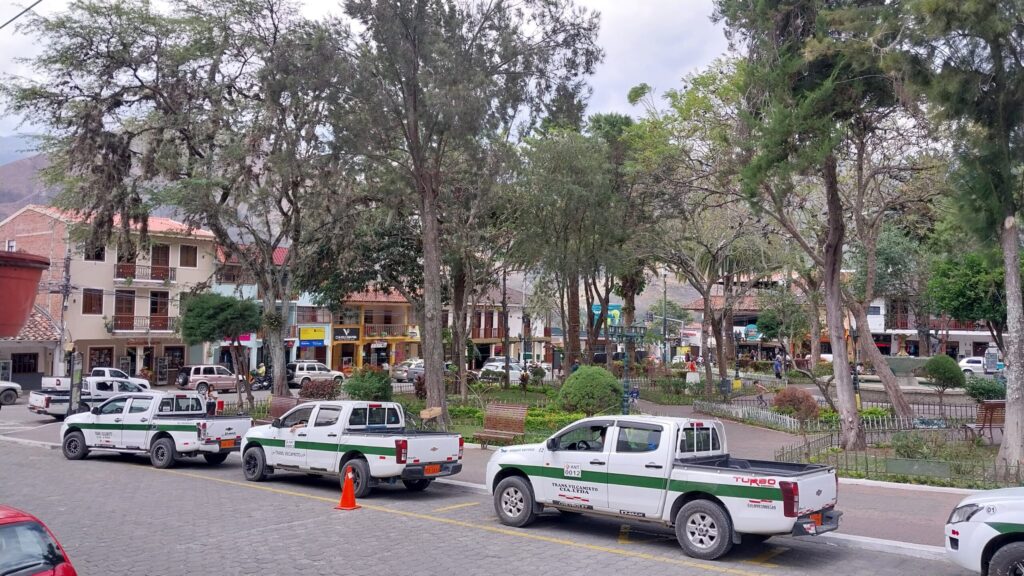
And… we finally made it to Vilcabamba. The journey took us 10 years, but we made it, and for only a fraction of your lifespan, you can do it too.
Generally, if you’re crossing the Ecuador-Peru border by land, I suggest taking one of the other routes as they’re much simpler. However, if you’re after a bit of an adventure, want to travel to or from the Peruvian Amazon, and see some places along the way, the La Balsa crossing is a good option, just long.
Alternative Routes Between Ecuador and Peru
If this route feels a little too complicated for you to be bothered with, don’t worry, there are easier ways to cross between Ecuador and Peru by land, which I’ll briefly cover here.
Here, we’ll quickly discuss the other routes from Peru to Ecuador by land.
Guayaquil to Máncora
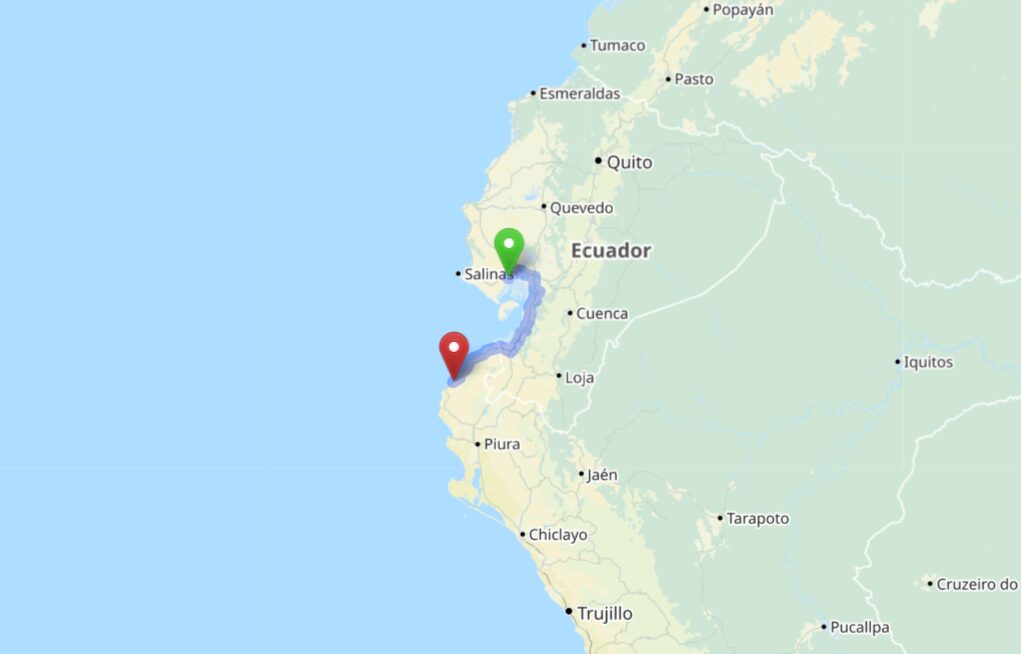
This is the most popular and tourist-friendly route, especially if you’re heading to Máncora for the beaches (which are the only decent swimming beaches in Peru). This is the route I took when I first backpacked South America in 2016/2017, and it was quite easy-going from what I can remember.
You can get an international bus directly from Guayaquil to Máncora. Keep an eye on travel agencies in Guayaquil. You will see quite a lot of them around Malecón 2000, which is the main tourist area. They may charge a little more, but it’s worth the extra money for the convenience.
Usually, the travel agencies will list the bus routes they offer.
Otherwise, if you want to go from Guayaquil to Máncora, you need to catch a bus from Terminal Terrestre de Guayaquil to Aguas Verdes or Huaquillas, which borders Peru.
The trip from Guayaquil to Huaquillas takes about 6 hours and costs around $10. From Huaquillas, you’ll need to take a tuk-tuk to Puente Bolsico (Aguas Verdes), which will cost another few dollars if you’re taking it from the bus terminal in Huaquillas.
Huaquillas is hectic and not the nicest place to linger. Aim to have plenty of time on your hands and cross early.
Make sure to get stamped both out of Ecuador and into Peru. Some travelers skip this accidentally and run into major problems later.
Máncora is about 2 hours from the border by bus or colectivo. You can find collectivos at the border or buses at Zarumilla bus terminal, which will take you to Máncora. You will likely see other tourists making the same journey, so if you’re lost, just follow the crowds or ask an official where to catch a bus to Máncora.
Cuenca to Piura
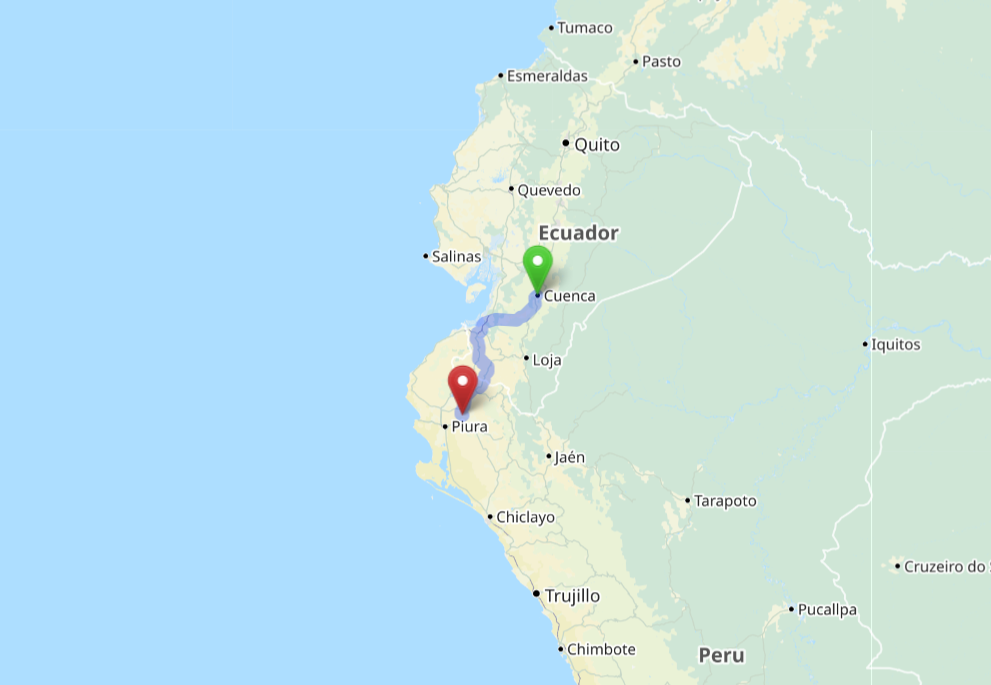
I haven’t taken this route, but from what I’ve heard, it’s quite easy going and not so busy. This is a more chilled-out, highland route for those coming from Cuenca, Loja, or Vilcabamba.
You can take an international bus from Cuenca, which will take you directly to Piura or Sullana, and cost around $40. Just look for one of the many travel agencies in the historical center of Cuenca, which will often have the destinations listed that they operate.
Otherwise, you can take a bus from Loa to Macará (the border crossing between Ecuador and Peru), which will take 6 to 7 hours.
Cross at the Macará–La Tina border post. It’s small, quiet, and safe, where you will then continue by colectivo or bus to either Sullana or Piura.
This route is great for travelers heading inland into northern Peru without needing to go to the coast. This route is less touristy, has fewer scams, and is at a slower pace. It’s a good option if you want to avoid the crowds.
And there you have it. The various ways you can cross the border from Peru to Ecuador, and vice versa.