Table of Contents
Ecuador may be a small country on the map, but it’s also a backpacker’s paradise which is why I keep coming back. Over the past 9 or so years, I’ve traveled to Ecuador to backpack, volunteer, and work on multiple occasions. It’s one of those countries that I just can’t get enough of.
Enjoying the waves on the Pacific coast, sitting in plant medicine ceremonies in the Andes, and exploring the untamed Amazon… Ecuador is packed with diversity. But what’s better is that all of these things are just a bus ride away. You don’t need to take expensive flights or spend multiple days in transit to get around the country. Perhaps one of the things I love most is that Ecuador is accessible, which just makes it all the better to travel.
So, whether you’re a long-term backpacker who is planning on milking the full 6 months until you get the boot, or you’ve just got a couple of weeks to dip your toes in, I’ll run you through all the best spots, routes, and hidden gems in this comprehensive Ecuador itinerary for any traveler.
For a more detailed deep dive into backpacking Ecuador, I suggest first checking out my Complete Ecuador Backpackers Guide here.
With that out of the way, let’s get into it.
Ecuador Backpacking Guide (The Beaten Trail)
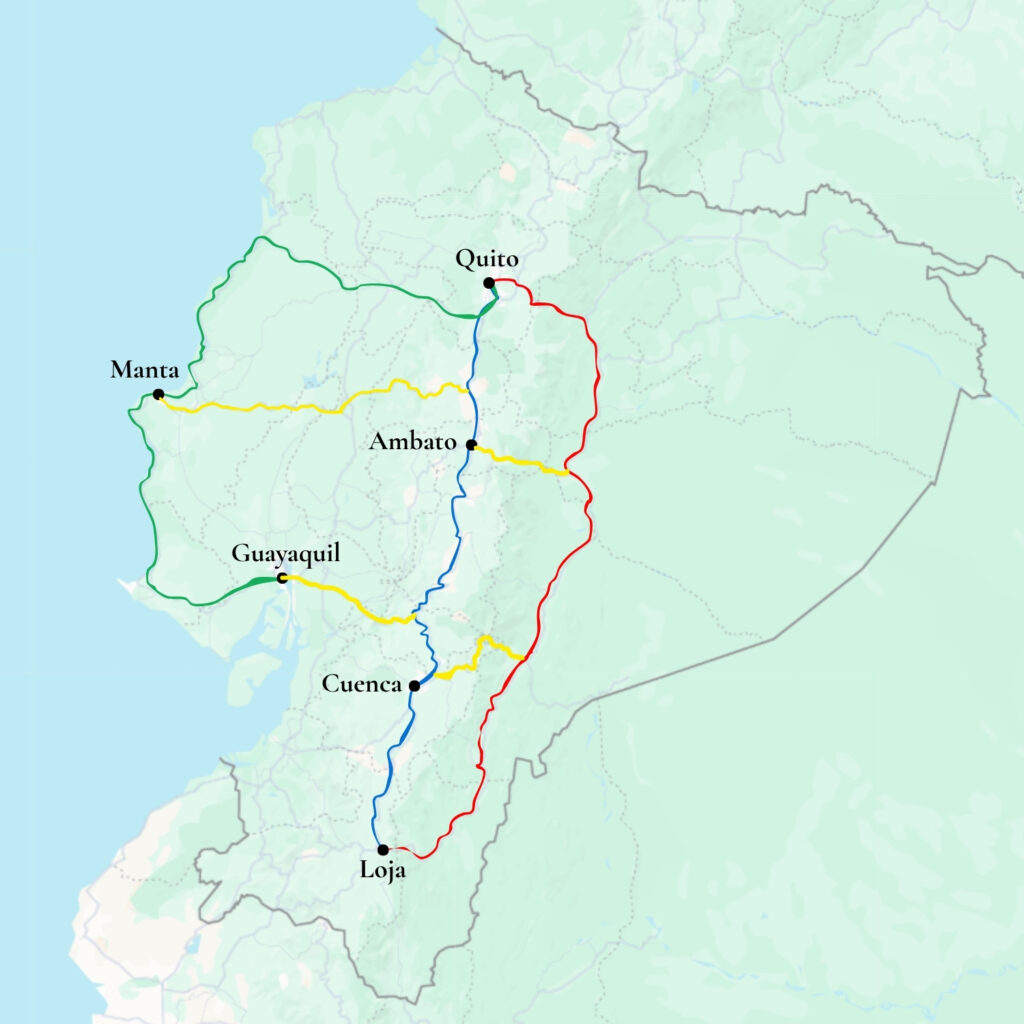
Ecuador is a wonderful country for backpacking due to its relatively small size but diverse environments, unspoilt nature, and convenient bus routes that connect the furthest reaches of the country.
As you can see in the map above, Ecuador has 3 primary roads.
These roads act as the arteries of the country, connecting the North to the South, and the East to the West. If you’re catching a bus to any of the popular tourist destinations, chances are you will be traveling along these routes.
Like most countries, Ecuador has a backpacker trail (often known as the beaten track). This means that most tourists tend to visit a select list of key places. There is plenty more beauty in the country, of course, but there are still many places that aren’t easily accessible or simply haven’t become a mainstream destination… yet.
So, here’s what we have:
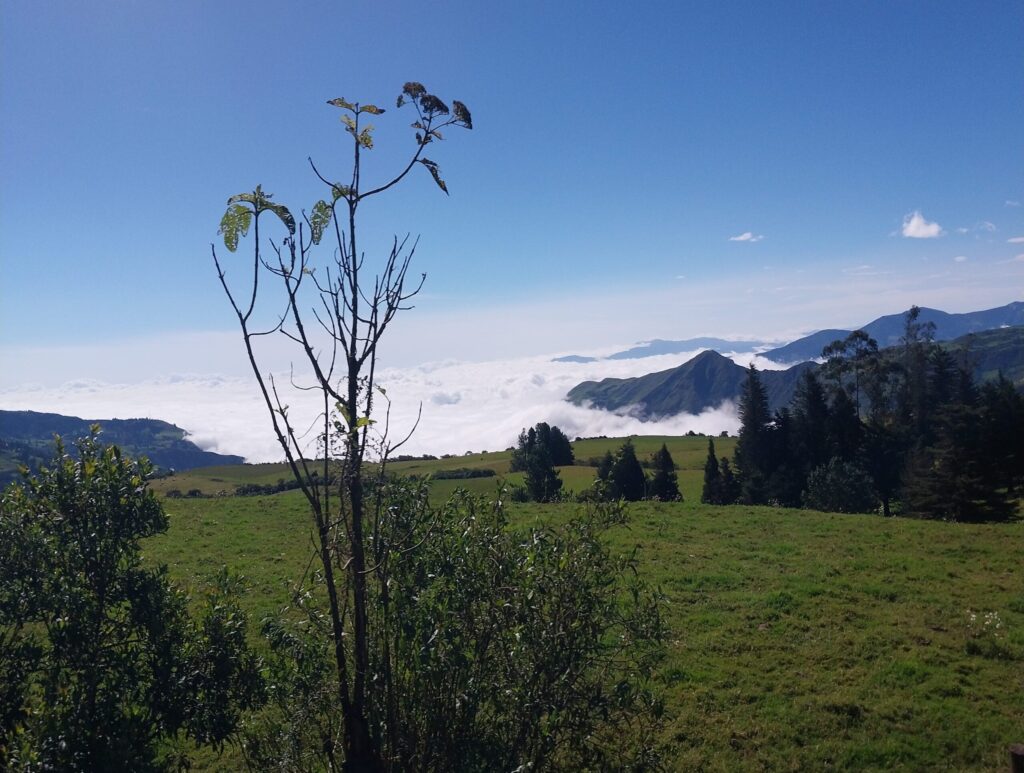
- E35: This is the road marked in blue that passes along the Andes, and is arguably the most important in all of Ecuador because it creates a direct connection between the North and South. If you plan on traveling directly from Quito to Cuenca, or vice versa, you’ll be taking this route. The E35 is incredibly scenic as the entire road passes through the Andes. Various sections pass above the cloud line, where you can get some incredible views.
Here’s a tip: If you’re traveling North, try to get a seat on the left side of the bus. If you’re traveling south, the right.
- E15: This is the main coastal road that connects popular tourist destinations like Montañita, Olon, and Ayampe. Also a lovely road, it mostly follows the coastline where you can get some nice views of the ocean and catch glimpses of many cute coastal towns scattered along it. The road carries on through Manta and onwards to Colombia, although most travelers don’t make it further north than Puerto Lopez as the coastal tourist heart is in the South (about 3 hours from Guayaquil).
- E45: This is the main Amazon road which connects Loja in the south to Quito in the North, passing through Tena, a popular backpacking spot. If you plan on doing an Amazon tour or getting down and dirty with the tapirs, you will likely be taking this road.
So… What Is a Good Route Through Ecuador?
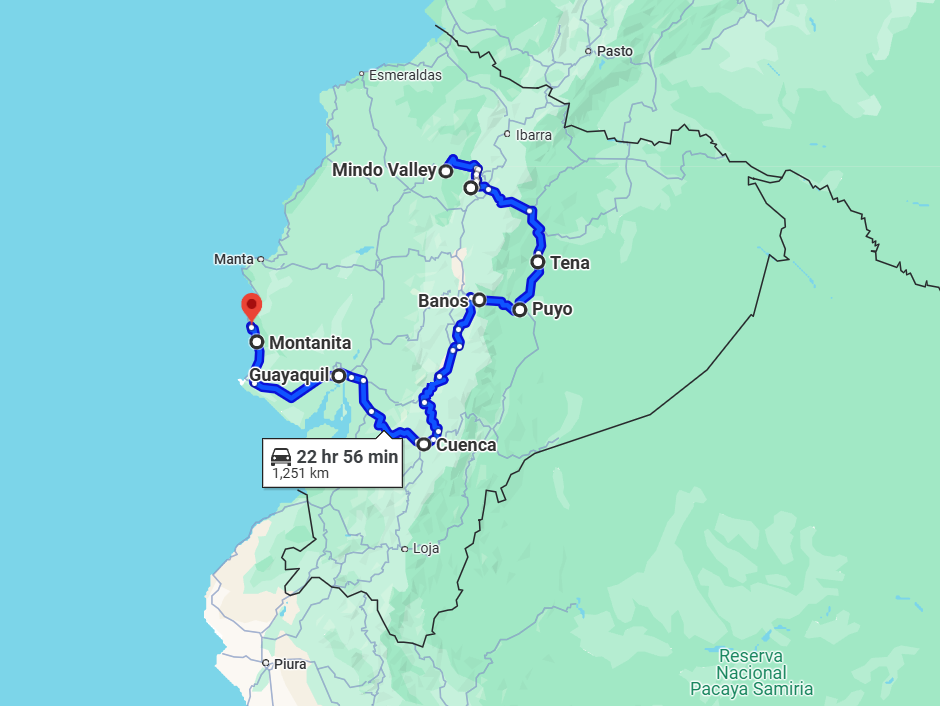
Let’s first cover the groundwork.
If you are flying into Ecuador, you will either arrive in Guayaquil or Quito, the two largest cities and international airports in the country. This makes life easy because Guayaquil is relatively South, making it convenient to travel North, while Quito is quite far North, making it easy to travel South.
Therefore, I suggest flying out of the country from the opposite airport you arrived in, if possible. If you have a return flight, no biggie. You can travel up or down to the other part of the country, then either fly back to the city you started in, or catch a bus which will take about 8 hours.
Otherwise, if you are traveling South America by land like many of us backpackers do, you will likely be coming through the Ipiales–Tulcan border crossing between Ecuador and Colombia, or from the Huaquillas–Aguas Verdes crossing, which is the most popular land route between Peru and Ecuador.
You can also cross from El Alamor, which is also a popular route, or via La Balza, which is on the Amazon side of the Andes. But this route is a bit of a nightmare… So, I would leave that one off the map for now unless you plan on heading directly to Chachapoyas or Tarapoto.
How Many Days in Ecuador Is Enough?
Ecuador is one of those countries that you can spend a lot of time in, or get a pretty good idea of the country in a couple of weeks. The nice thing about Ecuador is that the country’s size works in your favor.
Here’s what I suggest.
If you want a full immersive experience where you can properly relax and do some off-the-beaten-track exploring, I suggest spending 3 months in Ecuador, which is the duration of a tourist visa (which can be extended once per calendar year if you want to extend your stay). But if you’re stretched for time, you can still see a lot in 2 weeks, and I’ll lead you through all the main spots.
Where Should I Go Backpacking in Ecuador?
Above is an interactive map I created for Ecuador, where I’ve marked down all my favorite spots. I suggest saving this map somewhere handy so you can use it during your trip.
It’s color-coded as:
- Blue: Popular sites, sightseeing, and touristy stuff
- Yellow: Notable hostels and hotels
- Red: Notable bars, cafes, and restaurants
- Green: Bus terminals and transportation points
There are a lot of nice places to see in Ecuador, but the backpacking trail has around 8 cities, which are frequented by travelers. Here, I’m going to write the content as if you’re starting in the South (Guayaquil) and moving North (to Quito). But of course, just do it in reverse if you’re coming the other way.
Now, let’s get onto the best places to visit in Ecuador, whether you’re wanting to do a 2-week backpacking trip, or a 6-month immersive deep-dive.
Guayaquil: The Gateway to the Coast
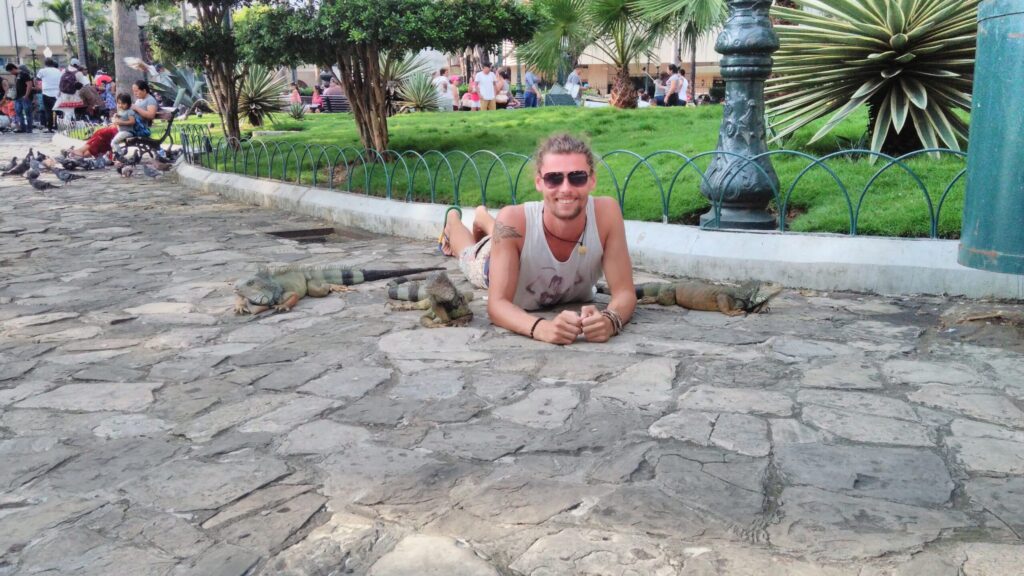
Guayaquil is often referred to as the gateway to the coast because there’s just one main road that connects all the coastal towns, and that runs through here. Guayaquil is sorta like that one estranged family member. You don’t really want to see it, but you feel obliged to when you’re passing through.
Most travelers pass through Guayaquil at some point. Whether you’re flying into it, flying out of it, or want to see the coast (or get away from the coast), Guayaquil is that awkward cousin who is always there, even when you don’t want him to be.
Ecuador’s largest city does have a few gems that are worth a visit. It’s gritty and has character, but character you don’t like, like Ron Weasley. But to be fair, the malecón is quite nice, as is Las Peñas, a gentrified Barrio that now has some charm and some serious hipster vibes, although those two things rarely mesh.
To be honest, Guayaquil doesn’t represent the vast beauty of Ecuador. If you’re flying in, it’s worth staying for a night or two max, but I wouldn’t spend too much time there. You can do all the main touristy things in a day.
- Recommended stay: 1 night.
- Recommended things to do: Leave
Montañita: The Surf and Party Spot
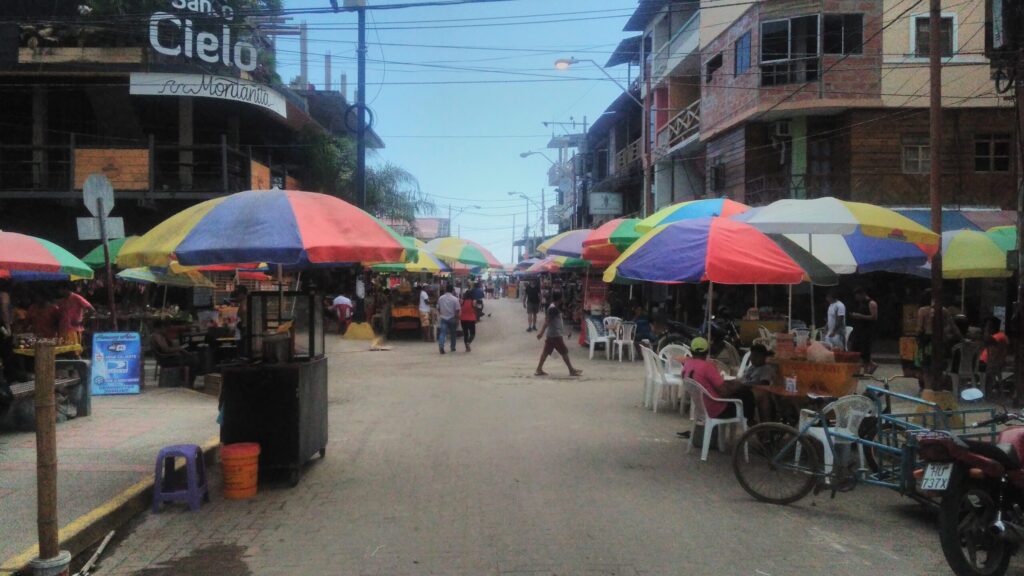
If you’re craving a party, Montañita is your go-to spot. About 3 hours from Guayaquil by bus, what was once a quiet fishing village has grown into Ecuador’s most infamous beach town.
I used to love Montañita when I was in my partying prime. In 2017, I volunteered in a hostel there for a month, and I’ve been back 4 or 5 times since. Now that I’ve reached the ripe old age of 32, I’ve gotten a bit over the scene as I prefer quieter, more relaxed places like Olón next door. But, it definitely has a vibe!
Montañita is full of surfers, alcohol, and party-goers. It’s like Miami stuck in the early 1900s. During the day, it takes form as a sleepy beach town, especially during the slow season. But during the weekends, this place pops off, attracting locals and tourists from all over the shop.
The beach is good. Warm, clean, no rocks, generally big waves. If you want to party, Montañita has you covered. Maybe a little bit too covered. Smothered. All the venues seem to blast music, creating one thick melt of intangible white sound.
On the other hand, Montañita has lots of hostels, and it’s a prime place for meeting other travelers due to its lively, social buzz. There are surfing schools everywhere, and I’ve met a ton of people who came to Montañita to do a surfing, yoga immersive. If that’s up your alley, this is a popular one to do.
So, if you’re looking to get a little loose, meet a ton of people, and spend your days surfing off the hangovers, this is your spot. If you just want something more relaxed, let’s move on to the next spot.
- Recommended stay for a 2-week Itinerary: 3 days (either Montañita or Olón)
- Recommended stay for backpackers: 1 week between Montañita and Olón
- Recommended things to do: Check out the full guide here.
Olon: The Relaxing Beach Town

If Montañita is the wild child of Ecuador’s coast, Olón is its peaceful sibling. Once upon a time, it didn’t have so much appeal. But it has grown on me over the years, especially as it’s developing quickly, and not in a way that makes you cringe either… Olón is the normal beach town compared to Montañita. It has a much slower pace, no blaring music, and feels more like a family-friendly destination on Ecuador’s amazing coastline.
In my opinion, Olón has a far more scenic beach than its brother, Montañita, who got a little lost in life and turned to drugs, although the waves aren’t as good. Olón is more spread out, less crowded, and there’s a lot more vegetation and palm trees, making it feel more like a tropical beach getaway.
Each time I come back, there are quite a few new restaurants, shops, and hostels. The first time I was there in 2017, there wasn’t a whole lot to do besides visit the beach. Infrastructure was partly non-existent, with long empty roads and not much to see. When I returned in 2023, it has booshed itself up as a prominent vacation spot, rivaling Montañita, but without the chaos.
This is also a good surf spot with plenty of up-and-coming schools that offer Spanish, Yoga, and Surf immersives. Here you can do a 22-day surfing, language immersive to get the full experience out of Ecuador. I met quite a few people who did this course, and they all said good things!
The nice thing is that Olón is just a 5-minute tuk-tuk ride from Montañita. It’s also a pretty easy 30-45 minute walk, so it’s easy to go to and from. If you’re torn between staying in Montañita or Olón, stay at La Punta Hotel. I stayed here for about a week, as it’s right in the middle of the two towns. It feels remote, where you can listen to the sounds of the waves crashing, although it’s a short walk to either town.
- Recommended stay for a 2-week Itinerary: 3 days between Montañita and Olón
- Recommended stay for backpackers: 1 week between Montañita and Olón
- Recommended things to do: Check out the full guide here.
Ayampe: The Hippy Beach Spot
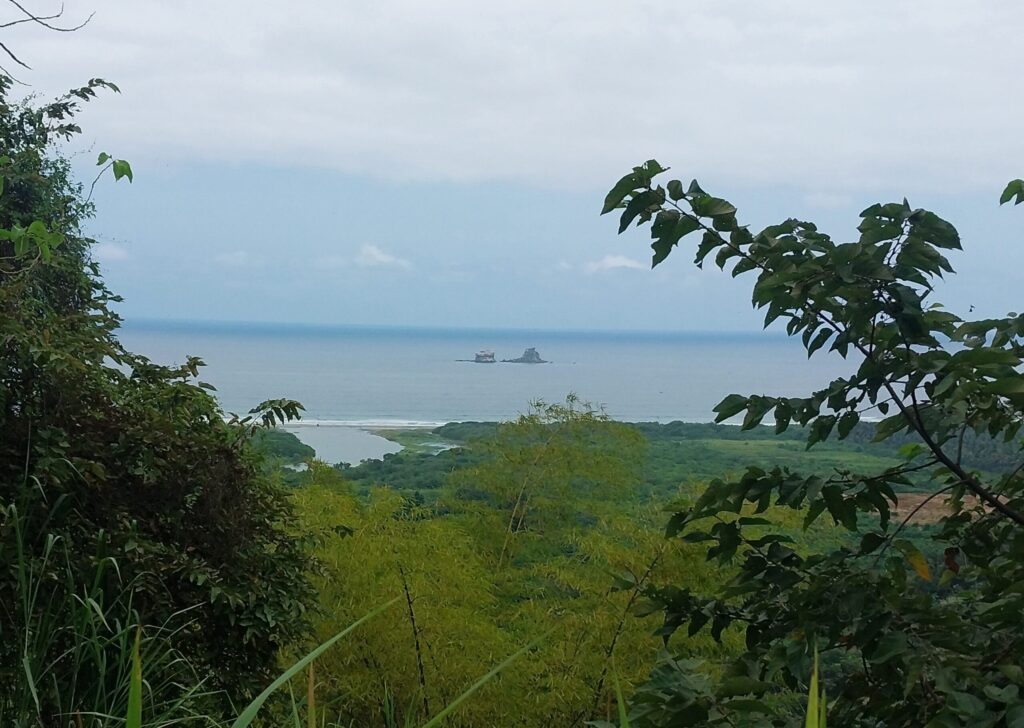
Montañita is all about the party, Olón is all about the charm, and Ayampe is all about the soul. This place draws in an alternative-focused community, where there is a much bigger presence of healing, nature, and creativity. If you’re looking for a truly raw beach experience with all of the mosquitoes and none of the netting, this is your place.
About 30 minutes north of Olón, you can easily catch a bus along the main road and hop off here. The drivers will call it out, but I suggest paying attention to your maps too, otherwise it’s all too easy to miss. This is a nice spot to spend a day or two if you’re looking for a more rustic spot to swim, relax, and get in touch with nature. I stayed at Casa Ariana, which is at the top of the hill, where the photo was taken from. If you’re looking for a nice, hillside apartment for yourself at a good price, I highly suggest staying here.
In saying that, there has been some development in Ayampe over the years, and word of this hippy beach paradise is catching wind. It seems to be becoming more trendy with time as modern cafes and restaurants are being introduced, and more people are moving into the area. So, I’m not sure how much longer it will stay as the hidden gem on Ecuador’s coast, but it seems to be keeping its appeal and down-to-earth vibes, which is good.
There is a place called Finca Punta, which is about a 20-minute walk from Ayampe’s center. Finca Punta offers plant medicine ceremonies and Temazcales for a good price. The guide, Aldos, is a knowledgeable, trained medicine man who works with other curanderos to provide incredible ceremonies. If you’re looking for an authentic Ayahuasca ceremony on the coast, or Temazcal, this is a great spot to go it.
From the coast, most people head back down the E15 to Cuenca, which is about 7 hours from Montañita. Some buses go directly, although they tend to book out early and run at awkward times (early in the morning or late at night).
But don’t stress, most people just catch a bus from Montañita (or Olón, depending on where you’re staying) to Guayaquil, and change buses there. This is what I’ve done every time I commute between Cuenca and the coast, which is quite often when I’m in Ecuador, it turns out.
- Recommended stay for a 2-week Itinerary: Just do a day trip
- Recommended stay for backpackers: 3 nights
- Recommended things to do: Surf, sit in a Temazcal or Ayahuasca ceremony, go to a cacao circle, check out the craft stores, have an expensive coffee at a Hipster cafe.
Cuenca: Colonial Charm and City Life
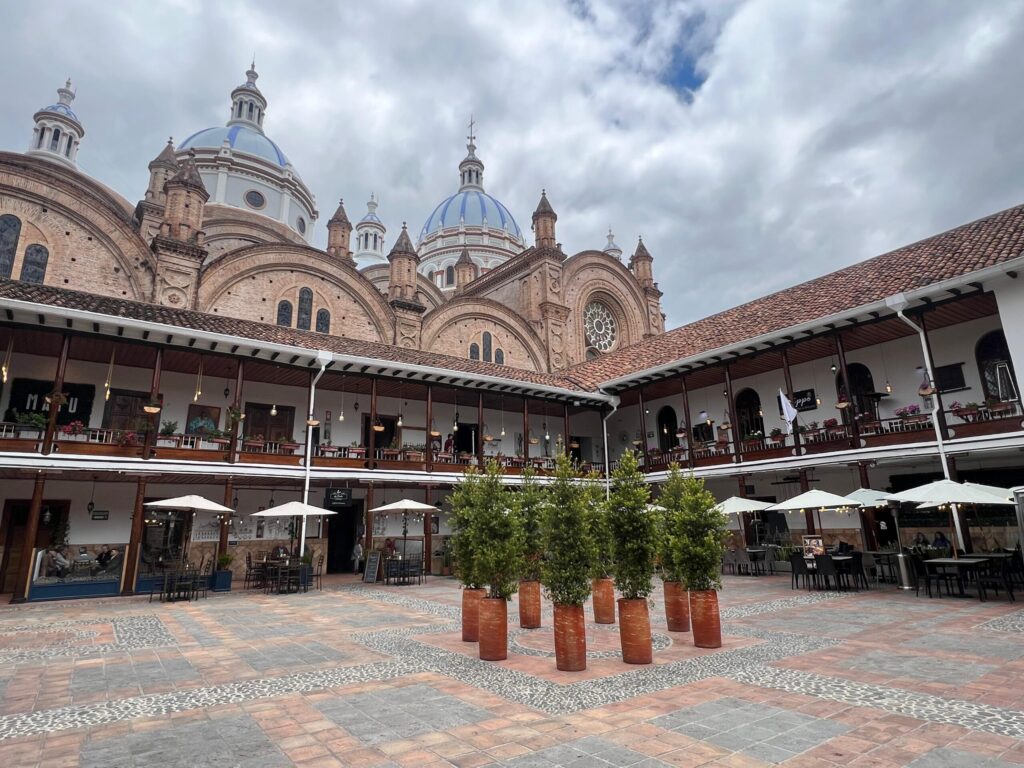
Cuenca is the third-largest city in Ecuador, and the most beautiful. This is one of the central gems for travelers who visit Ecuador, as it also makes a good base to check out all regions, venturing to the coast, further into the Sierra, or into the Jungle.
During the three times I’ve come back to Ecuador, Cuenca has always been like a home base for me, because it ticks all the boxes:
- It is aesthetically beautiful with a nice colonial charm
- It’s large enough that there is plenty to do, and you won’t get bored
- It’s a big digital nomad spot and has the largest expat population in Ecuador
- Nightlife is good, lots of cafes, parks, and areas to relax and get away from it all
There are lots of things to do in Cuenca, which is why so many travelers and expats make Cuenca their home for some time, or better yet, just never end up leaving. The city center is a well-preserved colonial city with cobblestone streets, beautifully preserved architecture, and plenty to do. There is a lovely little river running through town, which is a great spot to have a picnic or enjoy the sun.
The nice thing about Cuenca is that it’s peaceful, affordable, and very walkable. Whether you want to go sightseeing, enjoy the nightlife, eat delicious food, or use Cuenca as a springboard to explore Cajas National Park, this city has you covered.
You can catch a bus to Baños de Agua Santa from the bus terminal in Cuenca, which is often the next go-to spot for travelers. There is a direct bus service from Cuenca to Baños operated by Cooperativa Amazonas. The bus departs from Cuenca’s Terminal Terrestre, and there is only one morning bus that leaves at 8:45 am, although I suggest getting there earlier to secure your spot. The bus takes 6 – 7 hours.
If you don’t make it in time, don’t stress. You can also catch a bus to Ambato, and then another to Baños from there, which is about 45 minutes down the road. I’ve done this a couple of times, although I don’t recommend it because logistically it can be a challenge.
One time, after being dropped in the middle of nowhere (aka Ambato) and walking around for about an hour looking for a bus that wasn’t running, I took a Taxi, which I believe was $15. Considering I was with two friends, it worked out to be an affordable option, so there’s that if you’re desperate.
- Recommended stay for a 2-week Itinerary: 3 nights
- Recommended stay for long-term backpackers: 4 – 7 days
- Recommended things to do: shop, eat, sit by the river, explore the historical center, check out the markets, have a drink and enjoy the nightlife, go hiking at Cajas National Park.
Baños de Agua Santa: The Adventure Capital of Ecuador
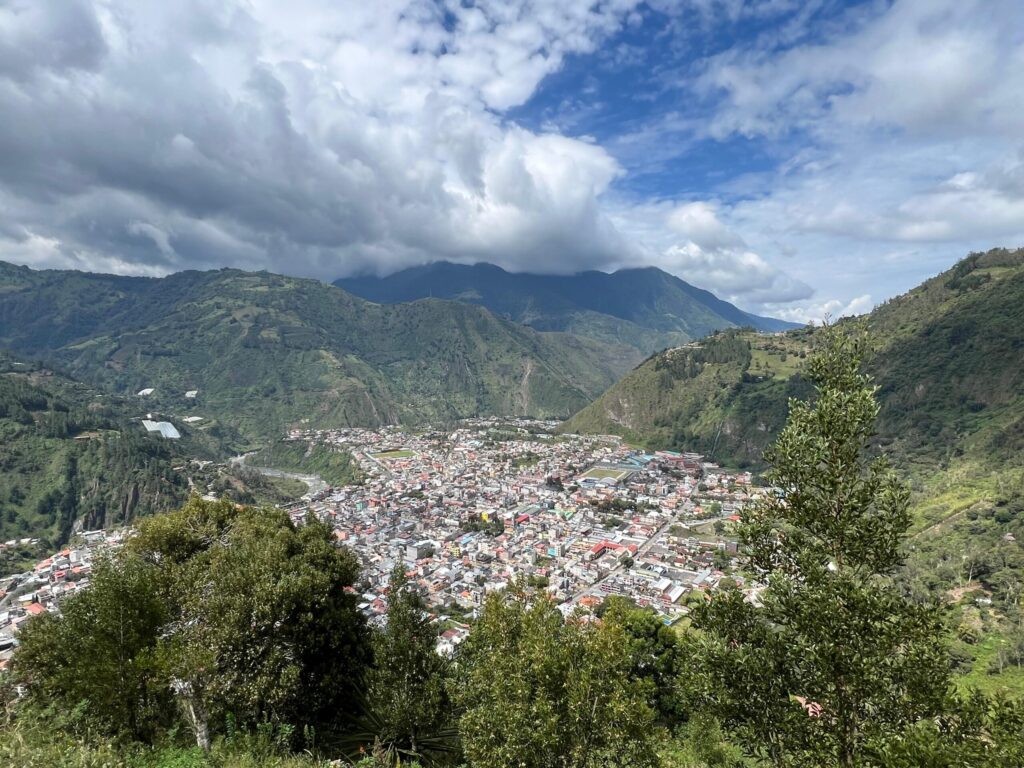
For a long time, I thought this place was called ‘Toilets’, due to the city being in a bowl with waterfalls streaming from the rim. Makes sense, but turns out my Spanish is terrible, and Baños means Baths.
Baños de Agua Santa (usually referred to as Baños) is also one of my favorite destinations in all of Ecuador, and I’m not the only one who says that. I’ve been back to Banos at least 5 times, and enjoy it just as much each time I return. Sitting at the base of the still-active Tungurahua Volcano, this is one of the most visited places in Ecuador. It’s a major tourist hotspot for a couple of reasons:
- It’s undoubtedly beautiful as a small colonial town surrounded by mountains. Lots of nature, waterfalls, and sightseeing activities in the area
- It’s the adventure capital of Ecuador. You can find everything here, from bungee jumping to white water rafting to paragliding.
Baños is the adventure enthusiast’s wet dream. Bungee jumping for $20? Count me in. Ziplining, white water rafting, and all of that good stuff can be found here. You can even tour the Amazon to see the local tribes from Baños, which is surprisingly close by.
But it’s not just for the adventure enthusiasts; Baños also has a growing party scene, which especially kicks off on the weekends. A bustling bar street, nightclubs, and party buses transform this peaceful little town into a party district. But that’s okay, if you’re here for the nature and quiet, you can stay away from all that.
Once you’re ready to move on, Puyo is just down the road, otherwise, you can head directly to Tena, which is a little more touristy and a little deeper in the Jungle.
- Recommended stay for a 2-week Itinerary: 3 nights
- Recommended stay for long-term backpackers: 1 week +
- Recommended things to do: Full guide available here.
Puyo: Gateway to the Amazon
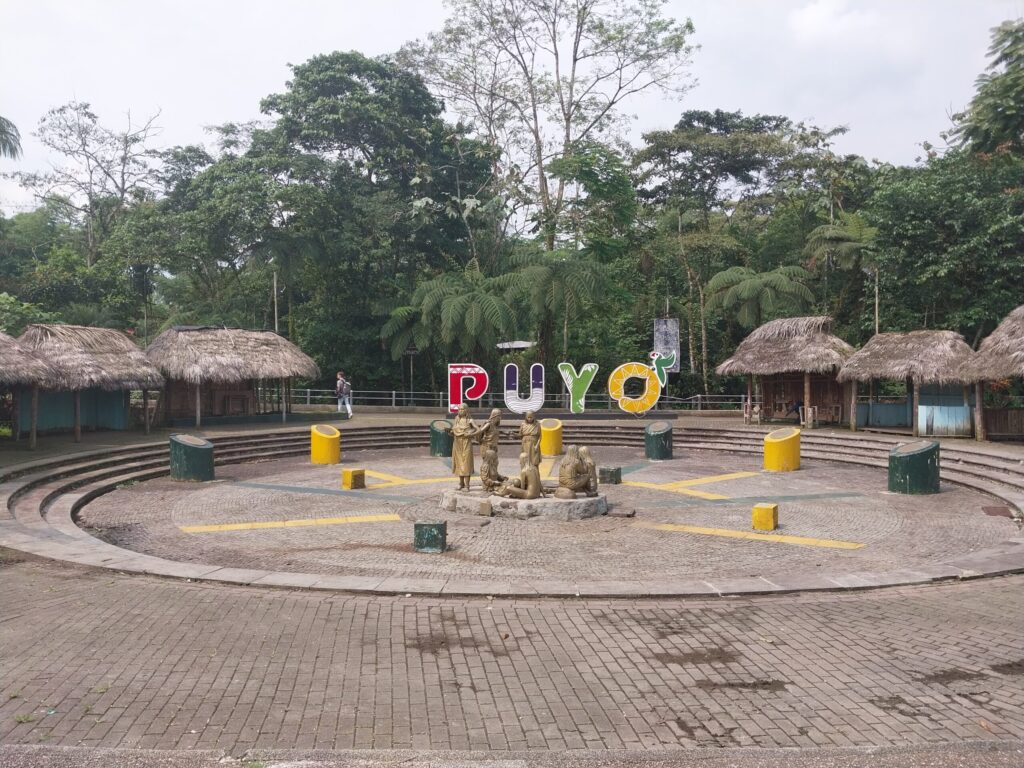
Puyo is a gateway city to Ecuador’s Amazon. Although it’s not so popular for tourists as most backpackers head straight to Tena, which is a couple of hours away, Puyo has its highlights. It has a nice malecón, waterfalls, rivers, canopy walks, and wildlife experiences are all within reach, often with fewer crowds and a more relaxed vibe than Ecuador’s bigger tourist hubs.
If you’re heading to Puyo, you should explore the nearby rainforests, visit the local indigenous communities, and check out the Paseo Turístico del Río, which is a nice walking trail by the river that connects to Parque Etnobotánico Omaere, a botanical garden.
Otherwise, the malecón is where most of the action is. There are quite a few nice bars, cafes, and restaurants overlooking the river. While there’s not a whole lot happening in the city itself, it is still worth a visit in my opinion, especially if you’re looking to do a tour.
You can get a bus in the same place it dropped you off, and head towards Tena, likely your next destination if you’re passing through the Amazon.
- Recommended stay for a 2-week Itinerary: Just do a day trip from Baños
- Recommended stay for long-term backpackers: 1 or 2 nights is enough
- Recommended things to do: Check out the malecón, walk along the river walk, and connect with local communities and tribes (mostly Shuar).
Tena: Deeper Immersion in the Jungle
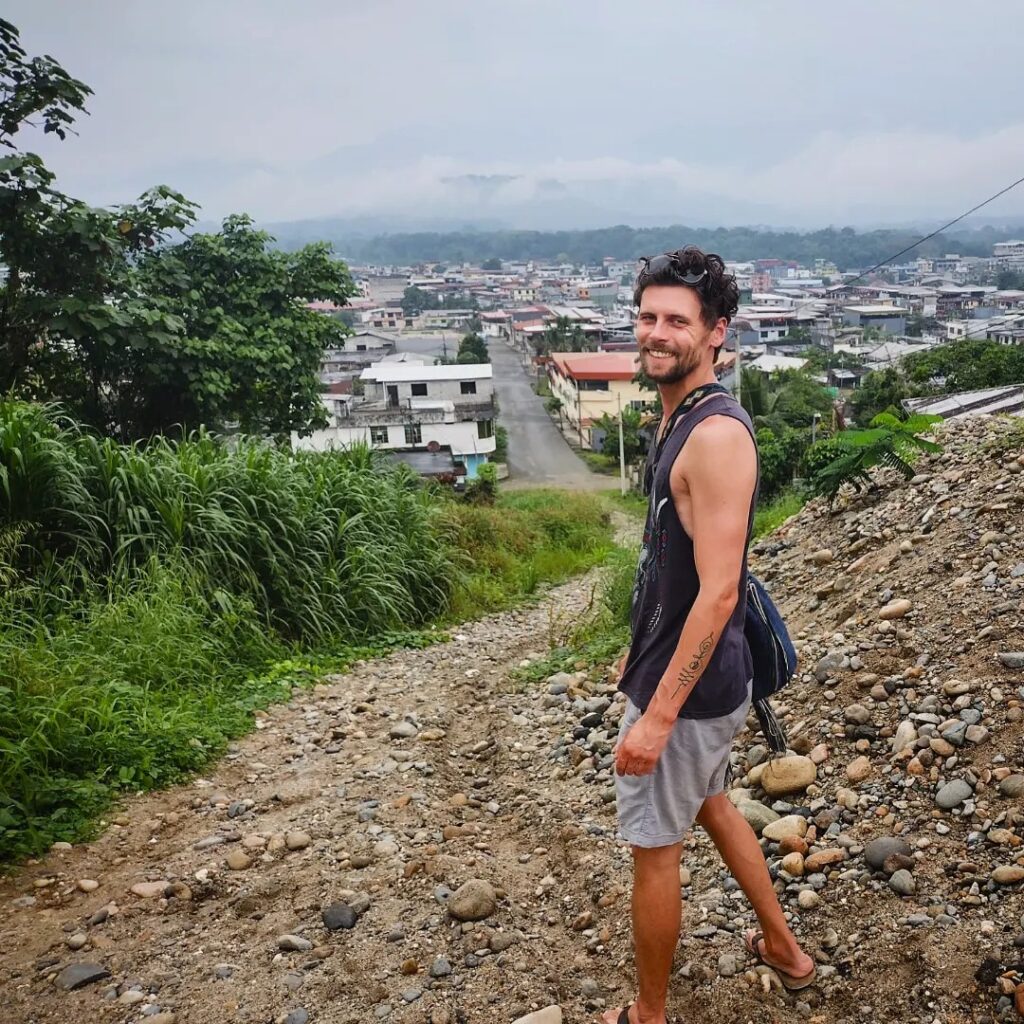
Tena is one of Ecuador’s top jungle towns where you feel the Amazon in full swing. Here, you feel somewhat more immersed in the jungle as it’s a little further in, although the town is about the same size as Puyo.
The city is equipped with different areas, shops, and a nice malecón with some bars and huts which have a nice vibe during the nights. There is a park called Parque Amazónico La Isla which has a nice viewpoint overlooking the city, and the reserve itself is worth a visit as it has Capuchin monkeys, lots of native flora and fauna, and even the local Tapir who comes to visit.
Tena is a popular launch point for jungle tours, whitewater rafting on the Río Napo or Río Jatunyacu, and guided hikes into the surrounding rainforest. What sets Tena apart is its balance of comfort and wildness. You can spend the day exploring caves or visiting indigenous Kichwa communities, then return to town for a good meal and a night’s rest. It’s also a great place for budget-friendly eco-lodges and educational tours that focus on conservation and local culture.
But before wrapping up with the jungle and heading up to Quito, I suggest that you get a bus to Puerto Misahuallí at Terminal Jumandy-Interparroquial, which is only about half an hour away.
- Recommended stay for a 2-week Itinerary: 2 nights
- Recommended stay for long-term backpackers: 3 – 4 nights
- Recommended things to do: Walk along the malecón, go to the look-out point, check out the local parks, do a jungle tour, and swim in the river.
Puerto Misahuallí: The Real Amazonian Experience
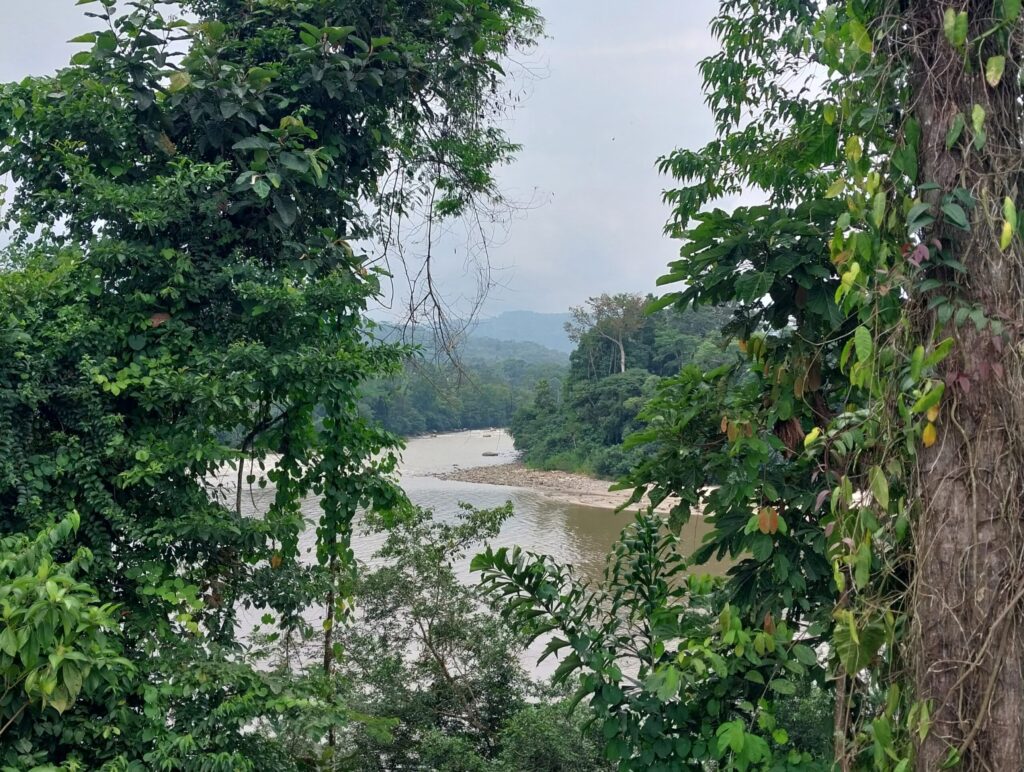
So many travelers skip Puerto Misahuallí or simply don’t know that it exists. I wouldn’t have known about this hidden gem either if I hadn’t been told about it by some locals.
Puerto Misahuallí is only about a half-hour bus ride from Tena, so it’s convenient to see in a day, or stay for a while if you want a more immersive jungle experience without all the concrete. This city is a laid-back riverside village that’s famous for its freely roaming monkeys around the town square, which adds a quirky charm to it.
But beyond the monkeys, Misahuallí offers a slower, more intimate Amazon experience. The river has a nice beach which sees a lot of visitors going for a swim, sitting by the water, playing instruments, and eating at all the street food stalls lining the beach. Tena is perfect for travelers looking to unwind, connect with nature, and experience indigenous culture up close.
There is also a very cool jungle lodge that I stay at every time I visit, called Magia Verde, which offers plant medicine experiences such as Ayahuasca and San Pedro. A little different from most ceremonies I’ve done, here you are with a guide (not a shaman), and sit with the medicine in silence in the middle of the jungle. It can be a very intense experience, but also beautiful.
Otherwise, if plant medicines aren’t for you, it’s still an amazing place to spend a few nights, listening to the roaring river and completely immersed in the jungle. You can take a taxi to the lodge, which is about a 5-minute ride or a 30-minute walk from the town center.
While it’s quieter than Tena, Puerto Misahuallí’s tranquil vibe and deep connection to the surrounding forest make it a memorable stop for anyone seeking a more soulful slice of the Amazon.
- Recommended stay for a 2-week Itinerary: Just do a day trip
- Recommended stay for long-term backpackers: 2 – 3 nights
- Recommended things to do: Play with the monkeys in the town center, check out the beach, sit in an Ayahuasca ceremony, and do an indigenous community tour.
Quito: The Lively Capital of Ecuador
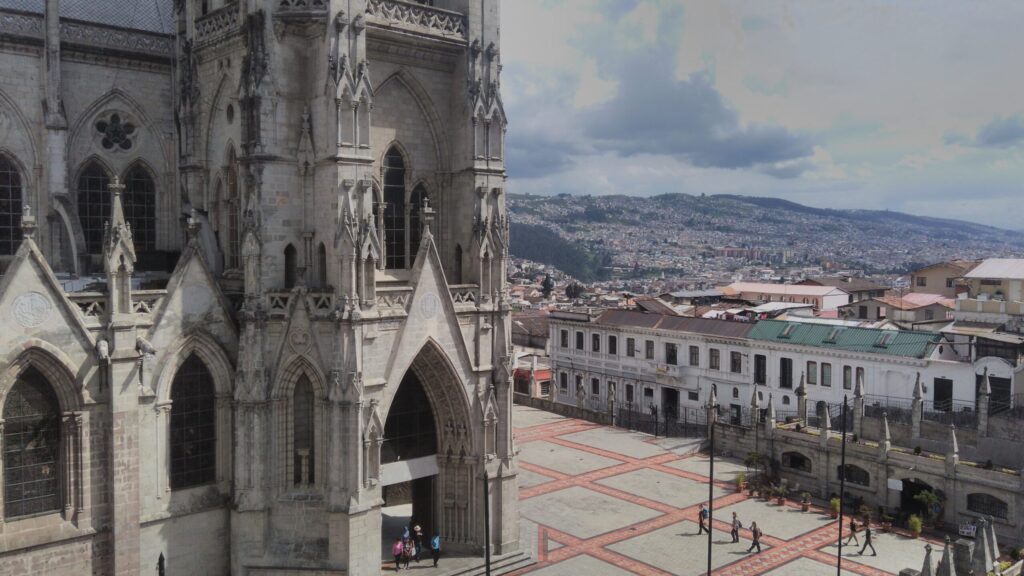
Quito is Ecuador’s high-altitude capital that rests at about 2,900 meters. It’s a Colonial city like Cuenca, but significantly larger. It offers a dramatic skyline surrounded by volcanic peaks, and it’s a nice place to spend some days to get to know the city and explore all there is to do here.
The historic center is packed with cobblestone streets, ornate churches, and nice plazas. You can easily spend a day walking around, checking out all the shops, seeing new areas, and getting familiar with the city. Neighborhoods like La Floresta and La Mariscal serve up coffee shops, artisan markets, and creative energy.
Although Quito is a relatively large city, it’s quite accessible to nature too. You can take a cable car up to Pichincha volcano, where there are various hiking trails with beautiful views of the city.. I walked through many farms up unmarked trails to the summit, where I then realized there was a cable car. But it was an adventure, and a good hike too.
Quito is the kind of place that surprises you with its depth. Seems like there is always something waiting around the corner here, whether it’s beautiful architecture, a unique church, a nice park, or a great food spot. You can easily spend some time in the city, but if big city vibes aren’t your thing, then best to move on quickly.
- Recommended stay for a 2-week Itinerary: 2 nights
- Recommended stay for long-term backpackers: 5 nights
- Recommended things to do: Ride the TelefériQo up Pichincha Volcano, visit the Basílica del Voto Nacional, stand on the Equator at Mitad del Mundo, wander around the Historic Center, and explore Parque Itchimbía.
Other Notable Places in Ecuador
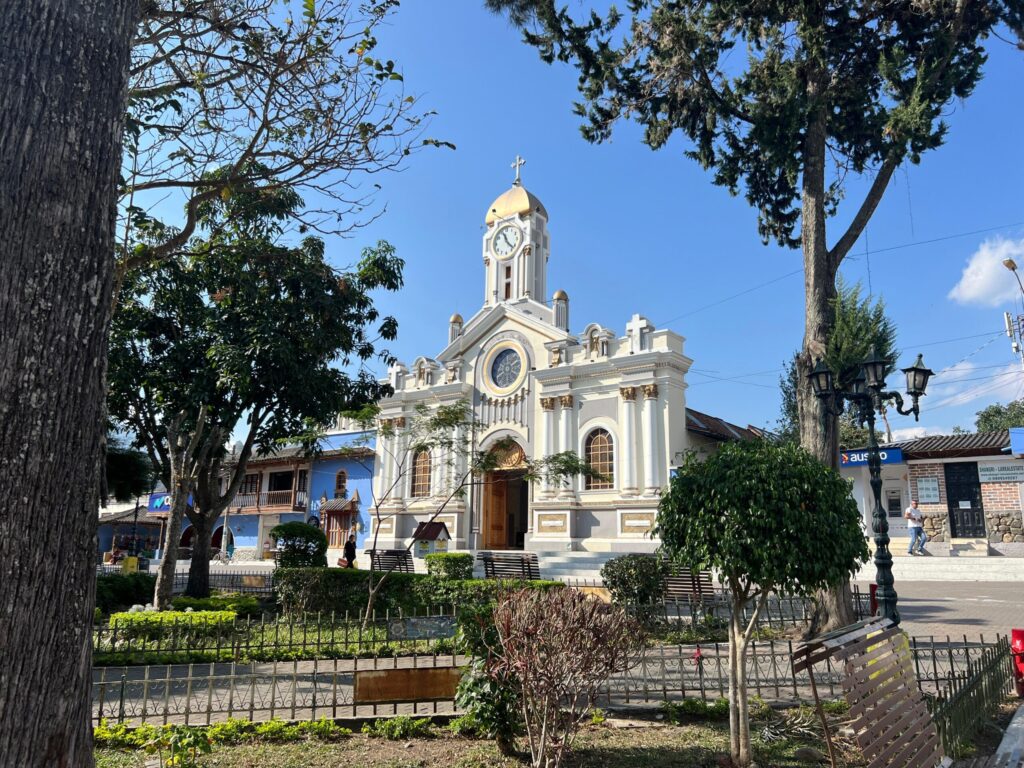
There are also other notable destinations that we should cover. If you have plenty of time on your hands and don’t mind traveling the extra miles, here are a few hidden gems in Ecuador worth exploring.
- Mindo: Just a couple of hours from Quito, Mindo is a cloud forest town known for its biodiversity and laid-back vibe. It’s a haven for birdwatchers, nature lovers, and travelers looking to slow down. You can hike to waterfalls, zipline through the forest canopy, visit butterfly and orchid farms, or simply sip local coffee while watching hummingbirds zip by. There are some tours leaving from Quito that will take you on a day trip, which is really all you need, although you can stay longer if you want to soak in the peaceful forest. You can book a day tour from Quito here.
- Vilcabamba: In the South of Ecuador. Beautiful small town nestled in the mountains. If you plan on continuing your adventure down to Peru by land, this is likely where it will be from, so it’s on the way. If not, it’s about 5 hours from Cuenca by bus. In my opinion, it’s definitely worth a visit because it is surrounded by stunning natural beauty.
- Cotopaxi: Ecuador is full of volcanoes, both active and dormant, but Cotopaxi is the largest and most spectacular in Ecuador. Just a couple of hours from Quito, you can see it in a day. Although you technically don’t need a guide to see it, logistics can be a bit of a nightmare, so I suggest doing a day tour from Quito, which is quite inexpensive. I suggest the tour below:
- Galápagos Islands: If you’ve got the funds, this is your crown jewel of Ecuador. These Islands are a geographical goldmine, with so many distinct species. You will need to fly in and pay for a ticket to enter the park, so seeing the Galápagos Islands isn’t a cheap endeavor. But everyone I know who has done it says it was worth the money. To get the most out of your time there, book this tour where Nicolas will show you all the best animals and places.
- Puerto Lopez: About another half an hour from Ayampe. Puerto Lopez has a nice beach with lots of shops, cafes, and restaurants, and it’s the launching point of La Isla de la Plata (or Poor Man’s Galapagos).
- Mompiche: Another coastal town that’s a little further North than the main coastal town trio. I haven’t been there myself, but I’ve heard it’s a more rustic beach experience than the other places, with a nice big beach, beautiful waves, and it feels like you’re completely immersed in the jungle. What a vibe!